The 2017 concentrates powerful dark fruit flavors and spice notes into deep, inky red hues that tumble, fresh, into your glass. Notes has previously presented the 2015 Antal’s Selection, and the newer vintage carries forward the wine’s history—the zin is a varietal that Count Haraszthy helped flourish when he brought the grape to the new world nearly 150 years ago.
2017 Antal’s Selection Zinfandel, Buena Vista Winery, Russian River Valley, Sonoma, California, USA.
Antal’s Selection throws a heavy cloak over you, a full-bodied red with a dark cherry profile and just a bit of smoke and pepper. Apologies for the shorter review in back-to-back entries (time is in short supply, even in this pandemic climate) and encourage you to browse further for the last Antal review or others in Notes here on Buena Vista wines—they’re my favorite and in ample supply.
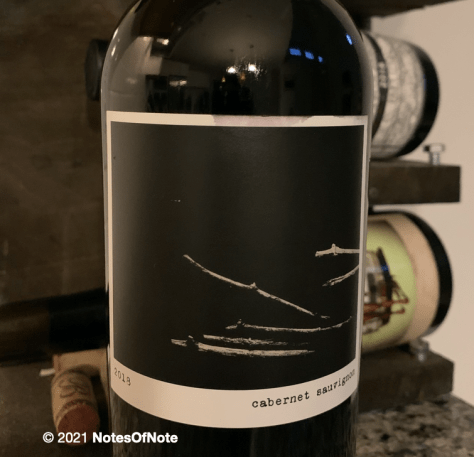
The Cuttings Cabernet Sauvignon has achieved cult following here in Notes, as this is now the fifth vintage of the wine covered in these pages. This 2018 measures up to previous reviews, which you’re encouraged to explore further by tapping on any of the links shown in the caption.
2018 The Cuttings Cabernet Sauvignon, The Prisoner Wine Company, Oakville, California, USA. For notes on previous years of this flight, please click here for the 2017, 2016, 2015, and 2014.
A big shout to Chrissy Wittman of The Prisoner Wine Company—it’s a treat to sample her work not just here during Women’s History Month but all year long.
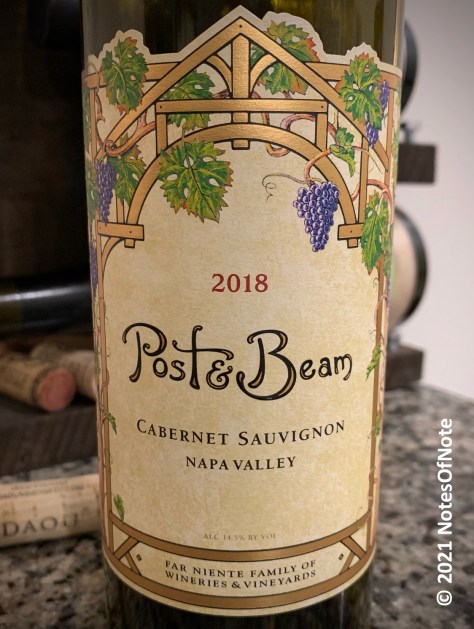
If you’re an oenophile of any sort, you probably know Far Niente by name, reputation, or at perhaps its signature label. Yes, me too. When I first saw the 2018 Post & Beam and its attractive price tag I scooped up a few right away.
2018 Post & Beam, Far Niente Wineries & Vineyards, Napa Valley, California, USA.
It’s the debut vintage from the Napa great, with amazing plum and dark berry notes woven throughout this hearty red. There is fantastic depth in this wine, and all kinds of subtle accents that I look forward to sampling in the next bottle.
This first one accompanied a Chicken Romano dish (yes I was pleased by how it turned out – a challenge unto itself when your audience is a professional!), smashed potatoes, green beans, and an arugula salad. There’s another portion of the chicken in the fridge but none of the sides—or the wine!
The winemaker comments, “Classically crafted from carefully selected Napa Valley vineyards, Post & Beam Cabernet Sauvignon honors the fundamentals of traditional winemaking. It is our purest expression of Cabernet Sauvignon, with elegant layers of fruit, supple tannins, whispers of oak, and a finish that is pure finesse.”
Great wine. I’m craving more even here as I jot out this brief sketch for you! If it’s stocked at your favorite wine store, be sure to grab several because this is going to go fast. It’s that hot!
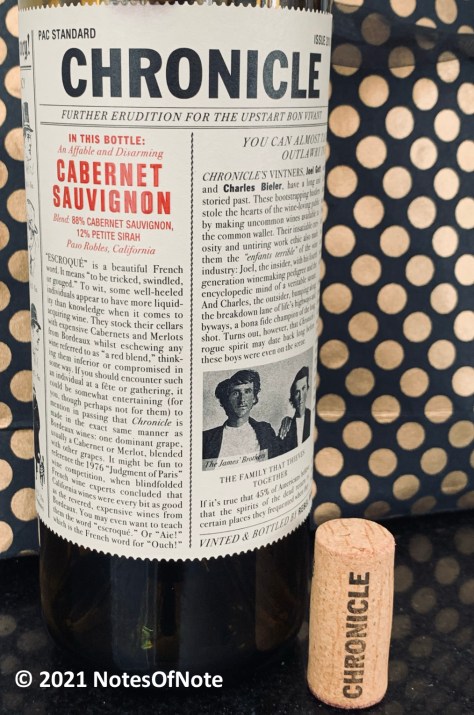
The attributes of this wine line right up to the preferences of this oenophile. The 2018 Chronicle is produced on California’s North Coast, it’s a blend of Cabernet Sauvignon (88%) and Petite Sirah (12%), and has an intriguing label that just may include an individually numbered bottle. Let’s dig deeper…
Generally, the North Coast includes Mendocino, Lake, Sonoma, Napa, Solano, and Marin counties. St. Helena is just west of the Mayacamas Mountains, located in the Napa Valley AVA, and is home to many of California’s best-known wines. The Valley itself extends about 30 miles from Napa at the south to Calistoga in the north, right along Route 29 and including St. Helena.
Fog in the region impacts its vineyards in meaningful and very specific ways. The complexities of cool and warm climates, sunlight, ocean airs, and earthquakes makes for diverse appellations and even subappellations conducive to different types of grapes (e.g., Pinot Noir and Cabernet Sauvignon), even among neighboring growers and towns. It’s a place that beckons to my soul even while I’m jotting a few notes for you all here.
2018 Chronicle Cabernet Sauvignon, Rebel Wine, St. Helena, California, USA.
The 2018 Chronicle is a medium- to full-bodied dry red blend, with dark fruit notes that I’m calling more blackberry or black cherry than plum. Sometimes my palate can pick that up; other times it’s less clear so use your own judgment here. I do smell a bit of leather in my glass, and the peppery finish is suggestive of both the Cab and Sirah grapes for the wine.
We had the Chronicle with Julia Child’s Beef Bourguignon, served with mashed potatoes and green beans. It was flat-out great, with tenderly seared beef and vegetables so tender…wow! Those who follow Notes regularly know the meal is often less relevant to this taster than is the accompanying wine, but this is not one of those occasions. The dish was so rich and savory that I really thought less of the Chronicle and more of the food flavors. Understand me: the wine is tasty but the stew even better.
The label (but less easy to support with online research) suggests that Joel Gott and Charles Bieler are the vintners here for the 2018 Chronicle. Thanks gents for your contribution to a great evening. I enjoyed your wine and will buy more in the future, but what I’m really excited to repeat is the Beef Bourguignon.
Number 500! It’s a great pleasure to share with you all post #500 on Notes Of Note. Only recently did I realize Notes was approaching this milestone and glad that a New Year’s Eve bottle rings the bell.
I’m thinking about death by 10,000 paper cuts. Water over Niagara Falls. All these metaphors and images about slowly chipping away at it over time. Gladwell’s notion that you need 10,000 repetitions to achieve mastery of a given skill…none apply to Notes so let me simply say I’m pleased to still be at this occasional hobby after all these years.
A 2010 wine (I think?) led off this blog back in 2011, and I encourage you to check it out. My motives are intact. The format is largely unchanged, a mix of time, places, a casual photo…perhaps a little research or the winemaker’s comments to explain further? Those are all staples of the column nearly a decade later.
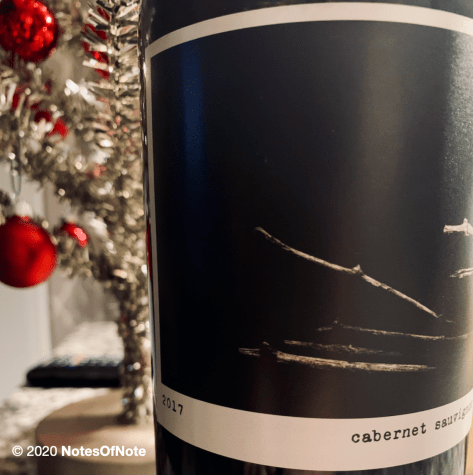
2017 The Cuttings Cabernet Sauvignon, The Prisoner Wine Company, Oakville, California, USA. For notes on previous years of this flight, please click here for the 2016, 2015, and 2014.
What’s different? My understanding of how many thousands of oenophiles do this same thing, embrace this same love of wine, tasting, and sharing. All the Vinvo, Wine.com, and Instagram apps and accounts devoted to wine tasting. Still thousands more tackle the process, the vineyards, and the related foodstuffs that go hand-and-glove with wine.
Also different from that simple start are my tastes. There are dozens of grapes, varietals, and wines covered here, including Cabs and red blends (more than 100 each!), Pinot (72 at present), Zins (30+), and even rareties like Zweigelts. Anyone reading from the origins of the column to its current posts show a clear and growing bias for California Cabernet Sauvignon, to jammy red blends and earthy new world Syrahs. Structured, dark-fruited wines, often with peppery accents and leathery notes. So if you are deciding on me as your wine influencer (ha thanks brother for the chuckle) be sure to base your choices accordingly.
And fans. New followers and tenured supporters, you know who you are!
This bottle has fans among my favorite people. Enjoyed it on birthdays, ECFF draft weekends, and my favorite dates. Including this one. We’re having the 2017 Cuttings with fondue to usher in the new year. There are two different kinds of bread (including a solid pumpernickel), two veggies (hello asparagus and broccoli!), and both filet and kielbasa (the latter a surprisingly great treat!) poised for our Gruyere/Swiss blend. I’ve had nearly as much fun looking up vintage fondue pots and recipes as I have sipping this amazing wine, courtesy of the Prisoner Wine Company.
It’s 80% of Cabernet Sauvignon (80%) and a blend of Petite Sirah, Syrah, and Zinfandel, and it’s as great as the first vintage I tasted years ago. Black berry fruit, black cherry, and earth spices—just exquisite winemaking! It’s so damn good that we’re not going to make it to the champagne tonight; this bottle of 2017 Cuttings is all the celebration we need. So here’s to milestones, and hoping for another 500 posts on Notes. Best to you all too in the year ahead.
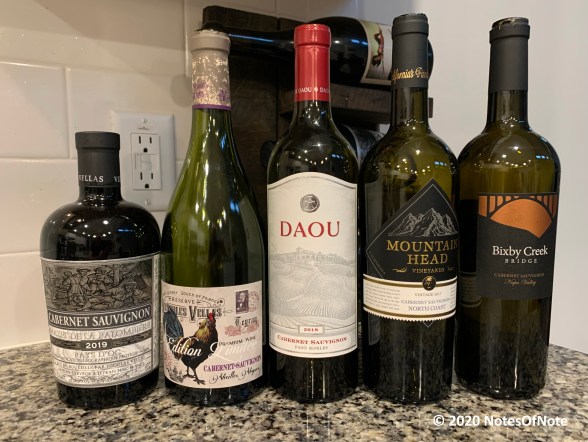
I’m always regretful when the business of daily life prevents me from sharing tasting notes. There are so many bottles and so little time…here’s a snapshot of several of the great wines that closed out this 2020 year. Best to you all in the year ahead! -R
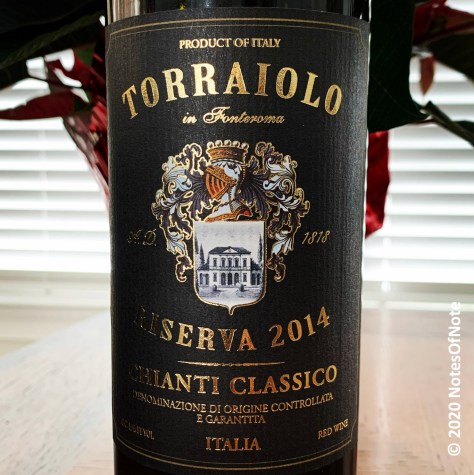
Savvy marketing or a good end cap occasionally turns my head to a wine that wouldn’t normally make my dinner table. The 2014 Chianti Classico Riserva Conti Torraiolo is the latest example, an old world red from the Tuscan region. It was positioned to grab shoppers’ attention and that’s why I’m coming to you now to talk about this easy-drinking red.
Italy’s Chianti region includes multiple districts, including the Chianti Classico subregion, and its best wines come from hilly areas (colli or colline in Italian) where the terroir has a strong hand in shaping the wine. Further research shows that only the Chianti Classico carries its own DOCG distinction, owing to the high quality of wines produced in this region—which lies between Sienna and Florence. (With a sigh I think again of our postponed Italy trip and the opportunity to drive through all the winding hills from Florence out to this countryside…) The soils of Chianti Classico are galestro: a soft, clay-like soil that enables the wines produced here to have high acidity and noticeable tannic structure with a medium body.
Towns in the region include Greve, Radha, Gaiole, and Castellina, and top producers include Badia a Coltibuono, Brolio, Ruffino. That’s the company kept by this 2014 Chianti Classico Riserva from Conti Torraiolo, which we finished last evening.
I found the wine to be pleasantly fragrant, light cherry and leather, when poured in the glass. It’s 100% Sangiovese. The Torraiolo, however, was thin and underwhelming. I can appreciate that Chianti Classico can be a total powerhouse, but that’s not the case here. The 2014 Chianti Classico Riserva by Conti Torraiolo accompanied a mixed salad and (delicious!) crab cake dinner, and that meal called for (if you’re pro-red as is this taster) a lighter bottle that would play well with the tastes of the arugula and dill… the Torraiolo didn’t really do that.
It was okay, but only okay. The price should have offered a clue of this, but perhaps I was all caught up in Christmas shopping and missed the sign. Enjoyed this opportunity to taste and comment on a new wine, but this first experience with the 2014 Chianti Classico Riserva, Conti Torraiolo does not need a repeat. Happy holidays and thanks for reading!
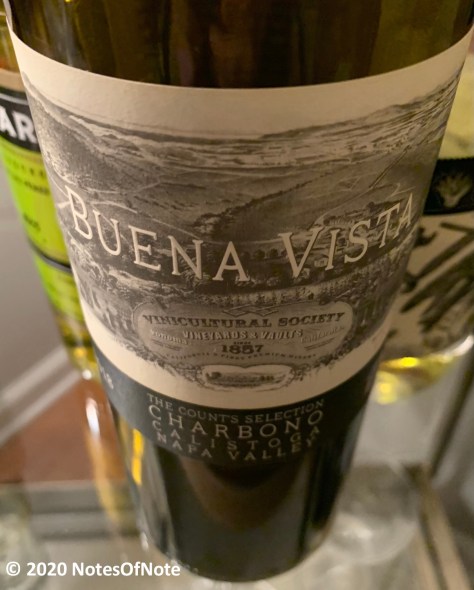
This Christmas special had to follow up a 2017 Machete from Christmas Eve, and it was very equal to the challenge. Whenever possible, I try to keep Buena Vista in mind for life’s occasions, even when that occasion is simply to make a celebration. Voila…
2018 The Count’s Selection Charbono, Buena Vista Winery, Calistoga, Napa Valley, California, USA.
It poured ruby red, little flecks of rich color flecking our glassware as it tumbled from the bottle. From these first notes you could scent dark, heady fruits—I think perhaps black berry or black cherry?—at the heart of the Charbono. With our minds thinking of family and friends far away, I had been asked to pick a good red (but nothing too sweet!) and I was positive this 2018 would answer the call.
The Charbono is a byproduct of a European vine-collecting expedition by the winery’s founder, Count Haraszthy, and I presume there are far fewer of these grapes grown in Napa Valley than the Cabernet Sauvigon that’s the hallmark of this AVA. The warm Calistoga weather brings us this wine, a soft, medium-bodied red. It tastes more black cherry than plum, and yes a few earthy spices that add a little complexity to the wine.
Our 2018 Charbono accompanied pan-seared duck breast called into service by virtue of postponed travel plans. An amazing port/cherry demi-sauce went with the bird, as did Hericots Verts and a fun parsnip purée that was flavorful and delicious. Our arugula salad included shaved fennel, sweet onion, toasted walnuts, and blue cheese crumble. Yes, dinner rolls and a Christmas Tree butter rounded out our plates just as the Buena Vista did our glasses, which we raise in toast to those who couldn’t be with us this day. Sending much love to you all…
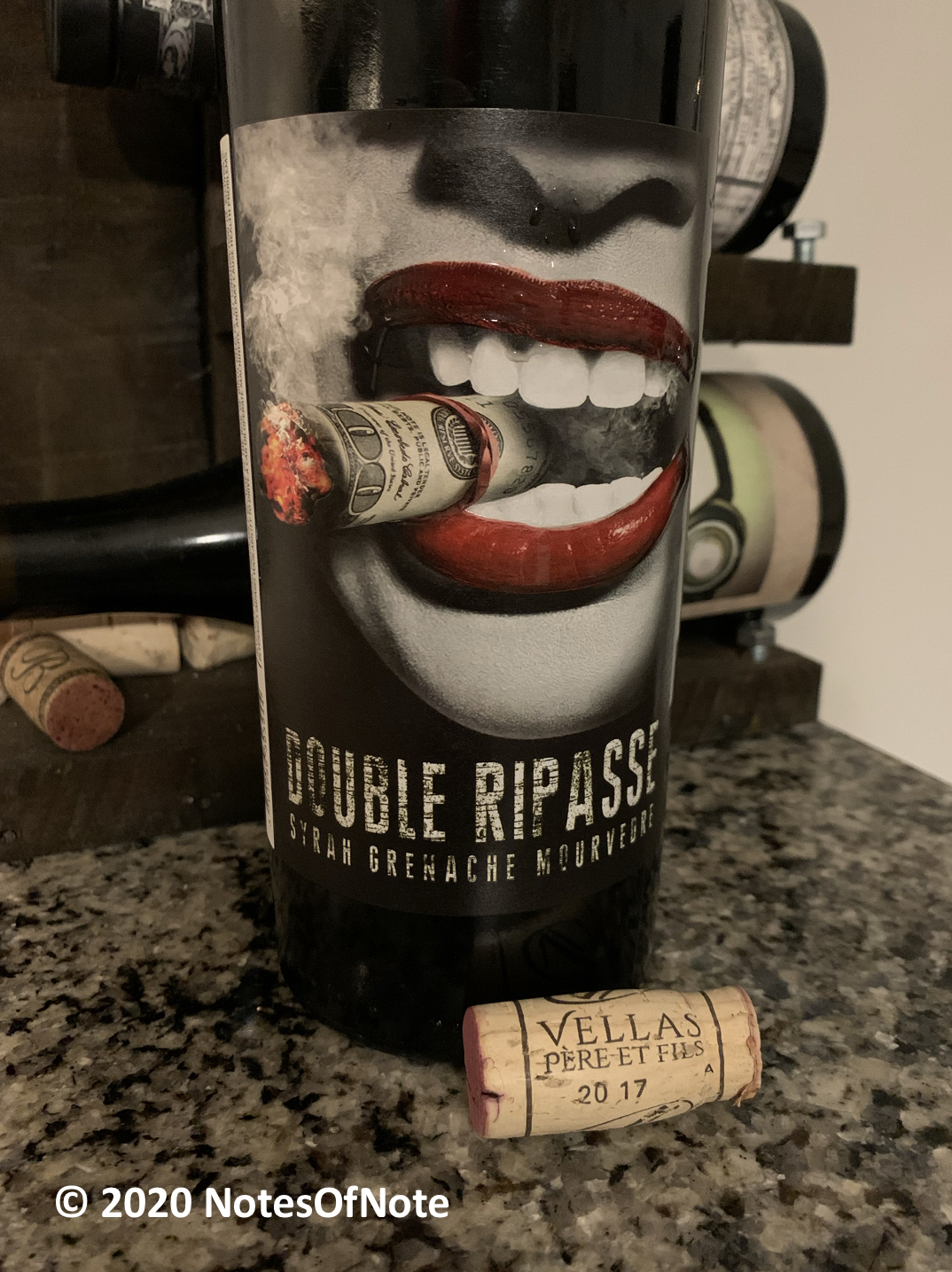
There’s serious swag in the Double Ripasse, another new find from my friends at Vellas. Notes has recently covered their Vienobles Vellas Cabernet Sauvignon and Mazet de la Palombiere (there are more here in the house now) and I relished the chance to tackle this brash red blend.
2017 Double Ripasse, Vellas Pere et Fils Languedoc, Rhône, France.
Obviously originating from the Languedoc appellation, this wine is a big Rhône consisting of Syrah (60%), Grenache (30%), and Mourvèdre (10%) grapes, and they come together to interesting effect. It needs to set up for a few moments when you first uncork, but you’re very much the benefactor once you let it breathe.
“Ripasse” typically means to press or squeeze in wine terms, and a little research says that a vintner has typically made the wine but held onto the skins, then reprocesses to add even more flavor (sounds tannic, right, or Amarone-ish?) to the juice. In this case, it’s also a clever bit of wordplay, and if you know this fella you know that’s worth the price of admission.
Few notes for you:
It’s got a new world vibe even though the 2017 Double Ripasse hails from Rhône.
Deep, dark purple fruit flavors, and carried to you with heavier tannins (which fade a bit with time)
Blackberry or black cherry are most prominent, but there’s a slow, easy earthiness that comes as you get into the Ripasse. Definitely the Syrah back there, lurking in the shadows at first…
The bottle art, and the growing history that I have with Vellas wines, was all I needed to find my way to the 2017 Double Ripasse. Next bottle I’ll show you the rear of the label and you can enjoy that with me. In the meantime, go out and grab yourself one…or the Vienobles…or the Mazet. This is becoming one of my favorite families and I’m confident will be one of yours too.










 NotesOfNote