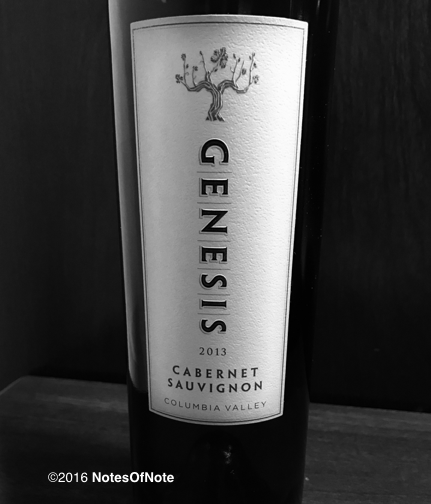
2013 Genesis Cabernet Sauvignon, Hogue Cellars, Columbia Valley, Washington, USA.
2013 Genesis Cabernet Sauvignon, Hogue Cellars, Columbia Valley, Washington, USA.

Enlisted my brother and I for this wine adventure the moment I saw the promotion from Fleming’s Steakhouse–the August showing of the “100 Wines One Summer” series. We did the Uber thing to and from this tasting so that we could relax and enjoy new wines without having to figure out who had to be the designated driver. That being said, here’s how the evening unfolded for this guy:
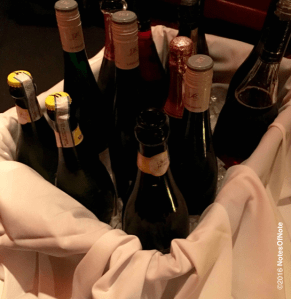
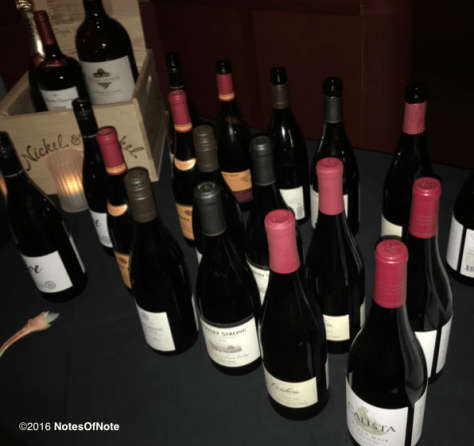 I’m a little regretful that I didn’t take better stock of the vintage in the above. Most were assuredly ’13s and ’14s but I am pretty sure there were a few ’12s in the mix too. Sorry about that, fans.
That said, fifteen samples made for a great night and a great experience to share. If you like any of the above be sure to share some yourself and spread the love. -RMG

I think this is my fourth and final bottle of the 2013 Origami Cabernet Sauvignon, and I’ve rushed or only photo bombed the previous three tastings. Means I’ve got to do right on this Napa Valley Cab this time around. So here goes…
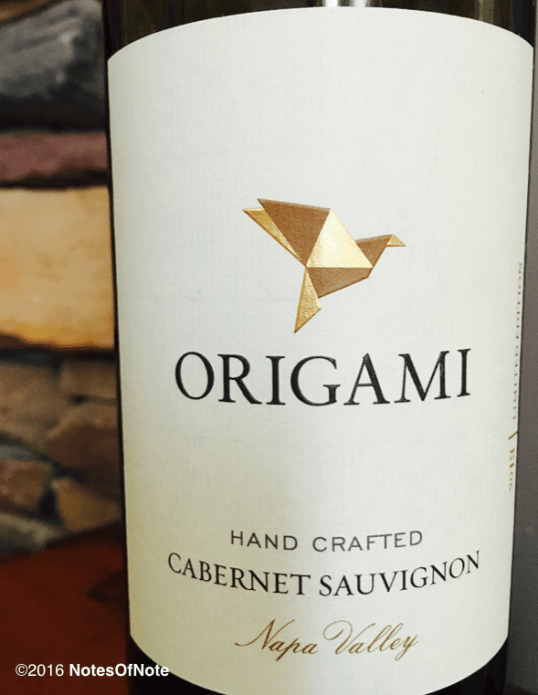
2013 Origami Hand-Crafted, Limited Edition Cabernet Sauvignon, Vintage Wine Estates, Napa Valley, California, USA.
This Hand-Crafted, Limited Edition Cabernet Sauvignon is typically offered only to members of the Clos Pegase wine club, but I snatched up a quartet courtesy of Wines Til Sold Out. From my distributor friends I learn that this bottle is a “micro-production” Cabernet Sauvignon…and while I have no idea what that means yet (perhaps sometime in the future) it is a great drink. Of course you have the notable black raspberry and spices of the region, and even some vanilla too. I let it breathe for probably 45 minutes and think it took on even better shape over the course of the evening. I also sampled in my favorite Cabernet Sauvignon glass, and I think that always bends my mind positively around a good wine.
Last night I had the ’13 Origami with steak, corn on the cob, and some macaroni salad. Today it accompanies a variation on that theme: corn, “crispy crowns”, and some grade-A steak burgers. Good flavors of char, pepper, and such.
It seems you’ll pay north of $50 if you’re buying this bottle at list, but at WTSO it was right at the $20 price point. Nice blend of cherries and spices, and nice combination of taste and affordability. Here’s raising a glass to the winemaker.


This gallery contains 13 photos.
You should always cap off a day of wine tasting with a good wine–the 2013 The Sheriff of Sonoma County is assuredly one of those. It’s a dark, spicy red blend from my favorite winery and culls grapes from AVAs throughout Sonoma County into one fantastic wine. This was a birthday gift and came out to play just this weekend.
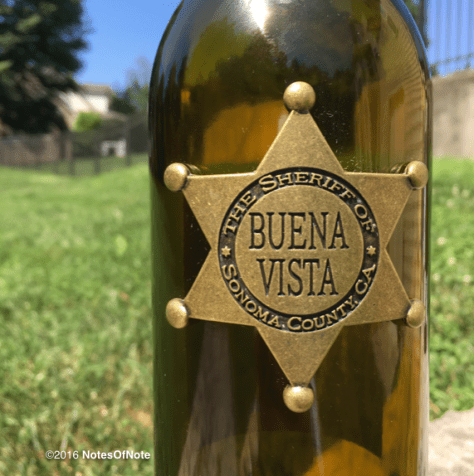
2013 The Sheriff of Sonoma County, Buena Vista, Sonoma County, California, USA.
This vintage is mix of Petite Sirah (30%), Cabernet Sauvignon (29%), Syrah (18%), Grenache (12%), and Malbec (11%)–what I’ve heard termed a “kitchen sink” wine by more experienced tasters because of the mash-up. It’s hefty, and I do not mean just the special bottle. The glass, adorned with this badge thing, is the heaviest bottle I’ve ever tasted and almost instills some gravitas into the tasting experience. What I mean is the actual wine itself. The Sirah/Syrah is very much present in this wine, an undercurrent beneath a rich Cabernet/Merlot layer. It is really magnificent and a worthy successor to the Caymus that I sampled just hours beforehand.
Last night the Sheriff accompanied bacon-wrapped filet mignon steaks, sizzled to perfection on hot NC evening, and sides of potato and salad. Tonight the 2013 complemented mixed salad greens (including freshly chopped basil that is fighting hard against some hearty sun…and getting some good love along its journey), waxed beans, and a couple of pork chops grilled up to taste and also accented with crushed black pepper and basil.
Say the Buena Vista folks, “Inspiring dark red fruit aromatics arrest the senses while rich raspberry, blackberry, and semi-sweet chocolate flavors are deliciously unleashed on the palate.” Yup, good friends all, those flavors, and accurately described.
 The winemaker explains they have sourced the grapes from Rockville, Dry Creek Valley, and Alexander Valley in the 2013 The Sheriff of Sonoma County. I understand that it’s performed very well in competition and with reviewers, and this guy is no exception. It’s my second Sheriff of this year (neglected to post Notes on the first…story for another time…) and I’m truly appreciative of the gift and wish I had saved more to share. Fun beverage to write about, and even better to drink.

One of my favorite wine shops caught my attention with a special promotion–centered around the 2014 Caymus Cabernet Sauvignon. It was a simple concept, one Winestore has run annually since 2010. The 2014 Caymus carries a sizable price tag, but is it justified? Does it outperform $25 competitors on reputation or actual taste?
Winestore lined up eight bottles, identical in size and shape, each masked with aluminum foil and numbered with a simple Sharpie. I was a rookie in that I’d never done a blind taste test, and never tried Caymus. Could I really pick it out against other worthy wines?

Masked bottles at Winestore, endeavoring all comers to hunt for the 2014 Caymus Cabernet Sauvignon.
I was interested to sample this highly regarded Wagner release, and interested to see if my modest tasting experiences over the past years would be of any value in differentiating it from the competition. I paid my fee and started with #8–you know why. Its color seemed slightly lighter than a typical Cabernet, and its easy finish I considered more Pinot- or Zin-like. Not too much in the way of earth tones or spices, and I considered it lower in price almost immediately. I jotted down tasting notes, swirled, and dialed up my next wine.
Number 7 was a shadow of #8. Almost immediately I was thinking neither of these was the Caymus, in part because neither was “blow you away” impressive and in part because there was less differentiation between them. That said, #7 carried a hint of smoke and slightly more raspberry than cherry or blackberry. All of this went onto my tasting sheet, and I started eyeing bottle #6.
Six was big flavor, an explosion of fruit. It was the right color. This wine’s big, jammy feel reminded me right away of the Petite Petit from Michael David that I love so much. Pretty cool, too, since it was Winestore that first opened my eyes to the Petite about two years ago. This is juice, this is big cherry, and the blackberry I thought missing from the previous samples.
The #5 wine was also a big contrast, very different from all three that came before it. The fifth was as dry as #6 was juicy. I’m not thinking Cabernet tannins here, and I’m catching a feel that is more Roija and Mediterranean than Californian. My notes say “Spanish? Grenache?” Was I right about that? We’ll get to that in a moment. Onward, true readers…
…to bottle #4. This one too was an easy disqualification. Very much not California, very much not a Cabernet. So not Caymus, but pretty damn good. I’m thinking Spanish Rioja here again. This sort of made another pairing. So far I’ve got #7 and #8 in proximity to one other, and #4 and #5 as semblances too.
By the time I hit #3 the wheels are turning, but I’m thrown out of the zone when the dispenser sputters and runs sort of empty as I fill my tasting glass. I sip, I swirl, I mull this one over. It’s got the right color, and my brain says “#3 always does right by you“. Wine #3 throws off the earthy notes that clearly signify Cabernet, and perhaps California at that. This smells special and tastes that way too. Is this my goal or just a windmill? I wonder how much of my game has been thrown by the sputtering dispenser.
There are fun people in the store, a few tackling this same Caymus challenge, and a couple others just enjoying time and each other’s company as they sample vino. I cracker up, I rinse my glass, and I make my way to #2.
It’s pretty damn good–is this the 2014 Caymus? It pours with the right color, has the right legs in the glass. I whiff and sip. I’ve never seen someone do the slurpy thing in real life, and I’ll be honest in telling you I swallowed every drop that I tasted today. This one in particular, because it is fine. Real fine! It is big fruit, it is layered, and it has a Cab-like finish.
Only #1 remains, and I hit it. It’s okay but doesn’t measure up to the last two bottles I’ve sampled. There’s a hint of something in this wine that I can’t quite place. It’s not vanilla, and it is not spice, leather, or licorice. Even now I’m not sure what it was, but it was closest to the licorice. Beautiful red color in bottle #1 yet no California Cabernet. (Look, if you read this column with any regularity, you know that an overwhelming percentage of all wine in Notes is Californian, so most times I know it when I taste it. This isn’t it.)
I think I’ve got my pick, and I’m wondering about the psychology of the order as I make my way over the employees managing the testing. Did they assign bottles to position at random? What does recency bias do to your taste buds? Do professional tasters wrestle over questions like this, and would they scoff at anyone who would confuse Caymus for these other wines? What’s the price of these other wines, which I have ordered by quality in my own brain in a way that’s independent from label, reputation, or cost?
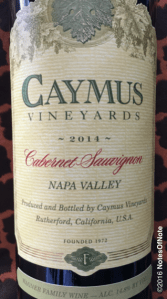
2014 Caymus Cabernet Sauvignon, Napa Valley, California, USA. AKA #6!
Moment of confession–at this last minute, I hedge my bet. I ask the employee if the Petite Petit is among the samples. When he says no, I know right then and there that Caymus is Bottle #6 and I make my prediction. Yes, I get it right, but I still half-kick myself for not having the confidence to say so without wanting to first disqualify the David. The 2014 Caymus Cabernet is reminiscent of both Conundrum (which I have had on several prior occasions) and, obviously, the Petite Petit.
So what did I learn? Looking back, I recognize my palate has begun to tell me things about red wines and, to a growing extent, to differentiate between rich, nuanced reds and others that lack the subtleties that come in higher-regarded (and pricier) releases. I get the sense that I can discern California Cab from other varietals. And I also learn that I can find 90 to 95 percent of Caymus’ amazing taste in the Conundrum and Petite Petit bottles that cost 50 to 60 percent less. Fun occasion–thanks to the Winestore team for the compelling promotion.
#8 was the 2014 Snowvale Cabernet ($12.99)
#7 was the 2011 Americano Petite Sirah ($14.99)
#6 was the 2014 Caymus Napa Cabernet Sauvignon ($64.99)
#5 was the 2014 Waccamaw Proprietary Red ($14.99)
#4 was the 2013 Las Flors de le Peira ($34.99)
#3 was the 2014 Willowlake Napa Cabernet ($59.99)
#2 was the 2013 Penfolds Bin 389 Cabernet-Shiraz ($34.99)
#1 was the 2011 Marge Priorate ($19.99)

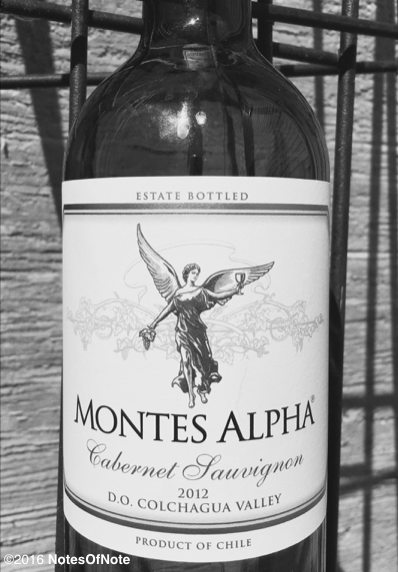
2012 Montes Alpha Cabernet Sauvignon, Colchagua Valley, Chile.

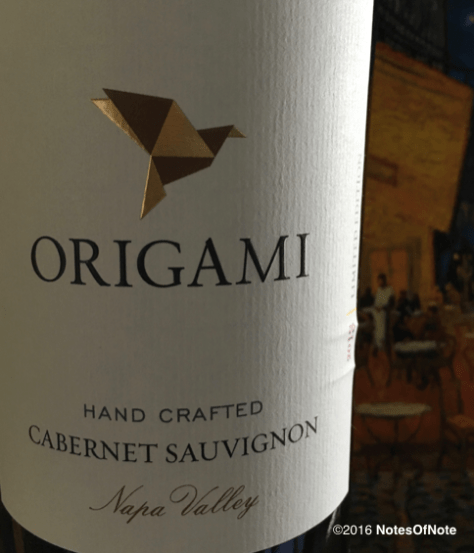
2013 Origami Cabernet Sauvignon Limited Edition, Napa Valley, California, USA.

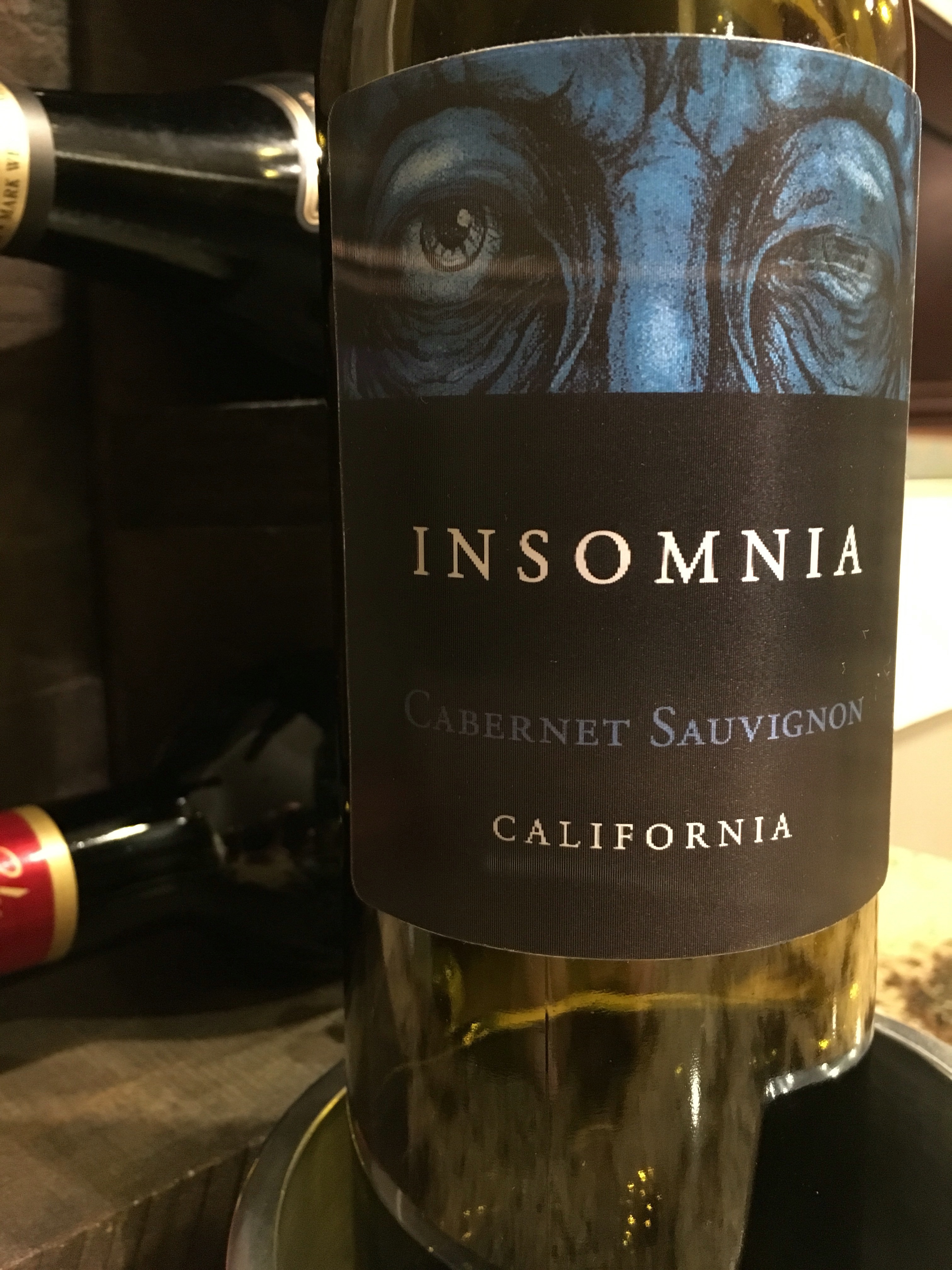
2012 Insomnia Cabernet Sauvignon, Buellton, California, USA.

 NotesOfNote