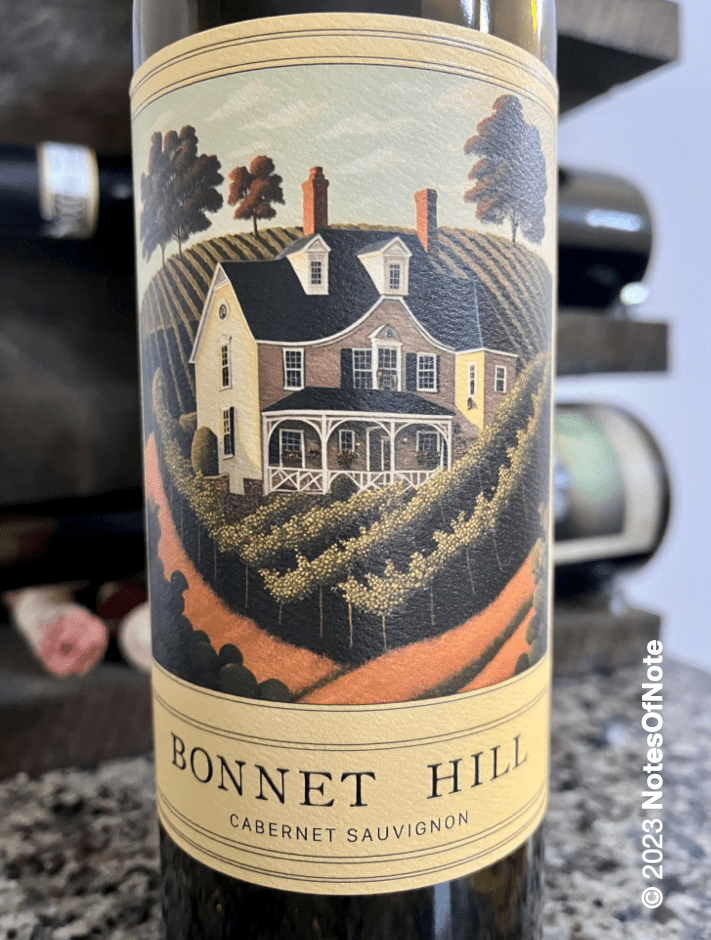
For this guy, there’s nothing like a great bottle of California Cab…except perhaps when it’s a GIFT bottle like this 2021 Cabernet Sauvignon, from Bonnet Hill in Healdsburg. According to my favorite wine store, the 2021 Bonnet Hill has jumped onto the scene in June of this year because of its incredible wine country pedigree.
2021 Cabernet Sauvignon, Bonnet Hill, Healdsburg, California, USA.
You have to know that the fruit for the Bonnet Hill comes from Andy Beckstoffer’s Crimson Ridge Vineyard in Lake County. It’s just to the north of Napa and slowly emerging from its sleeper status for Cabernet. Elected to the Culinary Institute of America’s Vintners Hall of Fame in 2010, Beckstoffer is a legend in Napa for his family-owned Beckstoffer Vineyards, numerous contributions to the quality of Northern California grape growing, and land prescrvation advocacy throughout the Rutherford Viticultural Area. Beckstoffer started investing in the Lake Country region several years ago, purchasing a 1,200-acre vineyard he named “Amber Knolls” in the Red Hills AVA—which is from where this 100% Cabernet Sauvignon originates.
It’s amazing value in the glass, a deep, ruby red that shares whiffs of cherry and plums…innate, inky mouthfeel that rings authentic and terroir as you taste it. Didn’t need to breathe; it was ready to go right out of the glass—no aeration, either. Bottled as Bonnet Hill, this 2021 is complex and had far less tannins than I expected…very easy drinking and a gentle finish.
The first Beckstoffer Crimson Ridge wines all released at over $80 per bottle, as spotlighted here. The 2021 Bonnet Hill is an absolute gem, priced well below that audacious marker, and I’m going to have to head back for more right away. It’s fantastic juice at a fantastic price!
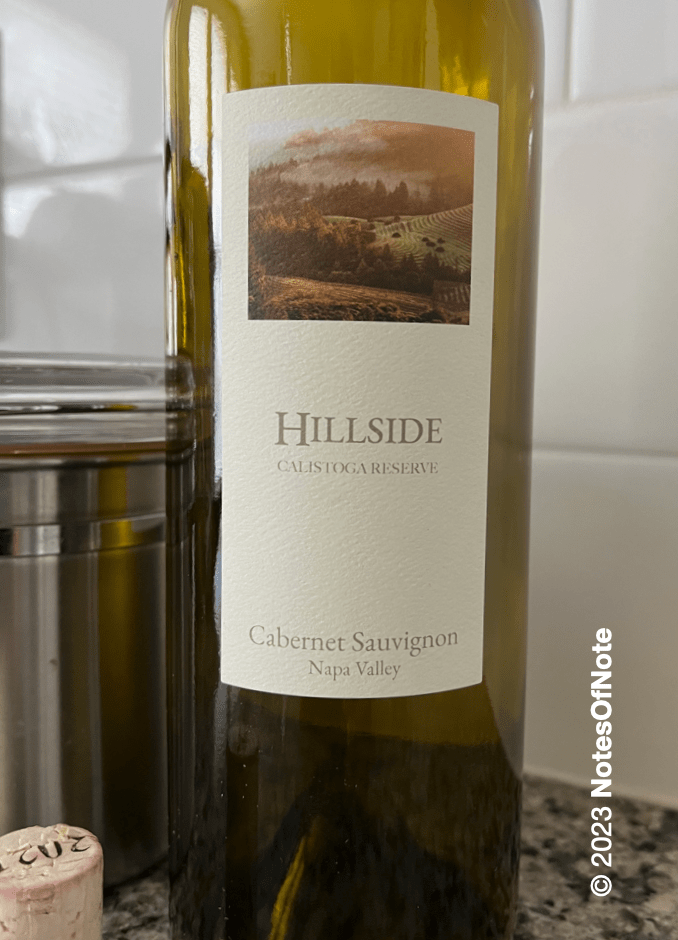
Next time you’re shopping for vino and find yourself lost in a sea of red and white options, here’s a recommendation: try sampling the Hillside 2021 Calistoga Reserve Napa Valley, Cabernet Sauvignon. It’ll take you away from the masses and steal you away for a little quality time.
2021 Calistoga Reserve Napa Valley Cabernet Sauvignon, Hillside, Napa Valley, California, USA.
I know I’ve been away from Notes for awhile, but suffice it to say I’ve been well acquainted with new world reds throughout. This one, a 2021 Reserve and a limited-production Cabernet Sauvignon (100%), is grown in a “prominent” vineyard in Calistoga, Napa Valley. It reportedly grows in a special block where red volcanic soils merge with volcanic ash—my sense of terroir kicks into overdrive at such notions, and the grapes here show these characteristics in a tangible way. The 2021 Calistoga Reserve is not red and not purple in your glass but rather straddles the line between them.
The Hillside 2021 Calistoga Reserve Napa Valley Cabernet Sauvignon is created with attention to detail, produced from grapes that were exposed to draught conditions. Winemaker Nicholas Bleecher indicates that growing pattern “resulted in a more natural load on the vines, requiring less pruning and dropping of fruit”—and also packs the grapes full of flavor.
What about a few notes, you say? The 2021 Calistoga Rserve is plums, blueberry—dark fruits for sure—and has little interwoven hints of earth and spice. Its tannins are very gentle, and this is a full-bodied, pleasurable red. I’ve sample in a variety of ways, accompanying meals and soloing after a long work day. Lot of the latter lately, and not enough of these fine wines. Here’s to the rest of the summer fixing those types of inequities!
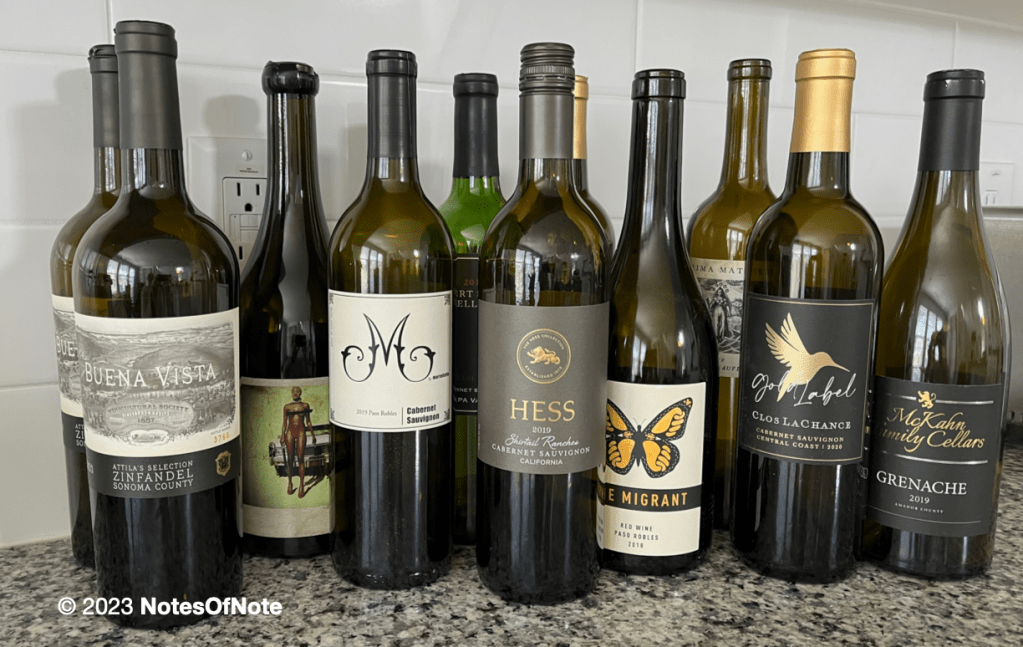
2019 Attila’s Selection Zinfandel, Buena Vista Winery, California, USA; 2019 Machete Red Wine, Orin Swift Wines, California, USA; 2019 Cabernet Sauvignon, M by Martellotto Paso Robles, California, USA; 2019 Cabernet Sauvignon, Robert Story Reserve, Napa Valley, California, USA; 2019 Shirttail Ranches Cabernet Sauvignon, Hess, California, USA; 2018 Bodega de Edgar Migrant Red Blend, Paso Robles, California, USA; 2019 Cabernet Sauvignon, Prima Materia, California, USA. 2020 Gold Label Cabernet Sauvignon, Central Coast, California, USA; 2019 Grenache McKahn Family Cellars, Amador County, California, USA.
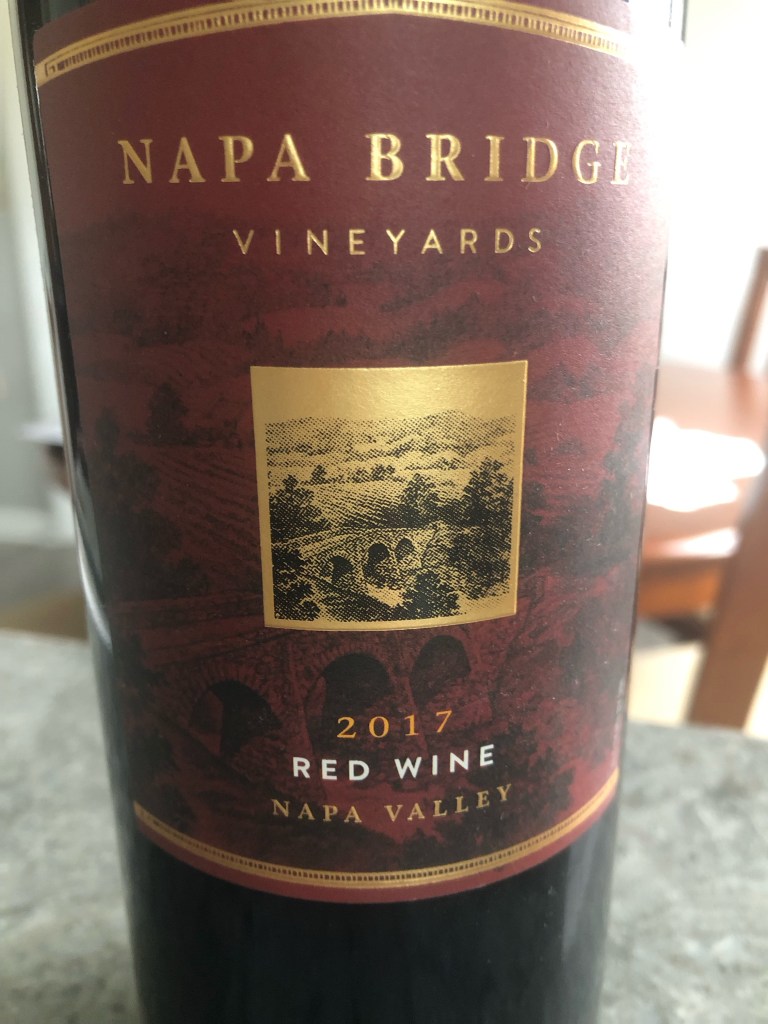
For this guy, usually it’s the wine that makes the memories. The wine that marks time, shines a light on special occasions. And while wine was part of this year’s holiday celebrations, it was more about the unusual circumstances that makes the 2017 Napa Bridge Red Wine stand out from many Napa reds I sampled in ‘22.
We’re in Brockport, having snuck into town among the unfriendly swells of a big rainstorm that accompanied Cara and I all the way up the 95 corridor. We started our trip in the unfriendly “green” radar of RDU and flew with the storm all the way up to Washington and then again to the ROC. Good pilots and friendly attendants balanced out rolling turbulence until we were on the ground and headed for family and Christmas treats. As the temperatures plummeted and precipitation picked up last night, flight cancellations were suddenly national news and made us feel lucky to beat the storm into town.
This morning we woke early and did a walking tour of the neighborhood before the storm really took hold. The pavement was wet and skies ominous, but that was all just prologue to the real weather events of Christmas weekend in western New York. We had just started clearing breakfast dishes when the power flickered for a few hesitant moments and then died. Looking out through the snowflakes to the neighbors’ houses it was obvious the entire ‘hood was impacted.
2017 Red Wine, Napa Bridge Vineyards, Napa Valley, California, USA.
Early afternoon, I bet the power would be restored by 4:05pm (it wasn’t!). We checked the local power company websites (not by WiFi obviously!) and saw the confirmed outages affecting much of the area, and many others. The snowfall didn’t seem to be the chief factor, but rather the howling gusts that bent limb and landscape to their will. At that point, I was pleased Mom’s recent siding and window project was complete, as you could almost see the house bleeding heat to the elements.
Funny moments? Those were the times you checked an appliance for the time, or when you automatically flicked a light switch when entering a room. Those moments when great neighbors called to check in on us, or when we reflected back on the last time (1991ish?) power was lost for an extended period. Less fun was reading that power crews are not able to get up poles and bucket loaders when winds exceeded 35mph, readings I was positive we exceeded several times each minute, or when your brain wondered how long the outrage would really last.
We broke out a puzzle and then cards, throwing hearts and that queen of spades hammer until it was so dark that we were calling out our discards to one another. Then it was Parcheesi by candlelight, wrapped in blankets and warm hats, until finally this guy had to break out the Napa Bridge. Maybe this was to fight through the doldrums of the powerless afternoon, maybe an appeal for warmth, or just because I knew several were ready, willing, and able?
At first taste, I was not overly impressed with this 2017 Red Wine from Napa Bridge Vineyards. Vanilla notes (not always my favorite) were definitely present, and the wine was slightly dry, tannic, and acidic. Red fruit flavors of cherry, and maybe blackberry were notable. Having ordered this online several weeks prior to Christmas I had anticipated a welcome treat that could be shared with the entire family. Check…ish? I would have bet it a blend of Cabernet Sauvignon, Merlot, and maybe Cabernet Franc—at least upon initial sampling? Generally I found it “meh” but, since our entertainment options were limited by Mother Nature’s fury, I sunk into this reality and enjoyed it with the great family time.
Once the wine had an opportunity to breathe, it was much more enjoyable. Since a powerless afternoon zapped us of stove or appliances, we opted for local pizza dinner (thanks Steve!) and carried the Bridge into the evening hours. The house was a balmy 51 degrees when power was finally restored around 730pm. Phew! Special thanks to all the dudes braving the swirling snow and icy winds to get back our comforts of home.
Later on, I discovered that Napa Bridge Vineyards combined nearly equal parts Cabernet Sauvignon, Merlot, and Petit Verdot for this fruit-driven 2017 Red Wine. Other reviewers described its plum and cherry notes as well as “cedar and herbal inflections in this mouth-watering, velvety blend.” I would not use “velvety” in my recap but warmed to this vintage over several subsequent tastings over the weekend.
Be assured, I know the day was nothing like Buffalo residents faced, nor those traveling by Southwest Airlines during Christmas 2022. It was inconvenient at times, to be sure, but somehow melded us all together more closely. It’ll be a Christmas that we’ll be talking about well into the future, and that’ll always be the place I keep too the 2017 Red Wine from Napa Bridge Vineyards. Happy holidays, friends!
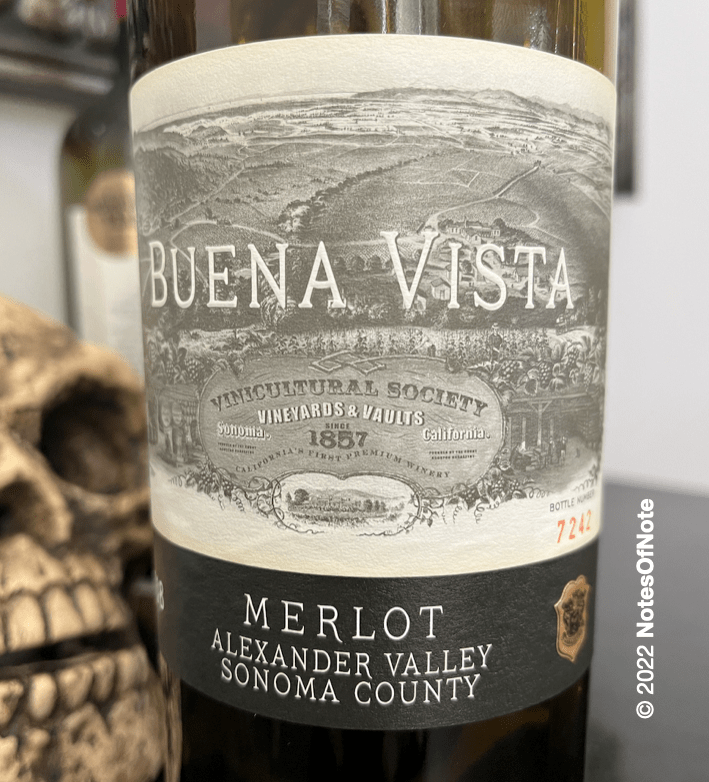
Good stuff in the mix here – firstly the 2018 Alexander Valley Merlot from Buena Vista Winery, and secondly a pan-roasted lemon garlic butter salmon with feta and olives—so delicious!
2018 Alexander Valley Merlot, Buena Vista Winery, Sonoma County, California, USA.
Yes this one’s an individually numbered bottle (mine is 7,242) and this wine deserves special attention. The 2018 Alexander Valley has all the marks of a great merlot. As it hits your glass, there are clear aromas of plum and dark cherry. It’s colored nearly purple in your glass, and concentrated, dark fruit notes are plentiful. The 2018 Alexander Valley Merlot has a really easy, silky finish.
What of the accompanying dinner? Salmon is always a great treat, and this was nice, fresh, and savory—accented with lemon, smoky paprika, and just a hint of crushed red pepper. There’s a kicked up olive dressing that drops a hint of salt and garlic into your ideal bite, too. The foodstuffs turned out about as well as I could have hoped, and kudos to Half-Baked Harvest for the helpful recipe and my very kind “sous chef” for her timely knife skills and unending encouragement.
Overall, this 2018 Alexander Valley Merlot made for a relaxing and satisfying Saturday night—and just in time after long work weeks for us both and exhausting business travel.
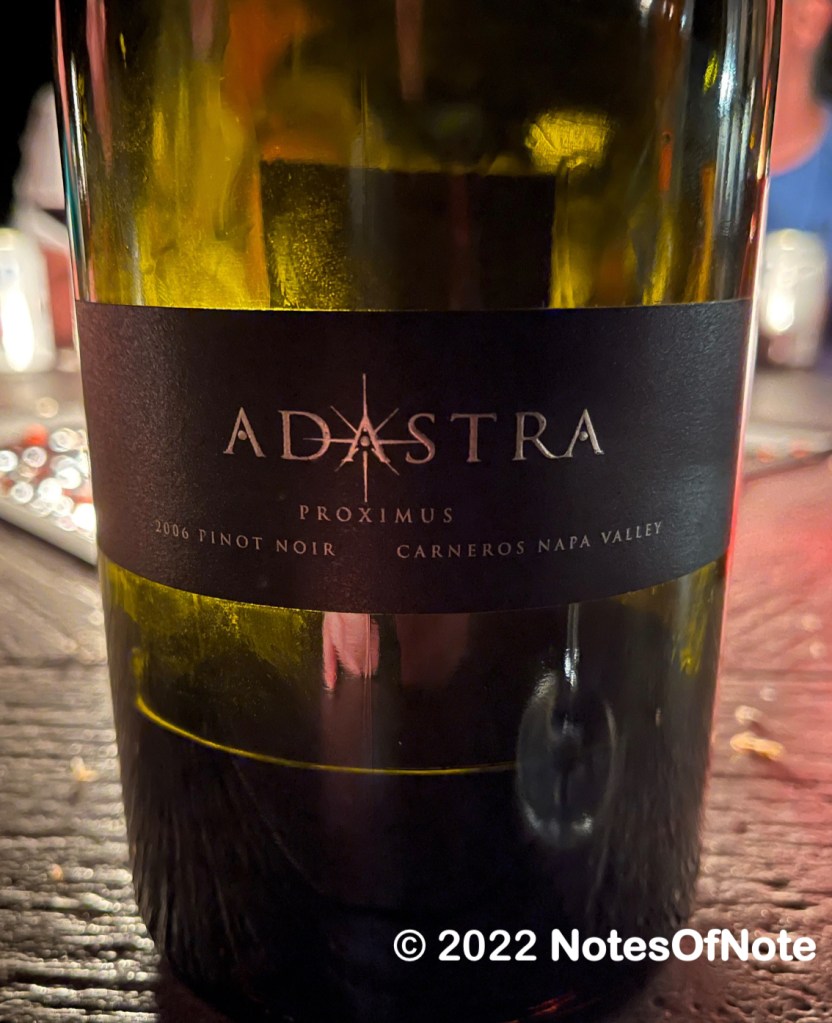
This is the second occasion I’ve been treated to a Proximus Pinot from Adastra, this one a 2006 magnum. Big thanks to the GDog for breaking this one out for Draft Weekend 2022 with the fellas. It’s an annual tradition spanning nearly 10 years, and great wine has often marked these gatherings as any follower of Notes may know.
2006 Proximus Pinot Noir, Adastra Wines, Carneros Napa Valley, California, USA.
Adastra is derived from the Latin phrase per aspera ad astra (through striving to the stars) and the history of this family-owned estate is easily accessible so I’ll spend less time on that here. Most important to you is the great Pinot created by this Carneros winery, and that Adastra prioritizes environmentally conscious farming practices for all four wines (Chardonnay, Merlot, Syrah, and Pinot Noir) they produce.* The 2006 Proximus Pinot Noir is ruby colored and is a weightier Pinot. We busted this out around a table fire and a host of jokes, some older than this bottling and others as fresh as this pour.
Knowing my fandom of all things wine, the guys asked how I tasted the 2006 Proximus Pinot Noir. It almost felt like a challenge, from these lifelong friends who have seen me drink crappy keg beer more memorably than fine wine. Hoping I answered the call, I gauged it dark cherry to taste, with notes of burnt matches or charcoal on the nose. Very fruit-filled and substantive. They pushed further (of course!) and asked if there was “earth” to the wine. Lots of laughs as we swirled the wine in our glasses and debated terroir for a few moments. I mulled this over and stuck to my original tasting notes—not earthy or peat moss but rather charcoal or maybe pepper. And tannins more like a Cab than I’d usually equate to a Pinot.
Adastra has produced two different Pinot Noirs, a Regulus and Proximus; the latter made only in very small quantities as the “best of the best”. In Latin, Proximus means “closer” and the winery uses the term to mean “closer to the stars”. The 2006 Proximus Pinot Noir was developed by Pam Starr, the winemaker for many years at Adastra (and now a consultant, I think), and was quite exceptional. Our only gaffe was setting the bottle too close to the flames but that was far overshadowed by our clear enjoyment of gathering together again after all these years.
I’m so thankful for the brotherhood, for friendships that span miles and decades. I appreciate too great wine like Adastra’s 2006 Proximus Pinot Noir and George for sharing it with us all. Looking forward to the next gathering and next Adastra too!
*Adastra has been a California-certified organic farmer for more than 15 years and eschews burning practices often used to curb vineyard growth, instead processing old vines with chipping machines to process yearly cuttings.
There was a time in Notes history when I scrambled to capture every bottle, every wine tasting adventure, seemingly every random thought about wine. Several hundred bottles later, that pattern has slowly changed with opportunity (and to some extent, taste). These days I always find time for a glass and a thought, but not always for sharing feedback in this modest column.
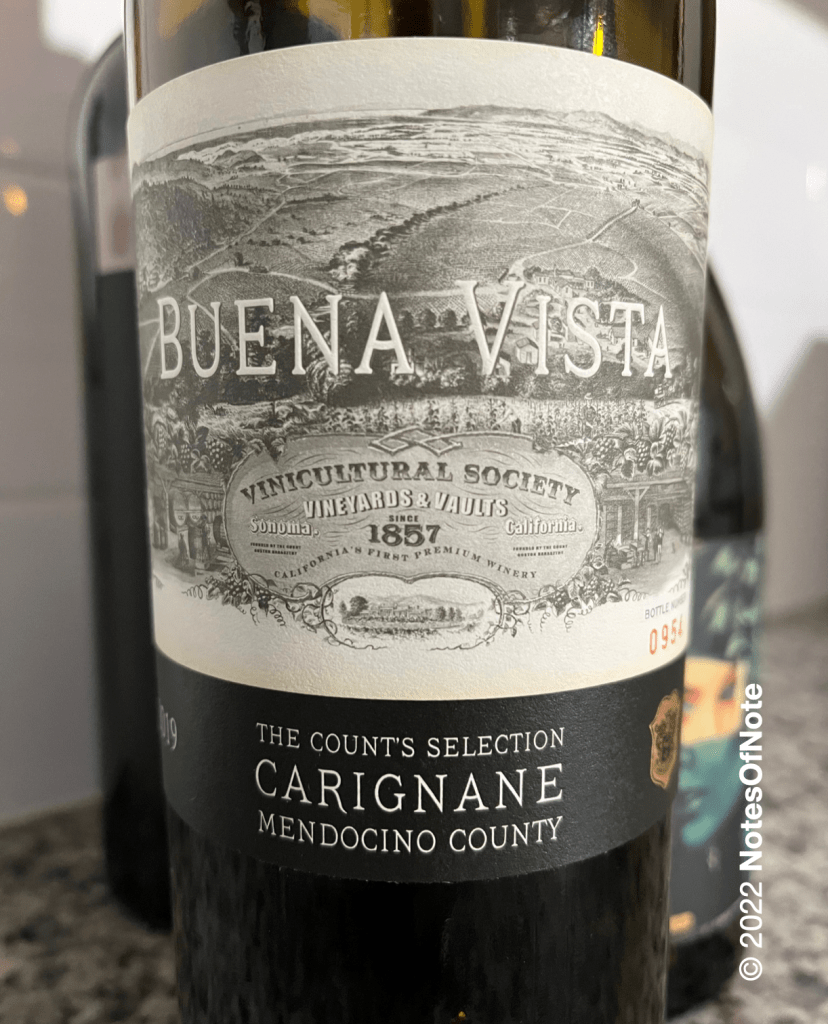
2019 The Count’s Selection Carignane, Buena Vista Winery, Mendocino County, California, USA.
The photos? Yes, those I have for sure. Like many oenophiles I assuredly have all the labels recorded. Like others, I have a few notes and thoughts that are half-discernible in various apps and scraps of paper…and on a few rare occasions I even get ‘em down here where others can read and sample. That’s no excuse – just reality, and perhaps even a forecast of the pending “Ones that got away” Q2 2022 that is on its way soon. Here in the meantime is my take on the 2019 The Count’s Selection Carignane, from Buena Vista Winery in Sonoma, California.
I bumped into Buena Vista’s Carignane several years ago, having cracked a bottle for friends who were in town for a quick visit. The Carignane surprised me at that time (was it my first with this grape? Think so…) and quickly found its way into my recurring order from Buena Vista Winery. This 2019 I drank a tad early…perhaps I should have left it on the rack for one more year? It’s quite good, but the tannins here felt a bit grippy.
There is plenty of blackberry on the nose, with other red fruits in the mix too. The 2019 Carignane has the blackberry taking a lead role, but there are other subtleties involved too. It is dark, dark purple in the glass and very rich on your palate. The wine starts a little dry but the blackberry notes fill that space pretty quickly.
The winemaker notes, “Ripe, juicy flavors of red cherry and blackberry cover the palate with a hint of licorice and a touch of black pepper that lead to a long, savory finish.”
According to the Buena Vista team, these are old vine grapes (an 80-year-old site known for Carignane), sourced from vines that are dry-farmed in the Ukiah region. Buena Vista harvested them in September, fermented, and ultimately aged the wine in French oak (13% new) for 15 months prior to bottling. The outcome of that production is the 2019 vintage of The Count’s Selection Carignane—I enjoyed this very much and know you will too.