2022 “Gun Bun” Cabernet Sauvignon, Gundlach Bundschu Winery

My introduction to Gundlach Bundschu came via the Mountain Cuvée, featured at my favorite wine shop back in 2017. Since then, I’ve had several opportunities to enjoy this historic winery’s work—and now, it’s time to talk about the 2022 “Gun Bun.”
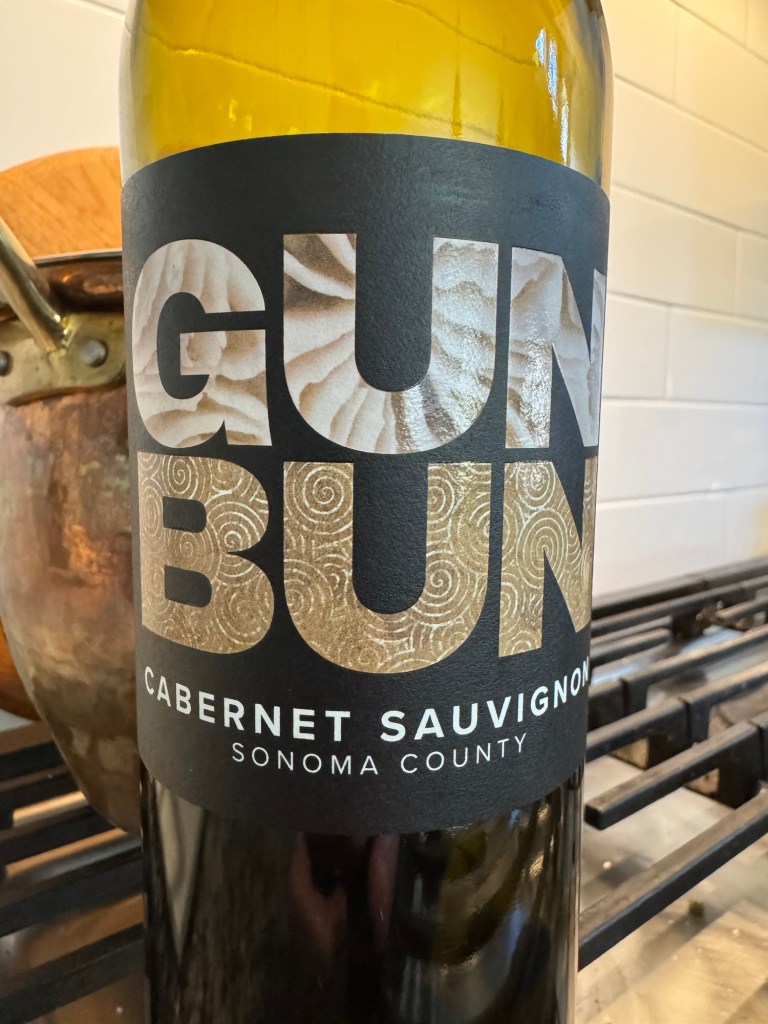
2022 “Gun Bun” Cabernet Sauvignon, Gundlach Bundschu Winery, Sonoma County, California, USA.

Like Buena Vista Winery, which shows up frequently in Notes, Gundlach Bundschu (est. 1858) takes real pride in its old-school roots. (No pun intended, I swear.) Still family-owned, the winery sits in the Mayacamas Mountain range of Sonoma Valley, on a 320-acre estate with seriously promising terroir. It’s bordered by the Carneros district to the south and impressive Napa neighbors to the east.

Lower on the estate, they grow Pinot. But once you get above 150 feet, you find hillside blocks of Cabernet Sauvignon and Merlot planted in rocky, shallow soils made up of volcanic ash and alluvial wash. If you’ve read Notes before, you know diverse terroir like this is exactly my kind of thing.

As for winemaking: the fruit is hand-harvested, optically sorted, and aged for 18 months in French oak barrels (45% new). The winery produces both an estate Cabernet and this “Gun Bun” 2022 Sonoma County Cabernet Sauvignon—a bold, approachable alternative. It comes in under $20, making it an excellent “weekday wine” for the dinner table.

In the glass, it pours a deep cherry red, and that dark cherry note really leads the way. I picked up some blackberry too—dark fruit flavors all around—with smooth, balanced tannins and an easy finish.

Anyone else tried the 2022 Gundlach Bundschu Estate Cab? I’m eyeing it for the near future. In the meantime, I’m more than happy with this “Gun Bun” as a solid, budget-friendly option.

As always, thanks for giving Notes a read—and cheers!

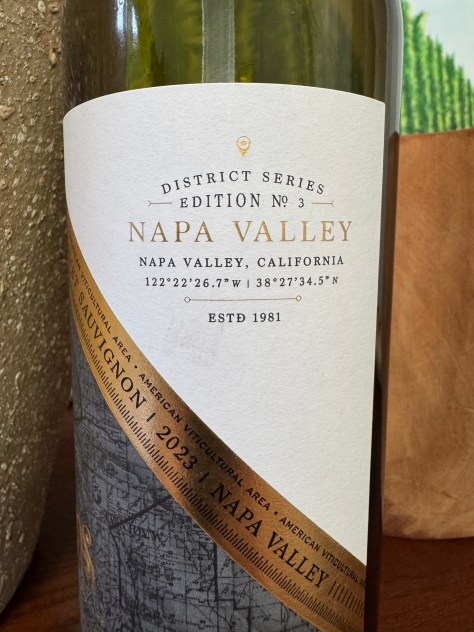
2023 Cabernet Sauvignon (District Series #3 Napa Valley), Precision Wine Co.

This review focuses on the 2023 Cabernet Sauvignon, District Series #3 Napa Valley as produced by the team at Precision Wine Co. Given my love for Napa Cab, the bottle seem to call out and demand attention—which we gave it this evening.

2023 Cabernet Sauvignon (District Series #3 Napa Valley), Precision Wine Co., California, USA.

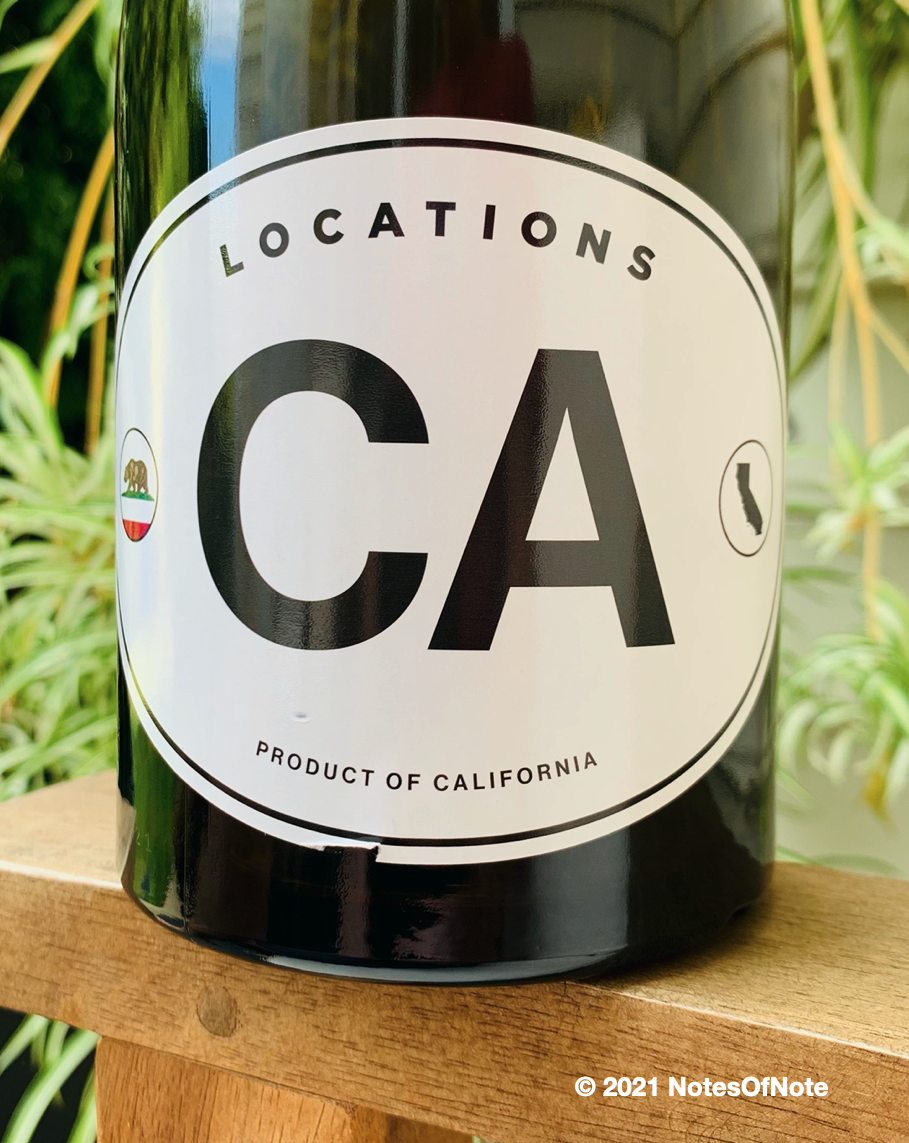
Why so interesting? Well, frequent readers of Notes know California’s first AVA is my favorite, and one I love to sample even more often than chronicled here. Wines that attempt to capture all the region’s best characteristics, such as the CA Locations Wines (most recently last weekend), are also favorites of this reviewer and this notebook. And now the Precision entry into the canon…

The 2023 Cabernet Sauvignon Napa Valley (District Series #3) offers you a rewarding tasting experience. It’s more dark cherry in color, a fragrant pour that suggests dark fruit at its core. The winemaker is definitely seeking the essence of Napa Cab in this offering, which is very well-balanced and flavorful. There are hints of spice box, strawberry…but even more so the dark plum and blackberry fruits. The rich blend of all these grapes and inferences is part of what I like best in a Napa wine—and this one is pretty damn good. It’s your favorites from the region in an affordable bottle. 

What of Precision? According to the website, they’re a Napa Valley producer specializing in sourcing premium fruit from appellations that include Napa, Sonoma, Lake County, Paso Robles, and Lodi—now rebranded as Navigator Wine Collection. Details on the Precision / Navigator corporate restructuring are covered here. The 2023 Cabernet Sauvignon Napa Valley (District Series #3) was my first sampling of their collection but I’m looking forward to more of the same.

Thanks, love, for this tasting experience that’s focused on all my favorites!  

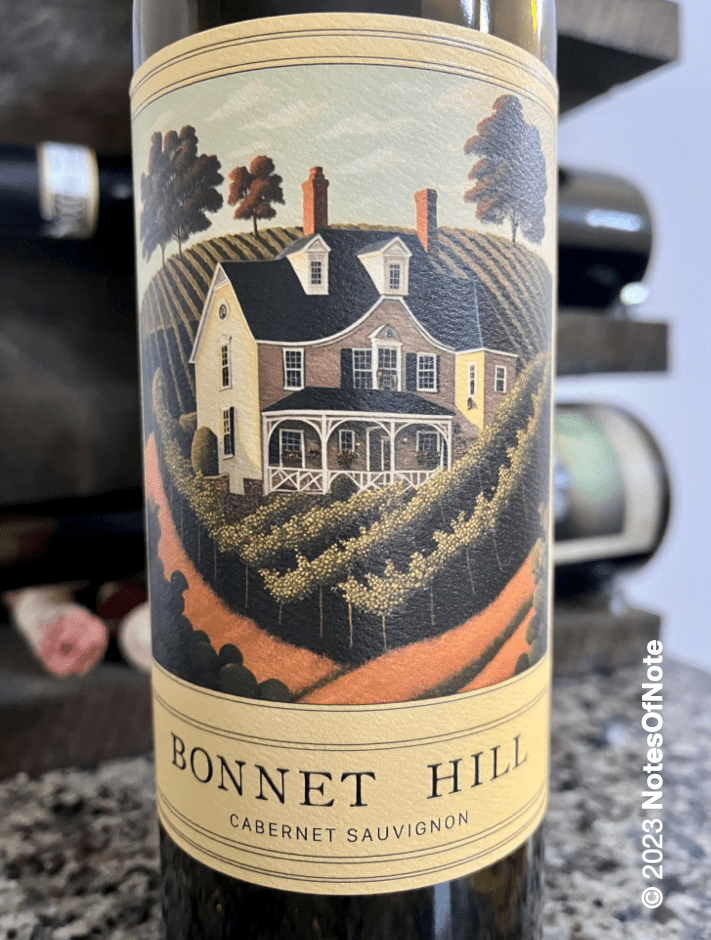
2021 Cabernet Sauvignon, Bonnet Hill

For this guy, there’s nothing like a great bottle of California Cab…except perhaps when it’s a GIFT bottle like this 2021 Cabernet Sauvignon, from Bonnet Hill in Healdsburg. According to my favorite wine store, the 2021 Bonnet Hill has jumped onto the scene in June of this year because of its incredible wine country pedigree.

2021 Cabernet Sauvignon, Bonnet Hill, Healdsburg, California, USA.

You have to know that the fruit for the Bonnet Hill comes from Andy Beckstoffer’s Crimson Ridge Vineyard in Lake County. It’s just to the north of Napa and slowly emerging from its sleeper status for Cabernet. Elected to the Culinary Institute of America’s Vintners Hall of Fame in 2010, Beckstoffer is a legend in Napa for his family-owned Beckstoffer Vineyards, numerous contributions to the quality of Northern California grape growing, and land prescrvation advocacy throughout the Rutherford Viticultural Area. Beckstoffer started investing in the Lake Country region several years ago, purchasing a 1,200-acre vineyard he named “Amber Knolls” in the Red Hills AVA—which is from where this 100% Cabernet Sauvignon originates.

It’s amazing value in the glass, a deep, ruby red that shares whiffs of cherry and plums…innate, inky mouthfeel that rings authentic and terroir as you taste it. Didn’t need to breathe; it was ready to go right out of the glass—no aeration, either. Bottled as Bonnet Hill, this 2021 is complex and had far less tannins than I expected…very easy drinking and a gentle finish. 

The first Beckstoffer Crimson Ridge wines all released at over $80 per bottle, as spotlighted here. The 2021 Bonnet Hill is an absolute gem, priced well below that audacious marker, and I’m going to have to head back for more right away. It’s fantastic juice at a fantastic price! 

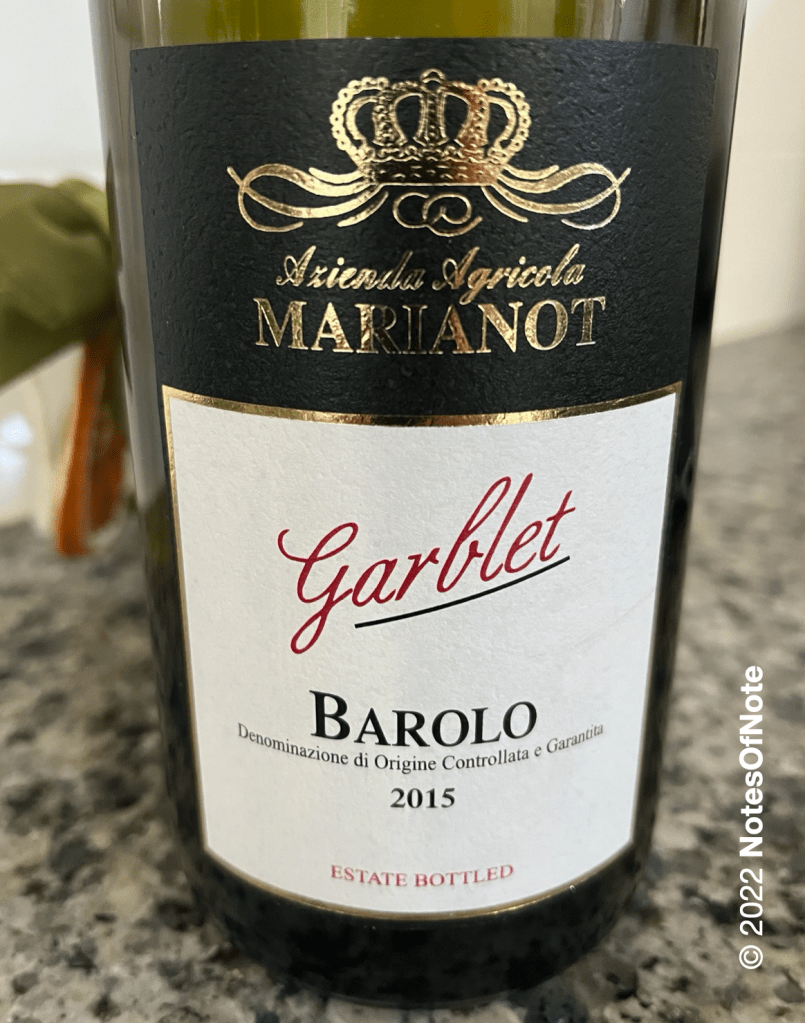
2015 Azienda Agricola Marianot, Garblet, Barolo

About two years ago I snatched up several of these “Garblet” bottles from Azienda Agricola Marianot, and slowly I’ve worked through them without providing a Notes summary—until today. This is a classic Barolo from Italy’s Piedmont region, with Nebbiolo fruit harvested from vineyards (ranging in age from 10 to 40 years) in Castiglione Falletto, Serralunga d’Alba, Monforte d’Alba, Barolo, Novello, La Morra, Ceduno, and Grinzane Cavour.

The 2015 Barolo vintage, I’ve come to learn, is pretty exceptional and I half-question the good deal that delivered the Marianot Garblet to me. I mean to say, if 2015 is indeed a great year for Barolo (and acknowledging Barolo as the “king of wines”) doesn’t it suggest this a fledgling offering if I obtained at less than $20 per bottle? Freely I share that the previous bottles I sampled felt slightly undeveloped, but that could have been me drinking too early or without allowing the wine to breathe as much as I did tonight.

2015 Azienda Agricola Marianot, Garblet, Barolo, Italy.
2015 Azienda Agricola Marianot, Garblet, Barolo, Piedmont, Italy.

This bottle I liked much better, and not just because I was savoring the UNC victory over Duke tonight. The wine is light red in your glass, clearly not as deep-hued as a Cabernet or Syrah, but delivers excellent cherry flavors. Call it garnet red? The 2015 Marianot Garblet has notes of strawberry and earthiness on the nose too, a dry wine overall. It grew on me over time and I’m wistful I had not allowed the previous bottles to set up properly. We had this wine with dinner, a Saturday night special with steak, wedge salads, and asparagus—and though light in color its tannins stood up well to the task.

Of the 2015 Marianot Garblet, James Suckling comments, “A fragrant Barolo that adds a spicy, herbal edge to the impression of dried rose petals and caramelized orange peel. Medium-bodied and grainy. Medium-chewy and medium-long on the finish.

The Marianot team fermented the Nebbiolo in stainless steel tanks and ultimately let the wine mature for 24 months in Slovenian oak barrels. Fining consisted of 4 to 6 months in stainless steel tanks and at least 6 months in the bottle. The result is an intense, harmonious 2015 wine that I really enjoyed. Looking forward to more Barolo in the days and weeks ahead. 

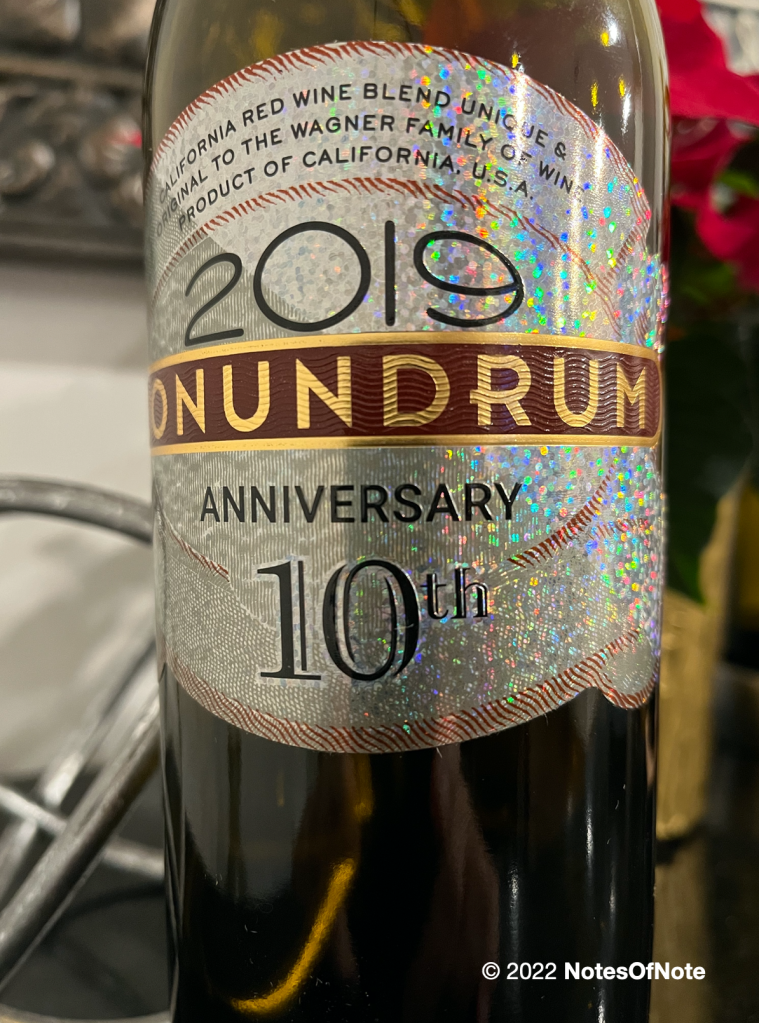
2019 Conundrum 10th Anniversary Red Blend, Wagner Family of Wine

Conundrum is always a great option for your vino fix, a proprietary red blend that Notes has covered many times and in many ways over the years. This site has covered bottles going back nearly a decade, and be sure to cruise notes on the 2012, 2013 (there are several) and even the 2014, or others at your convenience. I am not sure how I missed a vintage in this vertical but looking to make up for that here.

2019 Conundrum 10th Anniversary Red Blend, Wagner Family of Wine, Napa Valley, California, USA.

It’s a flavor bomb, a tooth-stainer of a red that has fans all over the world. As with previous vintages, the 2019 Conundrum is jammy and packs in the dark berry goodness. Sampling Conundrum for the first time or the 100th you’ll surely detect the dark cherry or plum notes, the leggy red tumbling full and inky into your glass. I have occasionally whiffed a little hint of vanilla in the mix, but this particular bottle had more of the fruit than the spice as defining characteristics. It had a few minutes to breathe but was essentially ready to enjoy right away without decanting, filtering, or similar preparation.

Yes the label is eye-catching, but less so than the Wagner name (Notes covers many of those, too) for most oenophiles. On the other hand, I’ve missed recent vintages of Conundrum so the silver did work as a marketing tool.

Polished off this 2019 tonight with a healthy tilapia (white wine, butter, garlic/caper goodness), broccoli, and apple sauce dinner. Trying to make good decisions early and often in 2022, and hoping your new year is off to a similar good start. Thanks for reading and best in the year ahead.

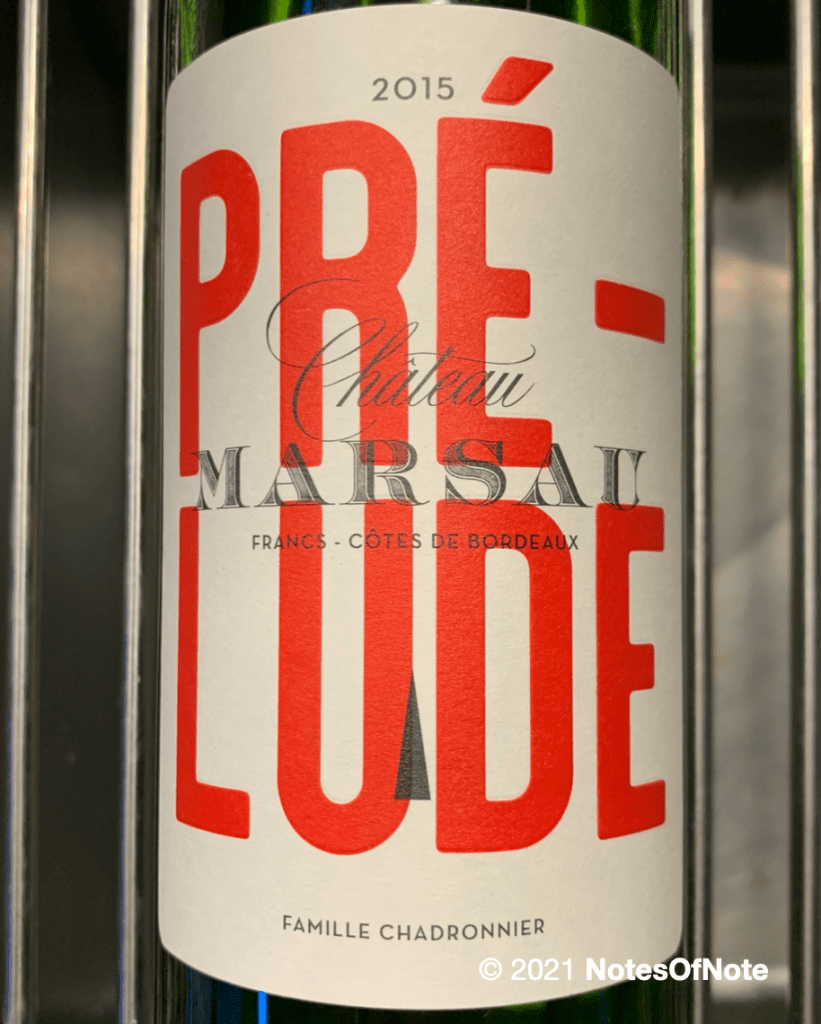
2015 Prelude Francs, Chateau Marsau

Always intriguing when you’re drifting back to older vintages, those that are perhaps less available than selections more readily available on the shelves of your wine store. The 2015 Prelude grabbed my attention—partly because of its catchy label, and partly because it goes back a few years before the recent 2018s I’ve been sampling.

2015 Prelude Francs, Chateau Marsau, Cotes de Bordeaux, France.

Unfortunately, this 2015 fell short of my expectations.  It’s Bordeaux profile should have lined up well with many recent bottles covered (with admiration, I might add) in Notes, but the Prelude was just underwhelming. It was very dry, even more tannic, and did not work either solo or with foodstuffs. The 2015 does have aspects of cherry and smoke—which are positives—but it’s just way harsher on the finish.

I don’t usually compare my thoughts to other reviewers, but did on this occasion to see what I missed. Others raved. One crazy guy called a “poor man’s Petrus” and, though I have yet to sample Petrus among these more than 500 tastings, I imagine it has a richer flavor profile by far than the Prelude. A less severe mouthfeel. 

“Coming from the youngest vines of the estate, it is also made of 100% Merlot”

Says the winemakers at Chateau Marsau

Maybe we chalk it up to an over-exuberance of youth? This reviewer is a Gen-Xer, so yes I understand that not everyone is a winner. Not every bottle gets a ribbon or a medal. The Prelude is okay, but only okay. My table has lots of favorites, and more repeat bottles than I have time to write about here…but this one needs no such repeat performance. Thanks for reading and enjoy your vino!

2018 Chronicle Cabernet Sauvignon, Rebel Wine

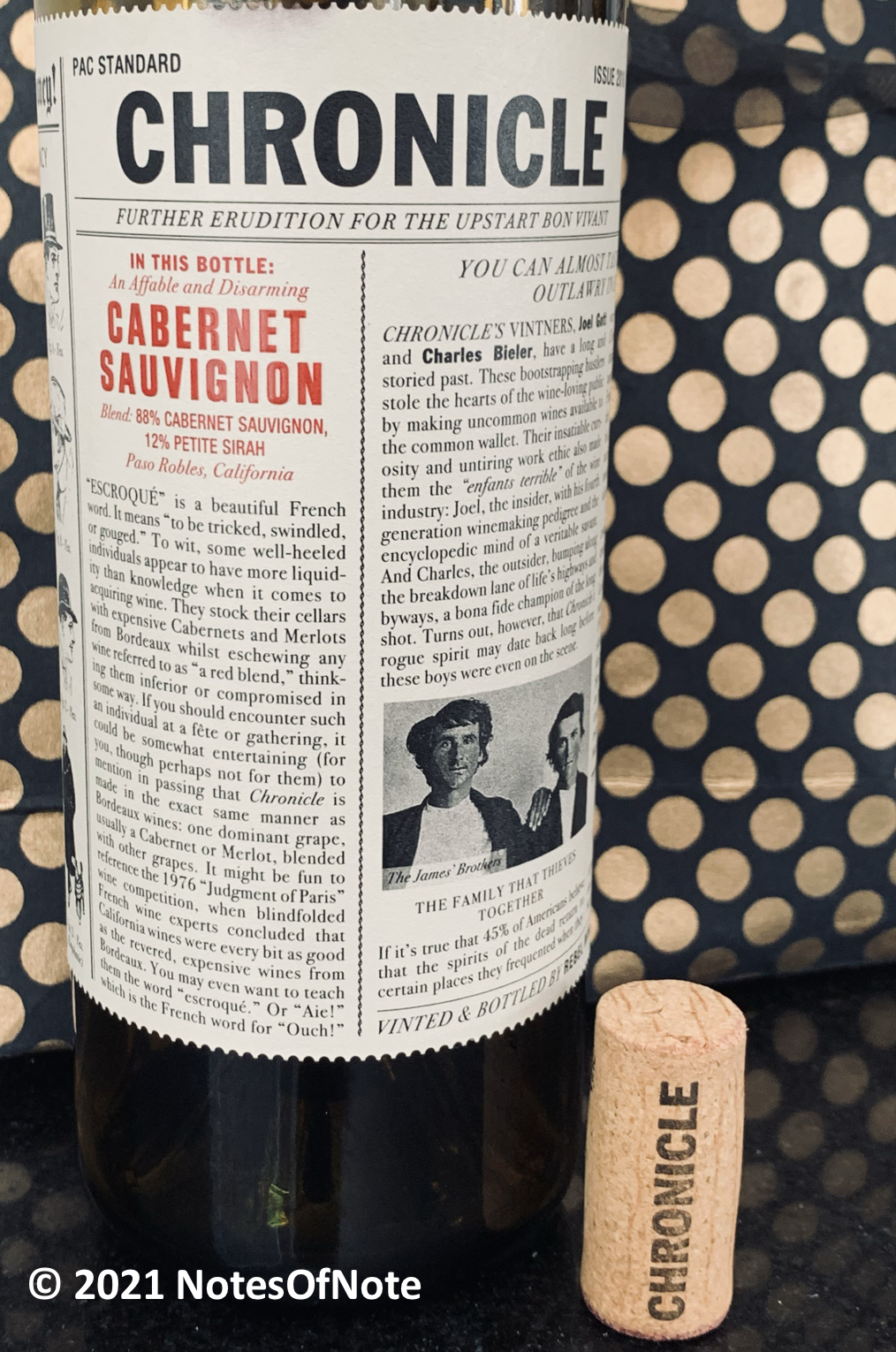
The attributes of this wine line right up to the preferences of this oenophile. The 2018 Chronicle is produced on California’s North Coast, it’s a blend of Cabernet Sauvignon (88%) and Petite Sirah (12%), and has an intriguing label that just may include an individually numbered bottle. Let’s dig deeper…

Generally, the North Coast includes Mendocino, Lake, Sonoma, Napa, Solano, and Marin counties. St. Helena is just west of the Mayacamas Mountains, located in the Napa Valley AVA, and is home to many of California’s best-known wines. The Valley itself extends about 30 miles from Napa at the south to Calistoga in the north, right along Route 29 and including St. Helena.

Fog in the region impacts its vineyards in meaningful and very specific ways. The complexities of cool and warm climates, sunlight, ocean airs, and earthquakes makes for diverse appellations and even subappellations conducive to different types of grapes (e.g., Pinot Noir and Cabernet Sauvignon), even among neighboring growers and towns. It’s a place that beckons to my soul even while I’m jotting a few notes for you all here.

2018 Chronicle Cabernet Sauvignon, Rebel Wine, St. Helena, California, USA.

The 2018 Chronicle is a medium- to full-bodied dry red blend, with dark fruit notes that I’m calling more blackberry or black cherry than plum. Sometimes my palate can pick that up; other times it’s less clear so use your own judgment here. I do smell a bit of leather in my glass, and the peppery finish is suggestive of both the Cab and Sirah grapes for the wine.

We had the Chronicle with Julia Child’s Beef Bourguignon, served with mashed potatoes and green beans. It was flat-out great, with tenderly seared beef and vegetables so tender…wow! Those who follow Notes regularly know the meal is often less relevant to this taster than is the accompanying wine, but this is not one of those occasions. The dish was so rich and savory that I really thought less of the Chronicle and more of the food flavors. Understand me: the wine is tasty but the stew even better.

The label (but less easy to support with online research) suggests that Joel Gott and Charles Bieler are the vintners here for the 2018 Chronicle. Thanks gents for your contribution to a great evening. I enjoyed your wine and will buy more in the future, but what I’m really excited to repeat is the Beef Bourguignon.

2017 Cabernet Sauvignon, Justin

I’m fairly certain that I had a Justin many years ago, a Reserve or similar high-end split courtesy of my brother George, and that memory sparked my purchase of this 2017 for the holiday weekend. Those memories may be suspect, however, as I do a search and see no results returned. Regardless, the vineyard’s 2017 Cabernet Sauvignon is here for your consumption.

2017 Cabernet Sauvignon, Justin, Paso Robles, California, USA.

Winemaker Scott Shirley does nice work with the 2017, which commemorates 30 years of producing this Cabernet Sauvignon. It’s traditionally crafted, right from the hand-picking of the grapes from their limestone-soiled, Paso Robles vineyards to the hand-sorting and small oak barrel aging (for more than a year) of the fruit. This craftsmanship implies care, quality, and consistent berry quality as well.

In your glass it pours deeply, fragrant purple, with really nice cherry aromas. We taste it and think of earth notes and leather too, so there’s more than some of that in the 2017 vintage. The wine is full and has an excellent mouthfeel and a fresh finish. Loved the taste for the price point, and it went very well with our dinner of grilled (okay, and partly roasted too) chicken thighs, corn, and a delicious rice-black bean recipe that’s years in the making.

Here’s your notes from the winemaker: “Dry, nearly full bodied, with ripe black cherry, cassis and red fruit, baking spice and oak accents on entry with sustained ripe primary and mostly black fruit, dried autumn leaf, cocoa and a pleasant suggestion of camphor on the mid-palate into the finish.”

I purchased this bottle from a grocery I (unfortunately!) don’t often frequent so I’m not sure how often the Justin will make an appearance in Notes. I’ll look forward to the occasions that it does. Try one for yourself!