CA5, Locations Wine

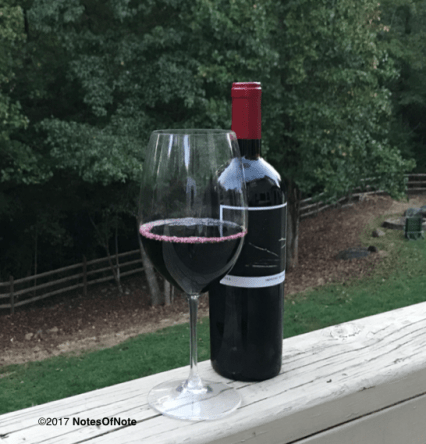
Winemaker Dave Phinney is in his #5 vintage of this California Locations wine, and this is the first of two CA5 bottles I picked up prior to the holidays.  California always offers a wide variety of grapes, tastes, and AVAs for consumers, and it feels incredibly ambitious to bring together all of these tastes into one single bottling that captures the essence of the region. Phinney has a long track record of doing this successfully, however, particularly in his Prisoner series and other related blends, so if anyone deserves the benefit of the doubt it’s him.
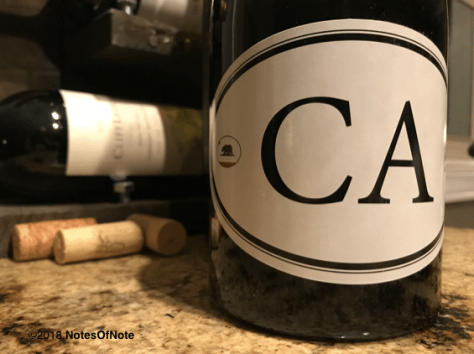
CA5, Locations Wine, Napa, California, USA.

CA5, Locations Wine, Napa, California, USA.

I’m still mulling over some of the subtleties at play in the CA5. Let me mention this wine includes fruit from Napa, Sonoma, Mendocino, and the Sierra foothills. I’m not sure how Locations networked with growers for the international Locations fruit, but it stands to reason he knew who to call in California for good grapes. In the CA5, there is an obvious cherry and blackberry foundation. The wine is smooth and fruit-forward–not as direct as a Michael David wine–and easy on the palate. The Locations people tell you it’s a blend of Petite Sirah, Barbera, Tempranillo, Syrah, and Grenache, and the grapes are nicely combined. A big red feel that is very much in keeping with the Bordeaux-style California Cabernet Sauvignons.
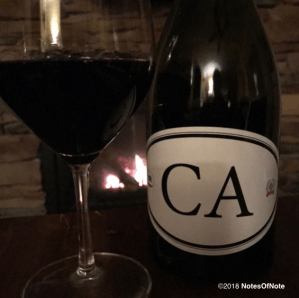
CA5, Locations Wine, Napa, California, USA.

CA5, Locations Wine, Napa, California, USA.

This to me is less Syrah, less peppery, but stacks of red and black berries. A hint of smoky spice too. The CA5 is barrel aged for 10 months in French oak, and it has a 15.5% alcohol content that sneaks up on you. I had it tonight with a pork and broccoli dinner, and the wine was a nice contrast to the roasted flavors in my meal. I’m considering pulling the cork on the second CA5 next weekend while this taste is fresh on my palate–if you have tasted this vintage perhaps you would share your thoughts here too for Notes readers?

Thanks for your consideration and your readership, and best in 2018.

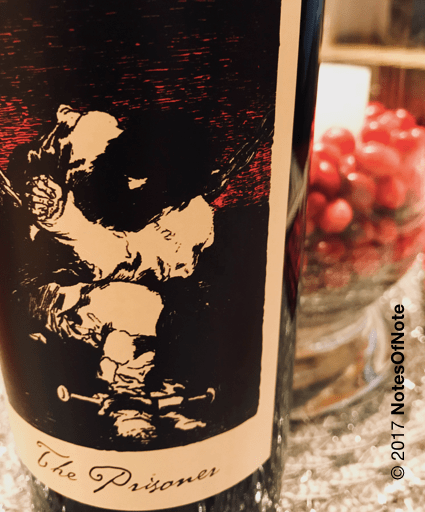
2015 The Prisoner, The Prisoner Wine Company

It’s The Prisoner who started off our evening, a 2015 purchased along with a few other Phinney red blends that will be opened during this Christmas season.  The Prisoner made a Thanksgiving appearance, too, enjoyed by long-time friends and family gathered for delicious bird and festivities.

Screen Shot 2017-12-24 at 11.44.49 AM

2015 The Prisoner, The Prisoner Wine Company, Napa County, California, USA.

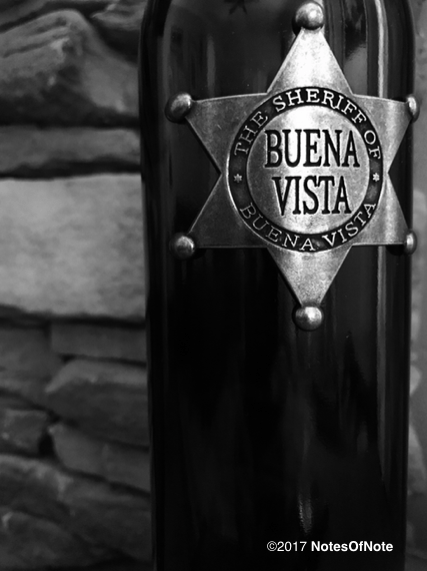
While I opted for a comparable Buena Vista red on that occasion, this evening I went with the Prisoner Wine Company offering.  The delicious, rich taste of the red overcame a rookie mistake: the bottle had sat in cold, December temperatures for several hours and I didn’t allow it to warm up enough when first serving.  Once the wine had warmed in the glass, its true character–big cherry and chocolate notes–were much more apparent on the nose and to the taste.Screen Shot 2017-12-25 at 11.14.47 AM

It accompanied hors de oeuvres (essentially cheese and crackers), and our three glasses quickly dented and polished off this 2015.  The taste?  The Prisoner you may already know, but if not suffice it to say it is vintage red blend, a mix of Bing cherry, chocolate, black raspberry, and warm spices.  Not earthy notes but more baking-type accents.  Its finish is very smooth and leaves that cherry as a sign-off.  Always a great treat!

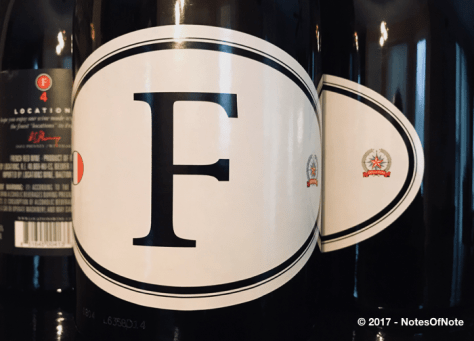
F4, Locations Wine

It was the Dave Phinney name that put this “F” Location squarely on the map for me. Notes has covered his wines on several occasions this year, or those he helped launch, and knowing my favorite Winestore had a holiday special on Locations got me up and moving early this weekend.

Orin Swift Locations F4, Napa, California, USA.

Orin Swift Locations F4, Napa, California, USA.

This is my first Location, based on the recommendation of the store clerk, and I have the Orin Swift “I”, “CA”, and “E” as options in 2018 too. I pulled the cork this evening and poured amply, with no decanting on this tasting. Grapes for the fourth release of “F” come from growers in Rhone, Roussilon, and Bordeux, and if you haven’t heard of Locations previously, it’s a twist on the kitchen sink conceit. Phinney is less concerned about the specific varietals and more about capturing the essence of wine from a given region, blending with all kinds of freedom.

The “F” I had with steaks, slathered with a chili spice / butter sauce, roasted Yukon potatoes, and steamed broccoli.  (Fun food fact—broccoli was first introduced to the US in the 1920s.)  And the wine was really fun.  It is kind and fruity, with some red raspberry and a little tang of cherry mixed in. The “F” has subtle earthy notes, but they’re so gentle that they don’t really come through in the tasting.  This fourth release of “F” is less tannic than a Cab or a Syrah, and has more body to it than does a Pinot Noir.  It is a very easy drinking wine overall that will go with just about any occasion.

A blend of Grenache, Syrah, and assorted Bordeaux varietals make up the fourth Orin Swift“F” Location, which is barrel aged for 10 months prior to release. The dinner was good; the Phinney wine was better.

The Ones That Got Away – Summer 2017

2014 The Cuttings Cabernet Sauvignon, the Prisoner Wine Company

Back in July I had occasion to taste test several amazing Orin Swift wines at my favorite wine store. The 2014 vintage of The Cuttings was instantly a new favorite, and I’ve since taken home two of these bad boys and enjoyed each immensely.

2014 Cuttings, Prisoner Wine Company, Oakville, California, USA.

2014 The Cuttings Cabernet Sauvignon, Prisoner Wine Company, Oakville, California, USA.

Let me tell you, The Cuttings deserves a more experienced palate than mine. It is layered, it is juicy, it is nuanced in ways I appreciate very much and have not the vocabulary to do full justice. This Cabernet is clearly a red blend of some exquisite kind, a black berry backbone with some spices carefully interwoven in my glass. The Cuttings smells heavenly, a clear contrast to lesser wines I have had over the past week. I am positive Dave Phinney (the winemaker) would object to the comparison but this wine of his reminds me a lot of a Michael Davis creation or one of Jeff Runquist’s “kitchen sink” wines–both profiled here in Notes in 2017 and in years past.

The wine is right, the glass is right, and even the day is right on this one. Hell, even the bottle feels substantive when you hoist it. The 2014 Cuttings was a reward from time well spent and poured all too quickly into my excited Riedel stemware.

The Prisoner Wine Company describes more effectively the goodness you’re in for when you uncork The Cuttings for yourself. There’s a reward in that glass and one I’m looking forward to again in the near future myself. Get one yourself and enjoy!

2014 Petite Petit, Michael David Winery

The Petite Petit is a fruit bomb, as Notes readers have seen previously, and this reviewer asserts that it stacks up favorably to some of California’s best-recognized red blends–Caymus being one such example. This is a 2014 Petite Petit, and was used to counterpunch an earthy meal that will be detailed below.

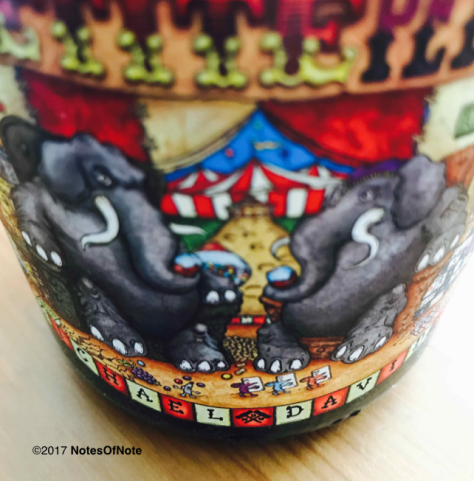
2014 Petite Petit, Michael David Winery, Lodi, California, USA.

2014 Petite Petit, Michael David Winery, Lodi, California, USA.

The Petite Petit is 85% Petite Sirah / 15% Petit Verdot–and red, juicy goodness. Michael David Winery produces this blend as well as the Freakshow and 7 Deadly Zins that you can see on your grocery wine shelves or your favorite wine store. All three are welcome in this house any time and should be for you too. Whenever you see the big red 7 or circus stuff on a label just grab it, put it in your cart, and thank me later.

Why pull the Petite tonight? Simple – this delic dish called for a “lush and fruity” red and I can think of few better options for that prescription. The 2014 is no longer available if you’re ordering direct from the winery, but I’m sure the 15 mashes together red berries and peppery accents just like this vintage. This bottle accompanied a big bowl of French green lentils, sautéed spinach, and diced tomatoes and cucumbers. Throw in a chopped shallot, a few garlic cloves, red wine vinegar, and some Dijon mustard and you have a dish that is both filling and refreshing.

So is the wine. It’s aged 13 months in French oak and hails from the Lodi appellation, a dark red gem that tumbles fragrant and fruity in your glass. Always a treat and hope you find time to enjoy one today.

2015 Zinfandel, Leese-Fitch

Opened this Leese-Fitch zinfandel earlier in the week but finished it off this evening to complement a Blue Apron meal that consisted of sautéed beef and roasted eggplant. I had selected the 2015 Zinfandel (and a Cab too) from Winestore not from the reputation of the winemaker, which was new to me, but rather the grape and the price point. It’s got great value at $10 and I would highly recommend if price is a driving force in your wine selection.

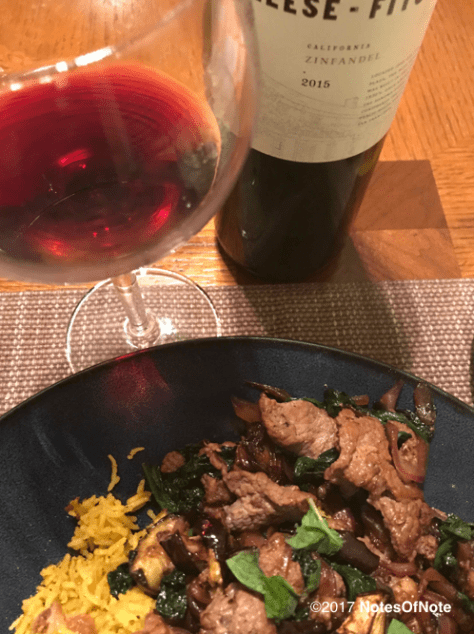
2015 Zinfandel, Leese-Fitch, California, USA.

2015 Zinfandel, Leese-Fitch, California, USA.

Sneaky by the Leese-Fitch team is the 18% Petite Sirah that they added to the wine, and even as I write here I’m not sure if I’ll classify this bottle as a zin or a red blend. Suffice it to say you’ll drink with a smile regardless, so let us not split hairs. It pours dark purple and has notes of blackberry and spices (thanks to the PS) in your glass, and it has that plus tastes of cherry and dark berries on the palate. This is one of those times you should drink not with some preconceived notion of taste, i.e., governed by price, but rather just enjoy for what it is–fun, easy-drinking zinfandel.

Mine accompanied a Middle East-influenced beef dish, served with roasted eggplant and spinach on a bed of rice that was kicked up thanks to an “Afghan-style” spice blend*. A creamy cucumber salad on the side was cool and refreshing, offsetting the spices of the main dish. I nearly blew the timing of the meal as I worked to free the eggplant from the sheet pan but if you look at the image here you’ll see I did recover in time (and yes ate ‘both’ portions). The 2015 zinfandel from Leese-Fitch was great with this meal, its earthy qualities calming to the spices too. Since I had opened it earlier in the week, the combo was more happy accident than intention but still effective. Thanks for reading and have a great day.


* Peppery nigella seed, cassia, and bittersweet saffron.


2012 Cardinale Cabernet Sauvignon

This Napa Valley red jumps immediately to my Top 5 all time, an amazing thank you gift from a long-time author friend. The 2012 Cardinale is flat-out spectacular and the best wine Notes has covered all year. Many thanks, Steve, and definitely raising a glass to our continued friendship.

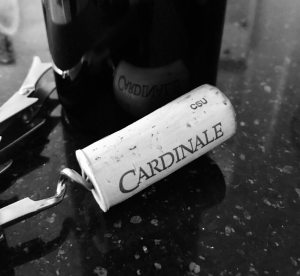
2012 Cabernet Sauvignon, Cardinale, Napa Valley, California, USA.

2012 Cabernet Sauvignon, Cardinale, Napa Valley, California, USA.

The 2012 Cardinale Cabernet Sauvignon is a blend of 84% Cabernet Sauvignon and 16% Merlot grapes, and truthfully is a whole lot more than that. It is a superfluous wine for which I entirely lack the vocabulary even after several hundreds of tastings covered here over the past decade. Upon initial tasting I could hit on dark cherry, on blackberry–even plum is a possibility–and some definite wisps of vanilla and peat (not sure that’s the right term for what I’m trying to describe in the latter) that I’m sure is driven by the terroir here.

A little online research shows that seven different AVAs (Howell Mountain, Diamond Mountain, Spring Mountain, Mt. Veeder, Stags’ Leap, Yountville, and St. Helena) were sourced by winemaker Chris Carpenter in developing this black cherry beauty. There are so many little subtleties in play that each time your brain seems to seize on one particular nuance it suddenly registers another flavor. Makes the 2012 very difficult to describe but spectacular to drink.

Just so I don’t leave you entirely bereft of actionable information, here’s a review from The Wine Advocate: “With enormous complexity and richness as well as full-bodied power and voluptuousness, it is a wine of exceptional purity, intensity, and well-integrated acidity, alcohol, tannin, and wood. This seamless, majestic Napa Cabernet Sauvignon-dominated 2012 should drink well for two decades.

Now, that’s a ton of technical jargon and very high praise to include on a website that’s declared purpose is to be the opposite of pretentious. Certainly not my intent, but the 2012 Cardinale Cabernet was really stunning and even thinking back I’m so amazed and privileged to try this. Many thanks Dr. G and looking forward to our next occasion!