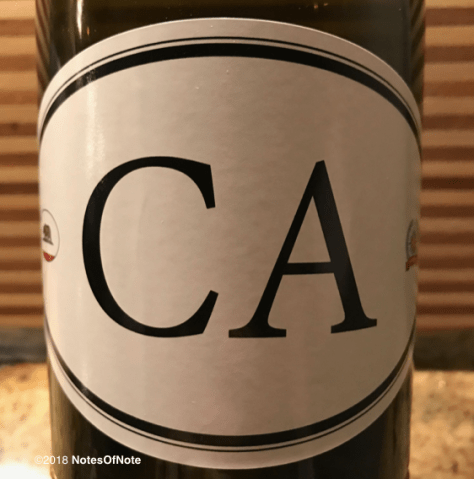
CA5, Locations Wine, Napa, California, USA. Click here for the Notes review of the CA5.
CA5, Locations Wine, Napa, California, USA. Click here for the Notes review of the CA5.

Call me a Wagner disciple, because this 2016 essentially makes a flight of Meiomi that started in 2011, 2012, and continued through 2014. First thought–how did I miss the 2015?
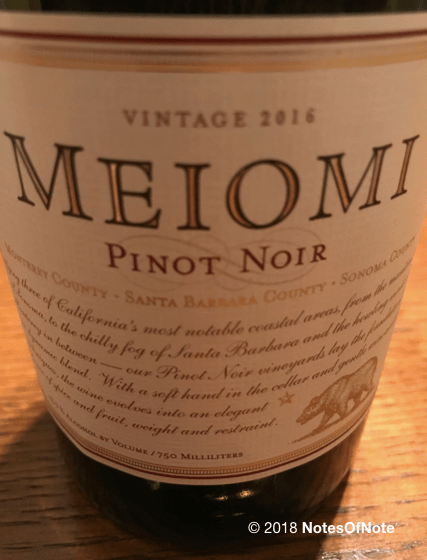
2016 Meiomi Pinot Noir, Rutherford, California, USA.
I’m not sure I did, quite frankly. It has to be somewhere among the “Ones That Got Away” quarterly updates on Notes, so feel free to continue exploring these tastings as your time permits. Meiomi has been much discussed for its mass market appeal, and if you haven’t made up your mind about these grapes after the Notes coverage or among the consumer media, nothing I’m going to write here is going to change your mind. Just know this is always an enjoyable wine and you’ll enjoy.
My best tip? Be sure to buy it at the right price.

Winemaker Dave Phinney is in his #5 vintage of this California Locations wine, and this is the first of two CA5 bottles I picked up prior to the holidays. California always offers a wide variety of grapes, tastes, and AVAs for consumers, and it feels incredibly ambitious to bring together all of these tastes into one single bottling that captures the essence of the region. Phinney has a long track record of doing this successfully, however, particularly in his Prisoner series and other related blends, so if anyone deserves the benefit of the doubt it’s him.
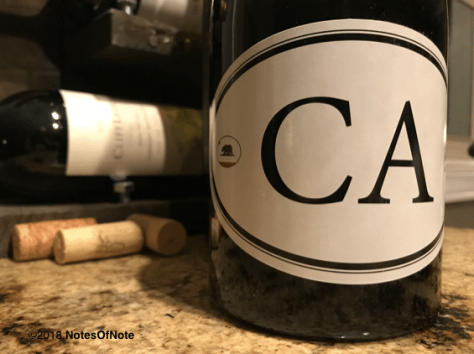
CA5, Locations Wine, Napa, California, USA.
I’m still mulling over some of the subtleties at play in the CA5. Let me mention this wine includes fruit from Napa, Sonoma, Mendocino, and the Sierra foothills. I’m not sure how Locations networked with growers for the international Locations fruit, but it stands to reason he knew who to call in California for good grapes. In the CA5, there is an obvious cherry and blackberry foundation. The wine is smooth and fruit-forward–not as direct as a Michael David wine–and easy on the palate. The Locations people tell you it’s a blend of Petite Sirah, Barbera, Tempranillo, Syrah, and Grenache, and the grapes are nicely combined. A big red feel that is very much in keeping with the Bordeaux-style California Cabernet Sauvignons.
CA5, Locations Wine, Napa, California, USA.
This to me is less Syrah, less peppery, but stacks of red and black berries. A hint of smoky spice too. The CA5 is barrel aged for 10 months in French oak, and it has a 15.5% alcohol content that sneaks up on you. I had it tonight with a pork and broccoli dinner, and the wine was a nice contrast to the roasted flavors in my meal. I’m considering pulling the cork on the second CA5 next weekend while this taste is fresh on my palate–if you have tasted this vintage perhaps you would share your thoughts here too for Notes readers?
Thanks for your consideration and your readership, and best in 2018.

It was the Dave Phinney name that put this “F” Location squarely on the map for me. Notes has covered his wines on several occasions this year, or those he helped launch, and knowing my favorite Winestore had a holiday special on Locations got me up and moving early this weekend.
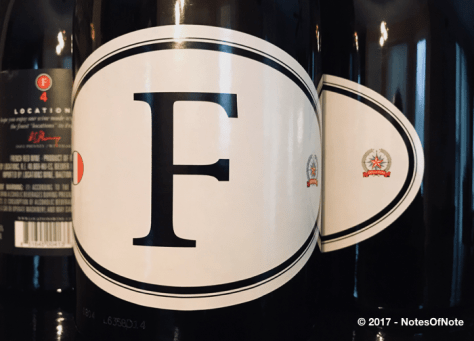
Orin Swift Locations F4, Napa, California, USA.
This is my first Location, based on the recommendation of the store clerk, and I have the Orin Swift “I”, “CA”, and “E” as options in 2018 too. I pulled the cork this evening and poured amply, with no decanting on this tasting. Grapes for the fourth release of “F” come from growers in Rhone, Roussilon, and Bordeux, and if you haven’t heard of Locations previously, it’s a twist on the kitchen sink conceit. Phinney is less concerned about the specific varietals and more about capturing the essence of wine from a given region, blending with all kinds of freedom.
The “F” I had with steaks, slathered with a chili spice / butter sauce, roasted Yukon potatoes, and steamed broccoli. (Fun food fact—broccoli was first introduced to the US in the 1920s.) And the wine was really fun. It is kind and fruity, with some red raspberry and a little tang of cherry mixed in. The “F” has subtle earthy notes, but they’re so gentle that they don’t really come through in the tasting. This fourth release of “F” is less tannic than a Cab or a Syrah, and has more body to it than does a Pinot Noir. It is a very easy drinking wine overall that will go with just about any occasion.
A blend of Grenache, Syrah, and assorted Bordeaux varietals make up the fourth Orin Swift“F” Location, which is barrel aged for 10 months prior to release. The dinner was good; the Phinney wine was better.

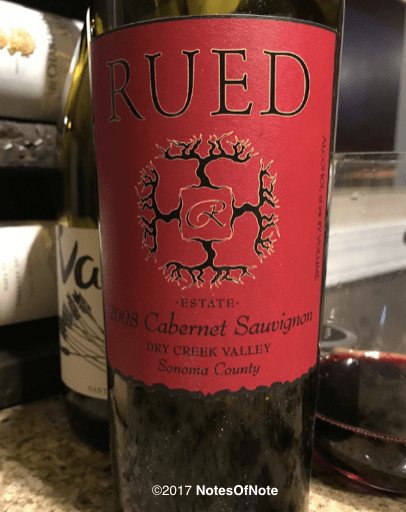
2008 Cabernet Sauvignon, Rued Estates, Dry Creek Valley, Sonoma County, California, USA.
I still don’t know if this is pronounced “red” or “rude” but it is striking in label design and obviously in its taste. Regardless, the winery is located in Dry Creek Valley, a fertile 2-mile stretch of land that receives cool morning fog and abundant afternoon sun. Notes has profiled a Dry Creek wine or two in its day, including a Cabernet Sauvignon, and you can see the overall semblance of this red gem to those wines if you care to explore those tastings further.

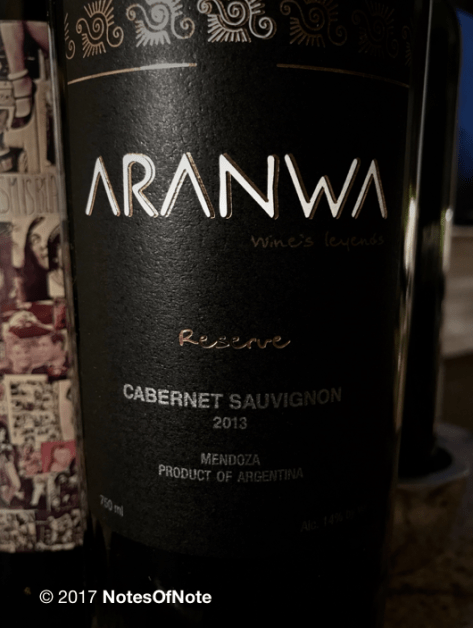
2013 Aranwa Reserve Cabernet Sauvignon, Mendoza, Argentina.

The 2014 Mountain Cuvee from GunBun is a delicious red wine bargain. It’s a Bordeaux-style Cab-Merlot blend grown and bottled in Sonoma County, and I hope the winery survived this last week of California wildfires without major incident. They make this easy-drinking, smooth red, and you will enjoy this wine like you might a fruit-forward red that is less Syrah blend and more Merlot in its profile.

2014 Mountain Cuvee Red Wine, Gundlach Bundschu, Sonoma County, California, USA.
Grapes for this drink are, some quick research shows, sourced from the Maycamas Mountain range and originate mostly from two growers in close proximity to the vineyard. The 2014 is a blend of 56% Merlot, 41% Cabernet Sauvignon, 2% Malbec, and 1% Petit Verdot, and it is aged for 14 months in French oak. Yes, I had it with fish both last night and again tonight, and that’s more of an indictment (if you must) of me than the wine itself. I was in a red mood and just couldn’t fire up a chardonnay or grigio to go with tilapia etc.
I recently bumped into the 2014 GunBun Mountain Cuvee at a blind taste testing at my favorite wine store, and it ranked pretty high on my list as I tried to determine which of their masked bottles was the 2014 Silver Oak Cabernet Sauvignon. I am not 100% sure, but I think my brother and I got a sample of the GunBun when we hit a tasting event at Fleming’s last summer? The bottle looks very familiar, and I know that would have been the only other time I’d been exposed to it or the name. Ah, yes, checking that link now (you should too) and it was their Mountain Cuvee. Liked it then (despite a different blend) and liked this ’14 for sure. You will appreciate as well–and I’m glad I have another bottle of these cellared too.

The Petite Petit is a fruit bomb, as Notes readers have seen previously, and this reviewer asserts that it stacks up favorably to some of California’s best-recognized red blends–Caymus being one such example. This is a 2014 Petite Petit, and was used to counterpunch an earthy meal that will be detailed below.
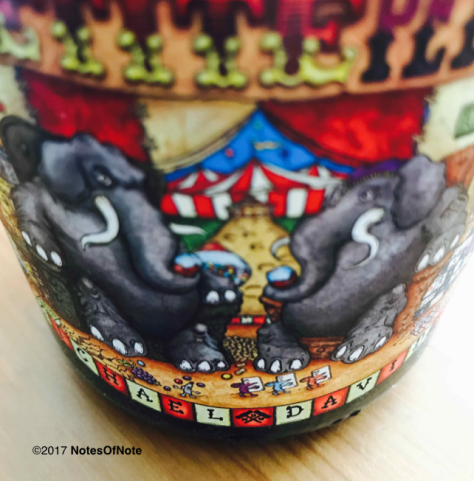
2014 Petite Petit, Michael David Winery, Lodi, California, USA.
The Petite Petit is 85% Petite Sirah / 15% Petit Verdot–and red, juicy goodness. Michael David Winery produces this blend as well as the Freakshow and 7 Deadly Zins that you can see on your grocery wine shelves or your favorite wine store. All three are welcome in this house any time and should be for you too. Whenever you see the big red 7 or circus stuff on a label just grab it, put it in your cart, and thank me later.
Why pull the Petite tonight? Simple – this delic dish called for a “lush and fruity” red and I can think of few better options for that prescription. The 2014 is no longer available if you’re ordering direct from the winery, but I’m sure the 15 mashes together red berries and peppery accents just like this vintage. This bottle accompanied a big bowl of French green lentils, sautéed spinach, and diced tomatoes and cucumbers. Throw in a chopped shallot, a few garlic cloves, red wine vinegar, and some Dijon mustard and you have a dish that is both filling and refreshing.
So is the wine. It’s aged 13 months in French oak and hails from the Lodi appellation, a dark red gem that tumbles fragrant and fruity in your glass. Always a treat and hope you find time to enjoy one today.

This full-bodied road bottle hails from Australia’s Barossa Valley. The 2014 Cabernet Sauvignon from Barossa Valley has some tannin bite to it, but some enjoyable fruit flavors too. As it’s a bottle keeping me company on a travel week in NJ, this post is more “snapshot in time” than it is a true review; hoping you’ll look past it on this occasion and continue exploring some of the truer gems that Notes can offer.
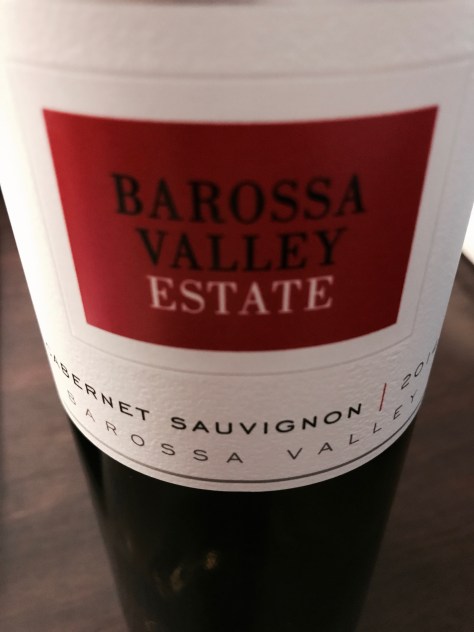
2014 Cabernet Sauvignon, Barossa Valley Estate, Barossa Valley, Australia.

Lake Monomonac is the backdrop for this red blend, one of my favorites from Michael David winery and often featured in Notes. It’s a big, jammy red with just a touch of spice that’s a little more tobacco than it is pepper.
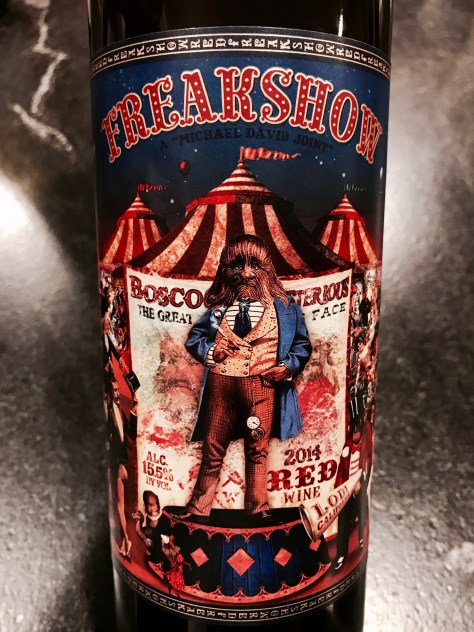
2014 Freakshow Red Wine, Michael David Winery, Lodi, California, USA.
The 2014 Freakshow Red Wine is a blend of 71% Syrah, 25% Petite Sirah, and 4% Souzao grapes, and it’s presumably the dilution of the Syrah that makes me think there’s less pepper in play here. It’s going to sound ostentatious but know the Freakshow accompanied filet mignon, lobster, fresh homemade bread, a mix of yellow and green string beans, and plenty of other delicious accents. And it poured out rich, nearly chocolatey, for each glass.
Of the 2014 vintages, the winemaker comments, “Aromas of blackberry cobbler, toasted walnuts, espresso bean, and hints of brandy. The wine is weighty with a velvet-like texture boasting flavors of ripe brambleberry jam, toffee, and dark chocolate mousse…”
Much of that is true, and you should be drinking the 2014 Freakshow Red Wine just in case my tasting notes are even close to accurate. So release your inner Dog-Faced-Boy and let that dog hunt–as long as he’s chasing down this bottle you’ll be very satisfied.

 NotesOfNote