2014 Cabernet Sauvignon, John William Vineyards

Few things in life are both cathartic and fulfilling all at once. That’s what you’ll find in the 2014 Cabernet Sauvignon from John William Vineyards, with a little dash of calm thrown in the mix too. We know 2014 was a great vintage in terms of Napa reds, and this one falls squarely into that category. I pulled the cork on Friday at the end of a long work week and finished it off with a smile just this evening.

2014 Cabernet Sauvignon, John William Vineyards, Napa Valley, California, USA.

2014 Cabernet Sauvignon, John William Vineyards, Napa Valley, California, USA.

Friday this red blend was the backdrop to a crazy late afternoon thunderstorm where the rain was driving down at an angle, bending plants and trees to its will. The John William I had intended to accompany some grilled pork chops but instead it went with a couple of leftover burgers that were the perfect antidote to standing outside in the rain getting drenched. And so it went yesterday, and the pork chops kept nicely for Saturday dinner and perfect temperatures–both outside and in the entrée.

I liked this wine right from the first pour, and my enjoyment only increased as I researched this vintage. Most of the grapes for the 2014 Cabernet Sauvignon were sourced from John William reserve vineyards, terroir including Howell Mountain and St. Helena that comes together in a delicious blend of deep, dark red that is nearly purple in the glass. I drank from Cabernet Sauvignon stemware and could smell and taste a rich set of dark berries in the works here. Less cherry flavors and more like blackberry, with accents of spice (not pepper like a Syrah) and a long fruity finish that is really wonderful. I haven’t done its profile justice in previous bottles that I failed to record in Notes, and most importantly you should know I’d hit another one right now if given the opportunity but I obtained from an online offer and not sure how accessible it is in my local wine shop.

Some details from the Winemaker:

  • They deliberately kept the grapes separated by region throughout the fermentation and aging processes in order to keep their unique characteristics.
  • The separate lots were aged in 35% new French oak barrels for 15 months.
  • The final product is a blend of 92% Cabernet Sauvignon with 7.5% Cabernet Franc and 0.5% Merlot varietals.

Great grapes, discerning process, and a fantastic result. I originally purchased based on vintage and AVA–and out of deference to one of my favorite composers John Williams of Star Wars and Spielberg/Lucas fame. Whatever the reason strikes a chord with you, just get it and see for yourself. You can thank Notes later.


2014 Caymus Cabernet Blind Tasting

One of my favorite wine shops caught my attention with a special promotion–centered around the 2014 Caymus Cabernet Sauvignon. It was a simple concept, one Winestore has run annually since 2010. The 2014 Caymus carries a sizable price tag, but is it justified? Does it outperform $25 competitors on reputation or actual taste?

Winestore lined up eight bottles, identical in size and shape, each masked with aluminum foil and numbered with a simple Sharpie. I was a rookie in that I’d never done a blind taste test, and never tried Caymus. Could I really pick it out against other worthy wines?

Masked bottles at Winestore, endeavoring us all to hunt for Caymus.

Masked bottles at Winestore, endeavoring all comers to hunt for the 2014 Caymus Cabernet Sauvignon.

Sampling

I was interested to sample this highly regarded Wagner release, and interested to see if my modest tasting experiences over the past years would be of any value in differentiating it from the competition. I paid my fee and started with #8–you know why. Its color seemed slightly lighter than a typical Cabernet, and its easy finish I considered more Pinot- or Zin-like. Not too much in the way of earth tones or spices, and I considered it lower in price almost immediately. I jotted down tasting notes, swirled, and dialed up my next wine.

Number 7 was a shadow of #8. Almost immediately I was thinking neither of these was the Caymus, in part because neither was “blow you away” impressive and in part because there was less differentiation between them. That said, #7 carried a hint of smoke and slightly more raspberry than cherry or blackberry. All of this went onto my tasting sheet, and I started eyeing bottle #6.

Six was big flavor, an explosion of fruit. It was the right color. This wine’s big, jammy feel reminded me right away of the Petite Petit from Michael David that I love so much. Pretty cool, too, since it was Winestore that first opened my eyes to the Petite about two years ago. This is juice, this is big cherry, and the blackberry I thought missing from the previous samples.

The #5 wine was also a big contrast, very different from all three that came before it. The fifth was as dry as #6 was juicy. I’m not thinking Cabernet tannins here, and I’m catching a feel that is more Roija and Mediterranean than Californian. My notes say “Spanish? Grenache?” Was I right about that? We’ll get to that in a moment. Onward, true readers…

…to bottle #4. This one too was an easy disqualification. Very much not California, very much not a Cabernet. So not Caymus, but pretty damn good. I’m thinking Spanish Rioja here again. This sort of made another pairing. So far I’ve got #7 and #8 in proximity to one other, and #4 and #5 as semblances too.

By the time I hit #3 the wheels are turning, but I’m thrown out of the zone when the dispenser sputters and runs sort of empty as I fill my tasting glass. I sip, I swirl, I mull this one over. It’s got the right color, and my brain says “#3 always does right by you“. Wine #3 throws off the earthy notes that clearly signify Cabernet, and perhaps California at that. This smells special and tastes that way too. Is this my goal or just a windmill? I wonder how much of my game has been thrown by the sputtering dispenser.

There are fun people in the store, a few tackling this same Caymus challenge, and a couple others just enjoying time and each other’s company as they sample vino. I cracker up, I rinse my glass, and I make my way to #2.

It’s pretty damn good–is this the 2014 Caymus? It pours with the right color, has the right legs in the glass. I whiff and sip. I’ve never seen someone do the slurpy thing in real life, and I’ll be honest in telling you I swallowed every drop that I tasted today. This one in particular, because it is fine. Real fine! It is big fruit, it is layered, and it has a Cab-like finish.

Only #1 remains, and I hit it. It’s okay but doesn’t measure up to the last two bottles I’ve sampled. There’s a hint of something in this wine that I can’t quite place. It’s not vanilla, and it is not spice, leather, or licorice. Even now I’m not sure what it was, but it was closest to the licorice. Beautiful red color in bottle #1 yet no California Cabernet. (Look, if you read this column with any regularity, you know that an overwhelming percentage of all wine in Notes is Californian, so most times I know it when I taste it. This isn’t it.)

Making the Call

I think I’ve got my pick, and I’m wondering about the psychology of the order as I make my way over the employees managing the testing. Did they assign bottles to position at random? What does recency bias do to your taste buds? Do professional tasters wrestle over questions like this, and would they scoff at anyone who would confuse Caymus for these other wines? What’s the price of these other wines, which I have ordered by quality in my own brain in a way that’s independent from label, reputation, or cost?
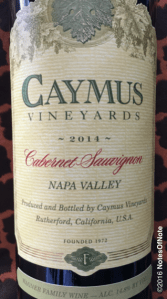
2014 Caymus Cabernet Sauvignon, Napa Valley, California, USA. AKA #6!

2014 Caymus Cabernet Sauvignon, Napa Valley, California, USA. AKA #6!

Moment of confession–at this last minute, I hedge my bet. I ask the employee if the Petite Petit is among the samples. When he says no, I know right then and there that Caymus is Bottle #6 and I make my prediction. Yes, I get it right, but I still half-kick myself for not having the confidence to say so without wanting to first disqualify the David. The 2014 Caymus Cabernet is reminiscent of both Conundrum (which I have had on several prior occasions) and, obviously, the Petite Petit.

So what did I learn? Looking back, I recognize my palate has begun to tell me things about red wines and, to a growing extent, to differentiate between rich, nuanced reds and others that lack the subtleties that come in higher-regarded (and pricier) releases. I get the sense that I can discern California Cab from other varietals. And I also learn that I can find 90 to 95 percent of Caymus’ amazing taste in the Conundrum and Petite Petit bottles that cost 50 to 60 percent less. Fun occasion–thanks to the Winestore team for the compelling promotion.

The Wines

#8 was the 2014 Snowvale Cabernet ($12.99)

#7 was the 2011 Americano Petite Sirah ($14.99)

#6 was the 2014 Caymus Napa Cabernet Sauvignon ($64.99)

#5 was the 2014 Waccamaw Proprietary Red ($14.99)

#4 was the 2013 Las Flors de le Peira ($34.99)

#3 was the 2014 Willowlake Napa Cabernet ($59.99)

#2 was the 2013 Penfolds Bin 389 Cabernet-Shiraz ($34.99)

#1 was the 2011 Marge Priorate ($19.99)

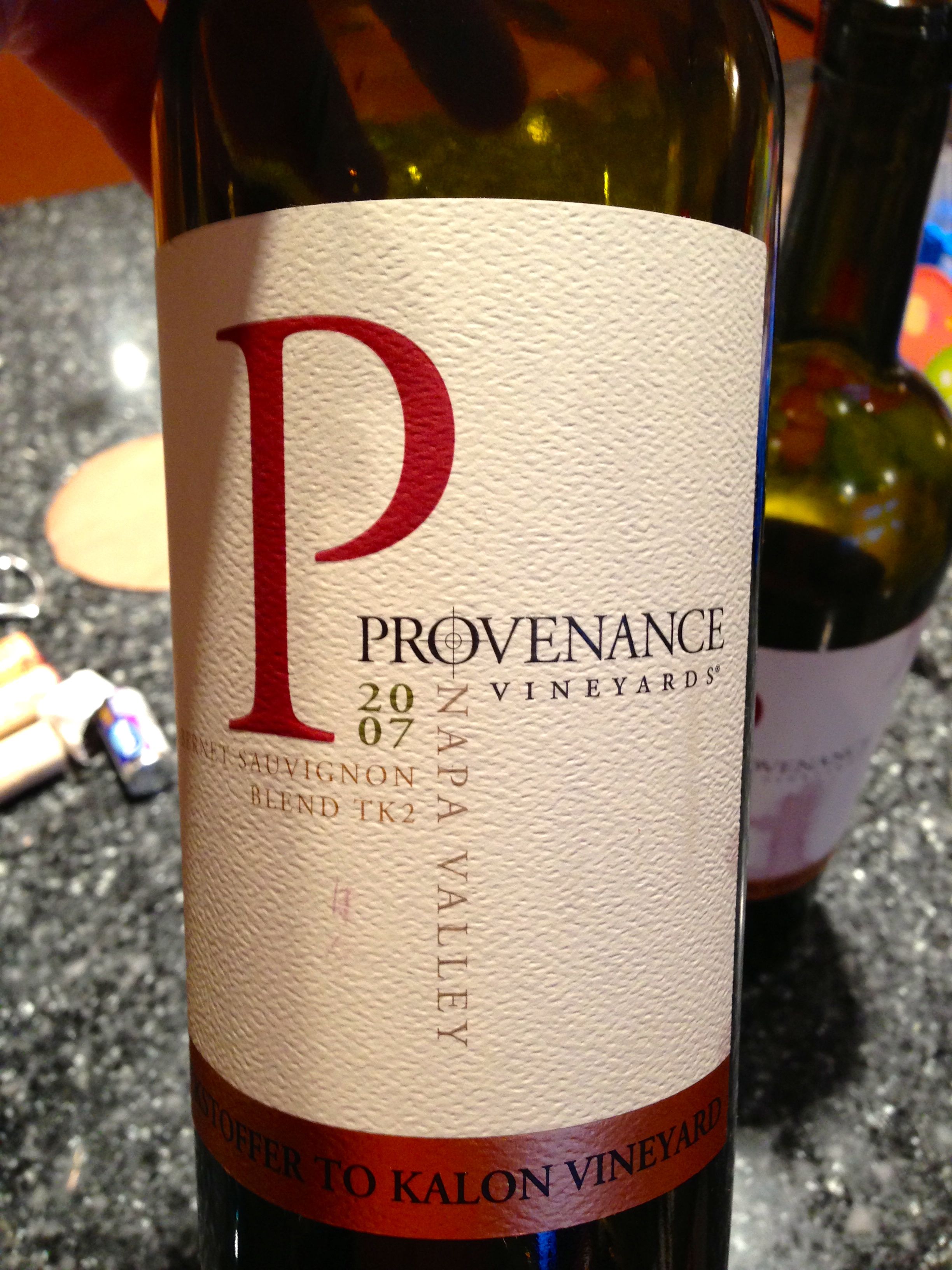
2007 Provenance Vineyards Cabernet Sauvignon TK2 Beckstoffer To-Kalon Vineyard

Special shout out to Eagan for this gem.  I (among others) asked Jamie to bring a little extra slice of life with him to the site of our Lake Gaston reunion–and this was a true hookup.  A flushed, red beauty, this Napa Valley Cabernet Sauvignon we opened after everyone made it safe and sound through the torrential downpour of Hurricane Andrea to our lake house for the long weekend.

2007 Provenance Vineyards Cabernet Sauvignon TK2 Beckstoffer To-Kalon Vineyard, Napa Valley, CA, USA.

2007 Provenance Vineyards Cabernet Sauvignon TK2 Beckstoffer To-Kalon Vineyard, Napa Valley, CA, USA.

Sort of hard to make this tangible for you.  On one hand, the Provenance accompanied some out-of-this-world food–including the best guacamole I’ve ever had, a killer macaroni and cheese made with Gruyère and Blue cheese, and a massive potato salad topped with fresh bacon that somehow escaped curious hands throughout the afternoon.  Plus expertly cooked chicken and succulent beef tips that were managed by the skill and aplomb of a veteran grill man who negotiated a tight doorway and a new grill (to him at least) to deliver such a dining experience to the gathered parties.  This savory red stood tall in all of the kitchen whirlwind, and I was sad to see it bottom up too soon, as it worked so well with all the grilled finery.

On the other hand, the Provenance also looked for elbow room in an evening filled with bad–and worse–drinks.  In my youth, I could more willingly down a crappy glass for a laugh, but as I’ve gotten accustomed to some of the treats of the Russian River Valley, France, and other fertile grapelands, the prospect of drinking swill to amuse friends is less enticing.  Did I do it?  Of course; I’m with the band–but I’d have preferred to stay solely with the Cab.

Those who follow our wine notes know that we often share some of the winemaker’s thoughts or experts’ opinions in case such prose helps with your understanding of a wine’s composition, complexity, or intentions.  Most of the time, though, the goal is simply to make it accessible to the layperson who is looking to get a feel for a given vintage or taste, and that’s how we’ll go forward here.  You can link to the vineyard anytime you like (particularly if you’re questing for information on its storied history), but you really don’t have to with the 2007 Provenance Cabernet Sauvignon.  It’s a treasure, one you should snap up and swirl with all possible haste.  It’s not only the bedrock for a weekend with the best friends on the planet, but it’s a keeper for your favorite grilled meal celebrating any occasion or none.  Grab some when you can–I know I will.

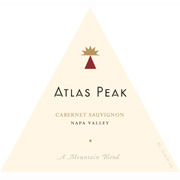
Atlas Peak 2005 Cabernet Sauvignon

Big, and bold, this fantastic Cabernet Sauvignon from the good people at Atlas Peak Vineyards.  Napa Valley is home to so many of my favorites, and this one quickly joined the list.  It is a mighty cab that grabs right hold of you and doesn’t let go until you’ve finished the last drop.  On a Friday night after a tough work week, the Atlas 2005 goes just perfectly with a grilled steak and a few scattered veggies that you pull off just to keep from feeling like a complete Viking.

2005 Cabernet Sauvignon "Mountain Blend", Atlas Peak Vineyards, Napa Valley, California, CA.

2005 Cabernet Sauvignon “Mountain Blend”, Atlas Peak Vineyards, Napa Valley, California, CA.

It has a “depth” and vibrancy to it…flavors of all dark berries and spices that escape my description.  After that great dinner, the Atlas kept good company while we turned up the tunes and blasted blues tunes loud and proud into the evening.  Here’s tasting notes supplied from the winemakers: “Perched on the steep slopes and high ridges above Napa Valley, vines here struggle in thin soil to produce grapes of concentrated fruit and uncommon character.  Atlas Peak Cabernet Sauvignon draws upon its Atlas Peak Estate and other prestigious Napa Valley mountain appellations–each with its own personality–resulting in this superb mountain blend.  Aged in French oak barrels in the Winery’s caves, this muscular Cabernet Sauvignon showcases deep berry flavors, intriguing vanilla complexity and a smooth, lingering finish.

Pretty big talk, right?  This bottle was part of a Buena Vista wine club membership, so finding it again will not be easy–the 2008 seems to dominate in online search–but the quest will be rewarding.

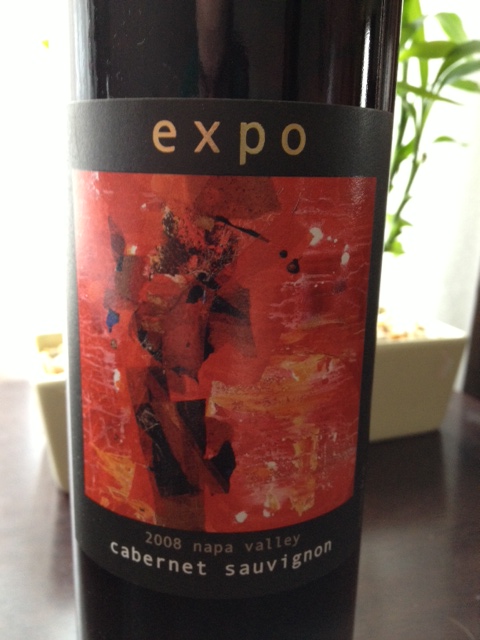
2008 Expo Napa Valley Cabernet Sauvignon

2008 Expo Cabernet Sauvignon, Napa Valley, California, USA. Featuring the artwork of Carol Schinkel of Fort Collins, CO.

2008 Expo Cabernet Sauvignon, Napa Valley, California, USA. Featuring artwork by Carol Schinkel of Fort Collins, CO.

Second tasting of the 2008 Expo Napa Valley Cabernet Sauvignon. I’m really a fan of this Cab and trying to think of a way to explain in simple terms: On a day where you are reluctant to break out a proven superstar but are looking for some grapes that bring it, the Expo is a great option. It’s not a home run, but it’s a solid double into the gap and you’re looking to advance. The Expo kind of has a boutique feel to it and was paired last night with a killer green salad and pan-seared steaks. The fresh ground pepper on the salad, combined with the red meat, seemed to bring out some of the flavors (dark reds, spices) of this great cuvee.

Since I cheated a glass from this bottle earlier in the week (a great, heart-healthy after-work drink, incidentally), I was about one short last night but am already looking forward to the next taste.

2008 Expo Napa Valley Cabernet Sauvignon

Okay, now we’re getting somewhere.  Started this bottle Friday evening, and polished it off Sunday night with a delicious dinner of steak (perfectly done), asparagus, and baked potato.  Believe me, it took a crazy amount of restraint not to down the entire bottle in one sitting because it is flat-out excellent.  We have several bottles of this Napa Valley Cabernet Sauvignon on hand, so Notes will have a photo in subsequent posts–the Expo’s artwork (contributed by Colorado artist Carol Schinkel) is also great.

Know that the 2008 Expo is striking.  It has been grown and produced by Alison Crowe and reminded me of several recent Bordeauxs we’ve been lucky enough to try…will break out additional tasting thoughts in our next sampling but first recommendation is that you put your hands on one right now.  You’ll thank me.