2011 Vintage of the 1448, Jeff Runquist Winery

The family winery of Jeff Runquist is located in the Amador County foothills of California’s Sierra Nevada Mountains – 1,448 feet above sea level, where this zesty red blend gets its name. Runquist has seemingly made his bones on Zin and Barbera wines (I have yet to try myself) but saves the leftovers of these premiere bottlings for the 1448 – called a “kitchen sink” blend by our local wine store staff.
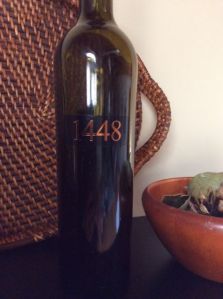
2011 vintage of Jeff Rundquist's 1448; Sierra Nevada California USA

The 2011 vintage of Jeff Rundquist’s 1448; Sierra Nevada, California, USA.

Originally purchased for our weekend on Lake Gaston, the 1448 actually lasted until this week when we knocked it down with grilled chicken and my 2014 summer favorite: orzo arugula salad, with roasted red peppers.  This red blend lines up really well with the grilled stuff, believe me. It’s a red–nearly purple–medley of Petite Syrah, Barbera, and Zinfandel, with a few other (his Verdot perhaps?) thrown in for good measure too. This red has some depth to it, and a smoky underpinning that plays well with your grillwork.

The winemaker remarks, “1448 – an assembly of wines from throughout California that delivers fruit-forward flavors with a rich texture sure to delight every palate.

And so it does. With some after-the-fact-research I can offer this breakdown of the 1448’s composition: 54% Petite Sirah; 31% Petit Verdot; 4% Barbera; 3% Syrah; 2% Zinfandel; 2% Carignane; 2% Souzao. Seems like I was headed in the right direction, and can share now as well that the 2011 is barrel aged to create its nuances and robust mouth feel.

I picked this bottle to share with lifelong friends and was perhaps a little disappointed we didn’t get into it together last weekend. On the other hand, it meant more of the 1448 for yours truly and I was appreciative of the Runquist touch here. Not only would I move swiftly to seize another 1448, but it put the premiere reds of this winery squarely in the cross hairs too.

2011 Petite Petit, Michael David Winery

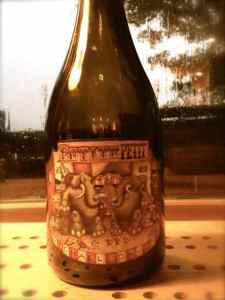
As part of a (long overdue!) Lake Gaston weekend with lifelong friends, I planned to swing out and pick up several wines that had earned recent accolades in our home. One of them was the 2011 Petite Petit from Michael David Winery, a veritable juice bomb hidden in these cheery elephant-decorated bottles. Thankfully I pulled this last bottle–and several other fun options–from the shelves at Winestore and couldn’t wait to share.

2011 Petite Petit Michael David Winery Lodi California USA.

2011 Petite Petit, Michael David Winery, Lodi, California, USA.

The weather was not cooperative by the dinner hour (as shown in this photo) but the 2011 Petite Petit was a burst of sun and flavor against the thundering skies and rain-spattered windows of our weekend rental. We poured a first glass, passed tastings around, and saw lots of nodding heads as each taster caught a whiff then a taste of all dark fruits of this Syrah/Verdot blend. Multiple glasses followed in swift succession. I’m not sure if everyone could taste the hint of charcoal that I described, but I’d enjoyed a bottle previously and sort of knew what to expect from this deep, rich red. I also knew we’d kill the bottle quickly, and indeed we did, our tanned faces smiling in enjoyment.

The Petite Petit was essentially gone before the dinner hour–grilled fare and delicious cold salads of pasta and potato–but it did give us ample opportunity to delve into other new favorites. Lots of new fans of the 2011 vintage after this evening!

2012 Braxton Hall Merlot

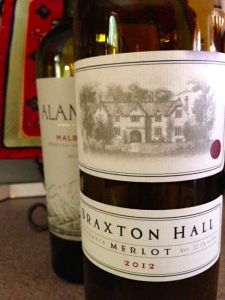
The 2012 Braxton Hall Merlot graced our table on two different evenings this week: the first with a casual cheeseburger; the second tonight with a grilled boneless NY strip steak.  Guiltily I confess potatoes – either one a “death row” choice for me – were the accompanying sides, and this red kept without issue over the four days between samplings.

2012 Braxton Hall Merlot, Santa Rosa, California, USA.

2012 Braxton Hall Merlot, Santa Rosa, California, USA.

Is it unusual for Merlot to be our grape of choice? Are we unnecessarily biased against Merlot after watching Sideways (2004)? Look at the numbers here in Notes and decide for yourself.  Pinot Noir, Cab, and Bordeaux are obvious favorites if you look strictly to the math, tasting notes, or our top-rated reds.  As over 19 million cases of California Merlot were sold in the U.S. alone in 2009, however, we are definitely swimming against the current if we have any such bias.

This easy drinking wine offers aromas and flavors of cassis, black olive, and assorted berries.” That’s how the wine seller described the Braxton. I’d call it safe and right down the middle. The Braxton Hall is approachable, even, and mild. This vintage was solid – if unremarkable – and would be a fine option any time. Just not for a special occasion.

2011 Petite Petit, Michael David Winery

The 2011 Petite Petit from Michael Davis Winery is bursting at the seams with fruit flavor. It packs a wallop of dark fruits and has a subtle underpinning of charcoal that leads to a rich, enjoyable finish. We opened this red late on a Saturday evening, with the sun’s light fading in the distance and smell of  T-bone steaks wafting in the still air.

2011 Petite Petit, Michael David Winery, Lodi, California, USA.

2011 Petite Petit, Michael David Winery, Lodi, California, USA.

So much fruit here! It pours purple so deep and dark that it looks almost like chocolate tumbling into your glass, and its earthiness is fragrant, big, and lush. According to the team at Michael Davis Winery, this is a blend of 85% Petite Sirah and 15% Petit Verdot and offers a “joyous explosion of color and fun!” I’m here to confirm they are not exaggerating with such claims.  The Petite Petit is full-bodied and almost like jam on the finish.

We had the 2011 Petite Petit with those grilled steaks, baby fingerling potatoes, and blue cheese salads on the side. You almost want to bite, to chew this wine just like the delicious foodstuffs gracing our plates. Here’s what Robert Parker offered about this vino: “This soft, opaque purple-colored wine exhibits impressive density as well as lots of blueberry fruit intermixed with graphite, licorice, and a hint of tar.

I’m not a fraction of the experienced taster that Parker is, but the flavors here stand up to be counted and I was able–even with my humble palate–to identify several of the most developed layers. Hadn’t had a glass of wine in more than a week and this one is a great means of breaking that unwelcome streak. Be sure to try the 2011 Petite Petit for yourself.

2012 Private Reserve Chardonnay, Buena Vista

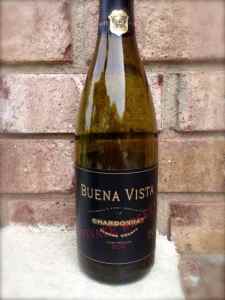
This one burned a hole in our pocket.  This top-notch Chardonnay arrived just a week ago as part of an April shipment from our friends at the Buena Vista Wine Club and is already a part of Notes.  But with Spring well underway here in our home, whites are in greater demand and I can see a shift on the horizon as reds will have to accept whites on more equal footing.

2012 Private Reserve Chardonnay, Buena Vista, Sonoma County, California, USA.

2012 Private Reserve Chardonnay, Buena Vista, Sonoma County, California, USA.

The 2012 Private Reserve Chardonnay had a chance to refrigerate all weekend and was nice and chilled by the time we uncorked after work today.  In comparison to a Pinot Grigio, this white had a much richer, flavor-filled density to it.  Some Grigio is almost like water to this taster, the Coors Light of white wines; the Buena Vista Chardonnay (this one in particular) was the succulent alternative.  There are plentiful floral notes in the 2012 Private Reserve, and definitely some citrus too…without some of the “oak barrel” that we occasionally find less ingratiating. (By way of clarification: I want to taste the complexities that result from this aging process without having the barrel dropped on my tongue…I think my wife shares the same sentiments.)

This is how the Buena Vista team articulated their concept: “The 2012 Private Reserve Chardonnay is sourced from vineyards throughout Sonoma County and displays fresh citrus notes that are accented by hits of baked apple and vanilla.

I don’t usually warm up too much to vanilla, but it’s not really the dominant scent or taste in the 2012 Private Reserve Chardonnay.  Having enjoyed time in Sonoma, I like to picture the winemaker, in compiling the right grapes for this varietal, sampling many of the same vineyards that we too hit in wine country.  I know that is an unrealistic expectation but nice remembrance nevertheless.  Oh yeah–last but not least.  We had this white with a flavorful ham, reheated from our fabulous Easter brunch, broccoli, and a homemade macaroni and cheese (with real melted cheese!).  The food was good, but the Chardonnay was the star of the show.

2010 Castle Rock Cabernet Sauvignon

Fantastic bottle of red from Castle Rock Winery.  The grapes for this 2010 Cabernet Sauvignon are grown in Columbia Valley vineyards that (seemingly) share the same latitude as the Bordeaux region of France.  That’s an interesting fact in particular because the Castle Rock followed immediately on the heels of a Bordeaux that earned some praise in Notes — but what a contrast between the two.

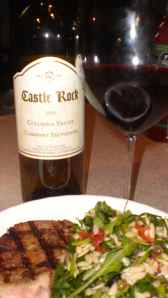
The 2010 Castle Rock Cabernet Sauvignon, with Columbia Valley grapes cellared and bottled in Geyserville, California, USA.

The 2010 Castle Rock Cabernet Sauvignon, with Columbia Valley grapes cellared and bottled in Geyserville, California, USA.

The 2010 Castle Rock Cabernet Sauvignon had a richer and fruitier taste to it, with berry scents released immediately upon the pour.  The Cadillac was fine, but the Castle Rock was by far the superior wine to this palate.  Lots of black berries in this one, and much smoother finish by comparison.  The Chateau Close la Chapelle was the red blend, but it was the Castle Rock that seemed to weave in more spices, more flavors…a definite winner in their head-to-head matchup.

I do wonder, though, how much of this can be attributed to the stemware?  We do have a specially shaped Cabernet Sauvignon glass (a Syrah and Pinot Noir glass too–thanks Bec) but not a Bordeaux glass.  I’ve learned that the right glass opens the bouquet the right way, and even directs the flow of wine to the appropriate taste buds upon drinking so there’s some validity to the question.

This 2010 is aged in French oak barrels for 18 months “to soften and add complexity” and accompanied a delicious grilled tuna steak and an arugula/orzo salad.  High marks all across the board and we know exactly how to get more of each treat.  Good roadmap for you too.

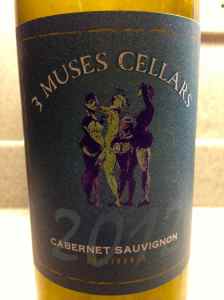
3 Muses Cellars 2012 Cabernet Sauvignon

Interesting dining approaches for our consumption of the 2012 Cabernet Sauvignon from 3 Muses Cellars.  Arriving home on a Friday evening after a week on the road in New Jersey, I had my first glass of this gentle cab with a delicious frittata.  Frankly, I’m not sure what wine goes best with breakfast food but sometimes it’s the adventure that makes this blog such a worthy cause.  Yes, that’s right, I’m sacrificing for the art…

2014-03-22

3 Muses Cellars 2012 Cabernet Sauvignon, Santa Rosa, California, USA.

…and I honestly don’t have great notes on how the Muses worked this first night.  The following evening, however, we revisited as part of a favorite easy meal: tender, succulent beef, crispy crowns seasoned potatoes, and fresh salads.  Armed with our new grill and a penchant for cow flesh, the steaks have been fantastic over the last several weeks and this is another one of those occasions.  The seasonings on our steaks were easy to identify but the faint touches in the Muses were less so.  Thus, I offer a few words from the winemaker:

Soft and subtle on the palate, this California Cab offers aromas and flavors of cassis, plum, dark berries, and dried herbs.

Short and sweet description, right?  Sort of like the vino itself.  The Muses had the deep, rich ruby hues we often associate with a California red but was a bit weaker in the subtleties that really make a great Cabernet Sauvignon distinguish itself from the pack.  I’m glad we gave it a go but there are many finer options out there waiting for us in the future.

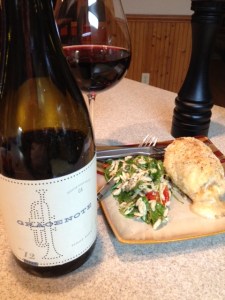
2012 Gracenote Pinot Noir

After a tiring flight from San Antonio, the 2012 Gracenote Pinot Noir was a welcome treat that marked the end of a six-day work week.  My wife had opened in advance of my arrival, and the aromatic Pinot Noir had had a good opportunity to breath while I was en route from the airport.

2014-03-15

2012 Gracenote Pinot Noir, Ubben Vineyards, Russian River Valley, California, USA.

This Russian River Valley red, aged in oak barrels, was created by Ubben Vineyards (and winemaker Reed Renaudin) and had a great fruity scent to it.  Great, vibrant color too.  Notes from the pros read as follows:

This sublime wine offers impressions of dark cherry, strawberry, lavender, vanilla, cedar, and a hint of toast.

It had a bit too much vanilla for me, but the strawberry (not exactly my favorite) was subtle and I tasted more of the cherry and cedar–gladly.  I consumed a glass with a chicken cordon bleu and delicious orzo salad, and the Gracenote was an effective medium between the two.  A nice bit of comfort after the Saturday night flight.

2010 Summation Red Wine Blend, Kendall-Jackson

Something about a “red wine blend” from Kendall-Jackson sounded good when I saw it in the local grocery store (I know, still sounds weird to me too) and on this occasion those instincts were right on the money.  The 2010 Summation Red Wine Blend, Kendall-Jackson Vintner’s Reserve is a fantastic bargain–a $15 wine that packs a much richer profile into its KL label.

We all know the Kendall-Jackson crest so forgive me for skipping the photo on this occasion.  I’m fairly confident I detected lack cherry, hints of vanilla, and some definite oak aging?  It was jammy and smooooth…so very smooth.  The winemaker offers the following:

Smoother than Cabernet Sauvignon, richer than Merlot, more balanced than Zinfandel, this red wine blend offers intriguing flavors and aromas: roasted coffee, dark chocolate, pomegranate, and black cherry intertwine to offer a multi-layered mouthfeel and sumptuous texture.

The Kennedy Center honors (amazing performers that prompted us to explore past years’ musicians with equal zeal) provided a great backdrop; the Summation’s was even better.  Definitely interested in putting my hands on a substantial quantity of this fine red offering.