Rodney Strong Estate Pinot Noir 2011

The Russian River Valley is famous for its great wines and, like other notable regions in California wine country, the unique climates and soils that make grape growing so fascinating and rewarding for the vineyards located here.  Years ago on an amazing summer vacation, my wife and I learned that it’s the cool evenings and perfect year-round weather that make for effective growing seasons and the maturity of the grapes in this part of the country.  The Rodney Strong Vineyards is one such beneficiary, and those of us who sample its work from time to time are winners as well.
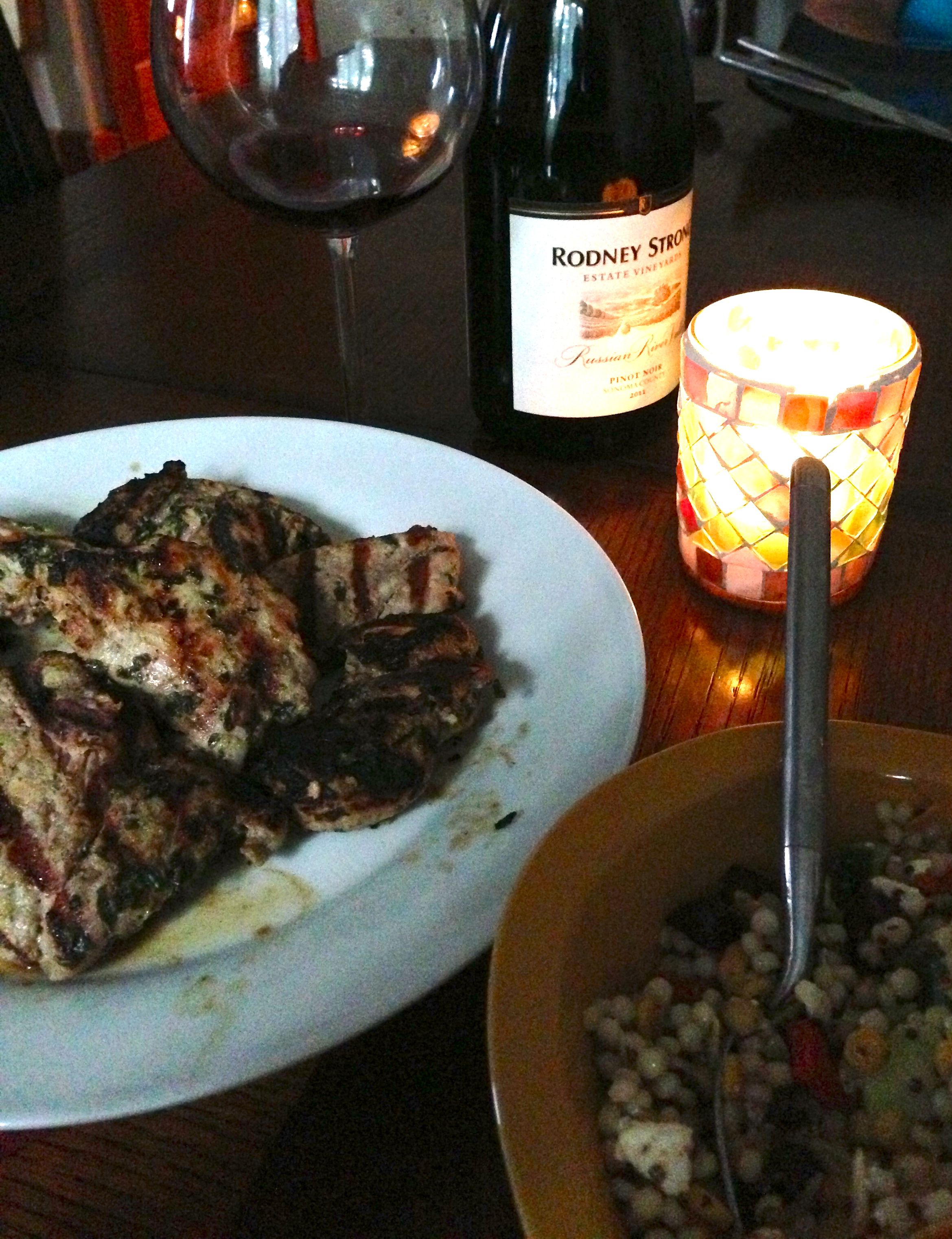
Rodney Strong Estate Pinot Noir 2011, Russian River Valley, California, USA.

Rodney Strong Estate Pinot Noir 2011, Russian River Valley, California, USA.

Even though we had a great Pinot Noir already open and beckoning, we vaulted this 2011 to the head of the class to accompany our Sunday dinner.  Our pork tenderloin, sliced into heavenly slabs each about an inch thick, had basked all afternoon in a great marinade of olive oil, basil, garlic, and lemon juice, and was grilled (thermometer-aided) to a tender finish.  Accompanying this was a delicious medley of Israeli couscous and quinoa that my mother magicked up with some roasted red pepper, feta cheese, calamatta olives, cucumbers, and white balsamic vinegar–as well as the Rodney Strong Estate Pinot Noir 2011.

Here’s the rundown from the winemakers at Strong: “Soft and silky, with intriguing floral and crushed pomegranate aromas, this medium-bodied wine was aged for nine months in small, French oak barrels which added a hint of toasty vanilla and spice complexity.  Ideal for current enjoyment, this Pinot Noir will age nicely over the next two to four years.

If you read NotesOfNote with any regularity, you know that vanilla notes doesn’t usually play too highly in this house.  This scent is more locked away in the 2011 Pinot Noir from Rodney Strong, though, and I don’t think I would even have noticed if not for the prompt from the winemaker.  I think that’s a good thing but try it for yourself and see if you agree.

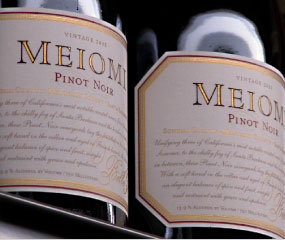
Meiomi 2011 Pinot Noir

Okay, you saw the name and immediately made your guess on its pronunciation.  It’s the word “coast” (phonetically ‘May-OH-mee‘) in the language of California’s Wappo tribe and an apt title for this blend of grapes from three of California’s leading regions–Sonoma County (26%), Santa Barbara County (23%), and Monterrey County (51%).  Many of their best qualities are swirled together in this winner, which we’ve luckily sampled over the course of the last three evenings.

Meiomi 2011 Pinot Noir, Rutherford, California, USA.

Meiomi 2011 Pinot Noir, Rutherford, California, USA.

Friday it accompanied hors d’oeuvres–cheeses and olives and whatnot–and struck such a chord with us that the Meiomi actually stuck around for our fabulous salmon dinner.  Peppered perfectly, the salmon had baked just to taste.  It wasn’t so dry that it flaked at fork touch, nor so rare that it resembled sashimi (which I do love).  A vegetable medley of red peppers, green onions, broccoli, and baby potatoes rounded out the meal and was a great backdrop for the Pinot Noir.  This may seem like an unlikely pairing to some but it worked very effectively.

Meiomi must be shaped in part by Joseph J. Wagner, a fifth-generation winemaker whose family has deep roots in Napa Valley.  He did a great job if he had a hand in this one.  Dark, pungent, and earthy, this spicy Pinot Noir has genuine oomph to it.  It’s not some weak-bellied Pinot that goes easy on the flavor.  To the contrary, it’s muscular.  It’s substantive.  It announces its presence as soon as the bottle is uncorked, and you can tell just from the initial waft of dark cherry or blackberry (or the like) and its spicy undertones that you are in for a treat.  If you are more biased toward vanilla hints and strawberry-tasting Pinots this is not really your bag but if you like your reds to give a good shot in the arm this is it.

The Meiomi worked just as effectively the next night accompanying a local pizza pie, and again the next with a marinated pork loin that was grilled in the hot July evening.  I’d put it in my top 10 for sure and have to think about a larger move if I had the good fortune to sample another bottle.  Get yours today.

Buena Vista 2008 Pinot Noir, Otelia’s Selection

Buena Vista 2008 Pinot Noir, Otelia's Selection, Sonoma, California, USA.

Buena Vista 2008 Pinot Noir, Otelia’s Selection, Sonoma, California, USA.

The good folks at Buena Vista had sent the 2008 Otelia as our February 2012 club shipment, and we finally pulled it this hot and uncomfortable July weekend.  Here’s their thinking on its composition: “Named for the Count’s youngest daughter, the 2008 Otelia’s Selection Pinot Noir is plum in color, with wonderful aromas of dark fruits, black raspberry, chocolate, and white peppercorn that delights the nose.  On the palate, rich grilled flavors emerge with a core of currant, raspberry, and hints of coco [sic] bean.  The wine shows excellent balance with a nice tannin structure and smooth texture.

Part of the reason the Buena Vista Pinots strike such a chord in our house is because they are more dark fruits (e.g., black raspberry, currant) and earthy spices (e.g., peppercorn) as opposed to strawberry and vanillas that I find a bit too cloying.  The 2008 Otelia hits a whole of lot of marks for us and will for you too, if you can find it.  The winery seems to have moved on to the 2010, which too sounds fantastic but we have yet to taste it.

I’m savoring the last glass of the bottle just now as we usher in Sunday evening, but it was a key to a great Friday night meal of grilled steak (seasoned with pepper and salt if memory serves), fresh corn from the cob, and some potato salad.  Even though it was probably still 90+ degrees by dinner time, the Pinot Noir was enjoyable and worked well with the flavors of the grilled steak.  Definitely smooth and probably even better for you if you are pulling it from some place with better temperature control than we have in our basement.

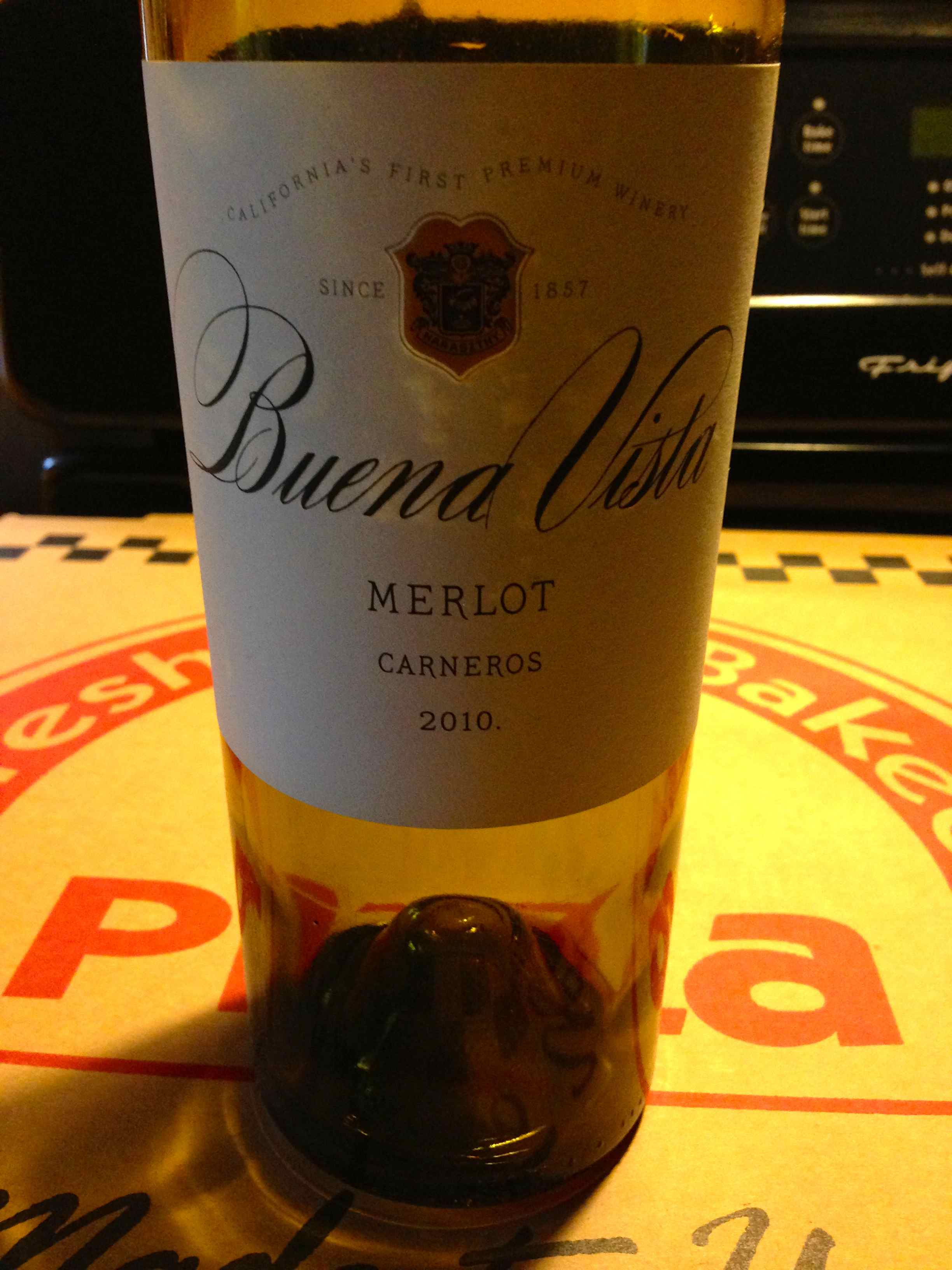
Buena Vista 2010 Carneros Merlot

Buena Vista 2010 Carneros Merlot, Sonoma, California, USA.

Buena Vista 2010 Carneros Merlot, Sonoma, California, USA.

Over the last several nights, this bottle accompanied many a fine meal–including a home-made chicken scarpiello and a light, summer chicken salad.  This Buena Vista Carneros Merlot was possibly best, however, accompanying just a pizza from our favorite local joint.  Half pepperoni and half pepperoni – black olive, the pie seemed to work well with the cherry and peppery vibe of this 2010 red.  It really looks and smells the part too:  it’s unmistakably Merlot, a deep purple color that wafts dark fruits up at you even as you pour your first glass.

For more informative notes by ‘real’ tasters or even the winemaker you can click here any time.  The description of how this varietal came to bear is worth the read.  Someone with more expertise (or perhaps promotional inkling) gave this a 91 and I think that seems about right in comparison to other reds I’ve had occasion to enjoy.  Always love a Buena Vista and look forward to the next!

Camino de Navaherreros, 2011

Camino de Navaherreros, Madrid, Spain.

Camino de Navaherreros, Madrid, Spain.

The last of the three wines we tasted at Wine Therapy was the 2011 Camino de Navaherreros.  You read this label and feel like you should be able to find a good Spanish-to-English translation for “navaherreros” but it escapes both Google and me.  Regardless, this high-alcohol (14.5%) grenache packs a helluva punch and you should grab one for your next barbecue.

It bites back; a spicy cherry red that wants you to notice it from the very first tangy sip.  Borne from 80-year-old vineyards outside of Madrid, grapes for the Navaherreros are grown from granitic soils and macerated for 25 days in wood, stainless steel, and concrete tanks before being aged in wooden vats.  Some tasters have described this wine as, “The aromatic nose reveals fresh, acidity driven red fruit.  In the mouth there are lifted flavors of dry, red fruit, cranberry and pomegranate, a little powdery quality, but definitely fresh with a hint of red pepper.  Definitely lovely.”  My thoughts echo not only the above, which I found spot on, but this gent whose review proceed mine too.

Swirling the Camino de Navaherreros showed its depth; it is definitely not a Pinot Noir but far more in the Cabernet or Cabernet blend camp.  We partook of this grape at the last stop of our food/wine tour and I wished I had a robust antipasta or steak to accompany it.  Lately I’ve been all about Bordeaux but the Navaherreros presents a compelling argument for the Spanish reds.

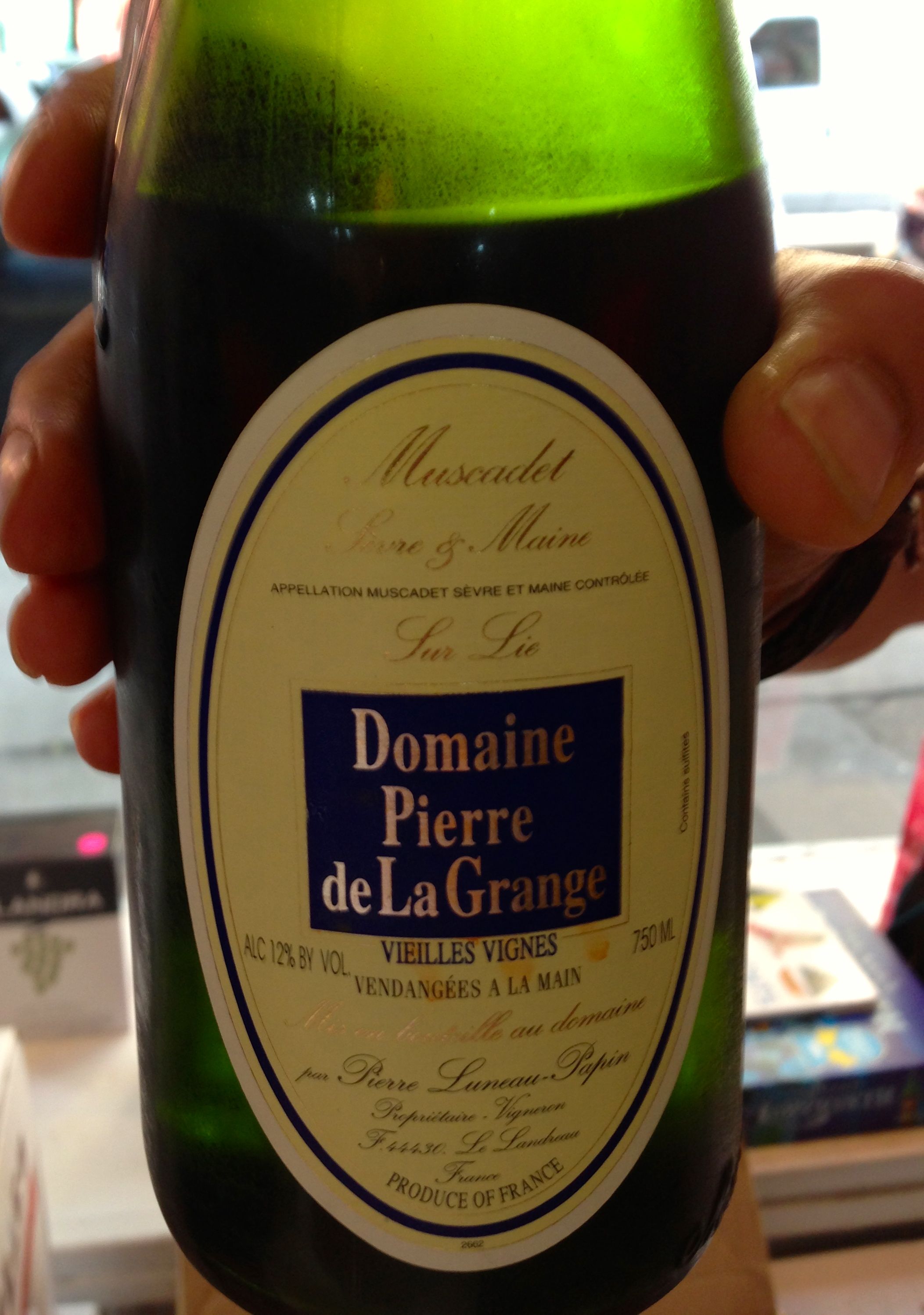
Domaine Pierre de la Grange Muscadet 2011

Domaine Pierre de la Grange Muscadet 2011, France.

Domaine Pierre de la Grange Muscadet 2011, France.

Our second tasting at Wine Therapy was the Domaine Pierre de la Grange Muscadet 2011.  This lovely, light import from the Loire Valley region of France was, for me, a clear winner.  It followed on the heels of the sparkling Rosé and had all kinds of citrus undertones that were enjoyable on the nose and the palate.  If, like me, you’re less a fan of oak or Chardonnay, this might be right up your alley.

Our knowledgeable host remarked that the Muscadet, made from the melon grape, “stayed crisp on the finish” and showcased its “minerally structure“, which I’m sure (quick bit of Internet research confirms this) is attributed to the soils in this region.  The Muscadet appellation lies just below Nantes on the western end of the Loire Valley.

We passed several restaurants in SoHo and Lolita on the walking tour that placed us in this little wine shop, and I would have gladly taken the Muscadet into any of them to accompany a seafood appetizer–maybe some mussels or clams?–or a light salad or pasta entree.  If you can already envision this bottle in your wine sleeve, chilling and perspiring in the warm summer sun, then I’ve done my job here.  You’d be smiling with your friends and enjoying a nice, affordable bottle of Domaine Pierre de la Grange Muscadet.


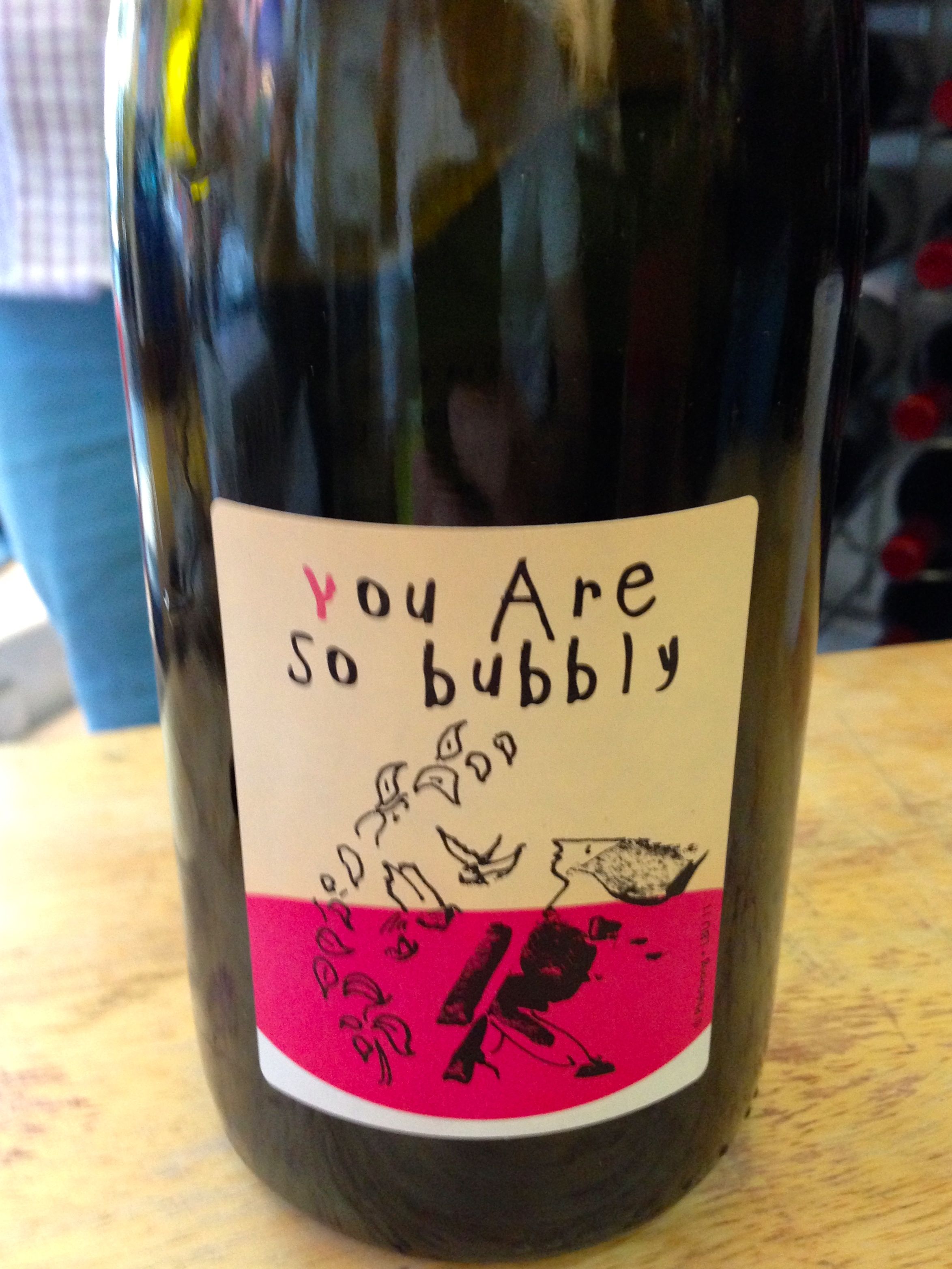
You Are So Bubbly, Sparkling Rosé

You Are So Bubbly, Sparkling Rose, France.

You Are So Bubbly, Sparkling Rose, France.

Our first tasting at Wine Therapy in Manhattan was You Are So Bubbly, a sparkling Rosé from the Louis/Dressner vineyards.  Imported from France, this Rosé engendered two different responses from my wife and I.  On one hand it was a refreshing cool beverage on a hot June day and slaked our thirsts; on the other I found it similar to other Rosés I’ve tasted.  Not my favorite grape or process, even in as a sparkling option.

I’m not a wine snob, but swirling this Rosé around a paper cup as we did isn’t the way you might enjoy this on your patio or poolside.  If you’re a fan of Rosé, You Are So Bubbly will probably strike a favorable chord for you.  I’m obviously more a fan of reds than whites, Rosé, or sparkling, but on a sultry summer day in the city you might appreciate the soft floral notes offered by this option.

Ultimately, I’d rate this sparkling Rosé higher for the ambiance and adventure and less for its taste, but check it out for yourself next time you have a cheese platter lining up for a gathering or summer picnic.

Haut-Medoc 2010 Chateau Dasvin-Bel-Air Cru Bourgeois

A week of scorching temperatures had us doing cold drinks rather than reds, and this was the first time all week vino was the right move.  We opened this Haut Medoc Bordeaux–a blend of 56% Cabernet Sauvignon, 35% Merlot, and 9% Petit Verdot–to accompany a great meal of grilled steaks and blue cheese salads (shrimp cocktail kicked things off).  This Bordeaux hit high marks for us and will be great to revisit again soon.

It has all the marks that resonate for me: beautiful color, a deep and rich red that’s fuller than a Pinot Noir; a blackberry and dark berry (rather than a strawberry) underpinning; a smooth taste that resonated for me even though we probably drank it “too soon” and didn’t allow it to breathe or age in any appreciable way.  It complemented the pepper-seasoned steaks perfectly.

Chateau Dasvin Bel Air 2010, Haut-Medoc Cru Bourgeois, France.

Chateau Dasvin Bel Air 2010, Haut-Medoc Cru Bourgeois, France.

Luckily we have several bottles of the Chateau Dasvin Bel Air 2010 Haut-Medoc Cru Bourgeois so we’ll have plenty of chances to share tasting notes from the “experts” with you.  This time out we’ll share a little information on the vineyard itself.

“The Chateau’s 30-acre vineyard lies at the southern end of the Haut Medoc appellation, on a large, narrow gravel soil resting on a thin coat of sand and a bank of yellow arenite on the one hand, and Garonne gravel on clay subsoil on the other.  In this environment, 25-year-old Cabernet Sauvignon, Merlot, and Petit Verdot vines are planted at a high density (in order to naturally restrict yields and develop the wine’s fruit profile) and cared for sustainably to allow their healthy development.  A first selection in the field is followed by another at the sorting table to select only the best chosen grapes that will be de-stemmed and used.  The must ferments in stainless steel tanks and temperature-controlled cement vats and pumped over three times a day.  Depending on the tasting session, there are 1 to 3 rackings, to help with clarification and final aroma profile of the wine.”

That’s a lot of information.  Some of it works for me; some of it is superfluous.  I can tell you with confidence that whatever the process is, it works great.  Ready for the next glass now!

Buena Vista 2008 Ramal Vineyards Syrah

Syrah isn’t my favorite red but this Buena Vista offering rang all the bells. Earlier this week my wife and I were in a beer state of mind but last night our favorite Sonoma vineyard beckoned. It poured out fragrant and fruity, a hint of spice hidden just below the surface, and was a great compliment to our pork chops with dijon mustard sauce, white rice with home-grown scallions, and mixed (i.e., green and wax) beans.

20130620-224531.jpg
You always know you’ve got a good bottle going when you look at it half full and are disappointed that it’s a work night…but that does make it all the better when you resume the “challenge” the next evening. The 2008 was again equal to the task, its rich ruby red the perfect companion to our pasta dinner this evening. I know without looking that the experts would praise this wine; we surely do too.

Thankfully we have more Buena Vista shelved and look forward to the next occasion, or even none at all, to break one out.

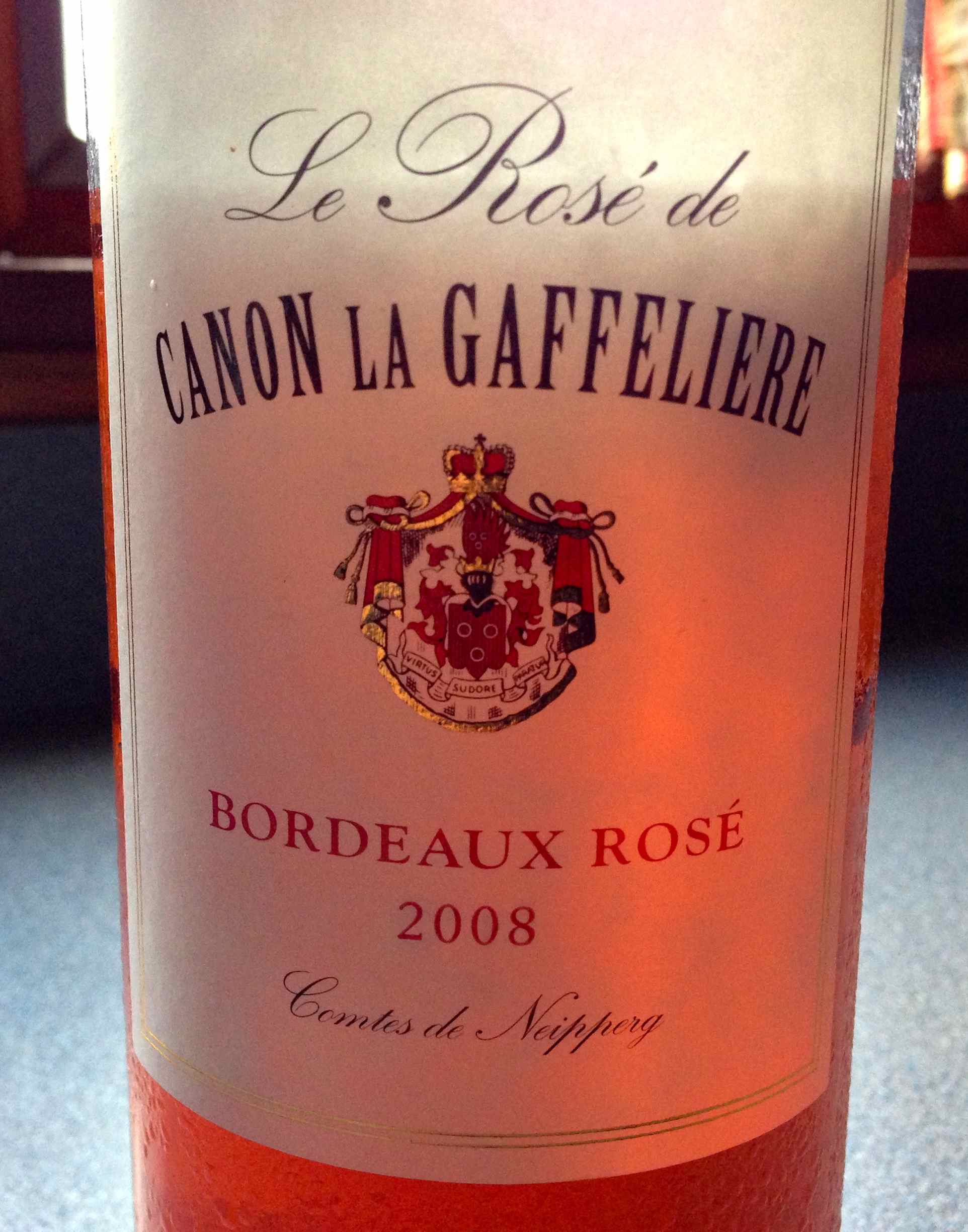
Château Canon-la-Gaffelière Rosé Blend Bordeaux Rosé 2008

I’ll preface by saying this was probably the first Rosé we’ve opened in some time…definitely the first appearance in Notes and could possibly be the last.  We opened this Château Canon-la-Gaffelière Rosé Blend Bordeaux Rosé on a Friday evening and thought it might escort us into a nice weekend.  Just couldn’t take it…seemed so…middling and indecisive.

Château Canon-la-Gaffelière Rosé Blend Bordeaux Rosé 2008, France.

Château Canon-la-Gaffelière Rosé Blend Bordeaux Rosé 2008, France.

This 2008 Rosé is a blend of Merlot, Cabernet France, and Cabernet Sauvignon, and those grapes always engender positive remarks–whether separately or as some Bordeaux–from this consumer.  Lots of evidence of this all throughout the blog, but it just didn’t add up here.  Despite being stored horizontally, the cork had dried out and largely disintegrated when we tried to open this bottle.  Maybe that accounted for some unpredictability in taste?  I don’t know enough about the spoilage of wines to comment on this further but may give the winemaker some benefit of the doubt by sharing this variable with you, readers.

Given the thumbs down we experienced, I thought it might be helpful to include a second opinion and share with you the following: “This is one of the strongest efforts from Canon-La-Gaffeliere since their spectacular 1990. Tiny yields of 30 hectoliters per hectare and a final blend of 55% Merlot, 35% Cabernet Franc, and 10% Cabernet Sauvignon have resulted in a wine of exceptional complexity. Aromas of roasted herbs, spice box, sweet and sour cherries, licorice, incense, and black fruits are followed by a wine with tremendous opulence, full body, and moderately high but sweet tannin. Excellent acidity gives precision to this big, but impeccably well-balanced, pure.”

I couldn’t disagree more (confess that we couldn’t even finish half the bottle) but leave it to you if you want to see for yourself.  I’ll skip this one next time.