Camino de Navaherreros, 2011

Camino de Navaherreros, Madrid, Spain.

Camino de Navaherreros, Madrid, Spain.

The last of the three wines we tasted at Wine Therapy was the 2011 Camino de Navaherreros.  You read this label and feel like you should be able to find a good Spanish-to-English translation for “navaherreros” but it escapes both Google and me.  Regardless, this high-alcohol (14.5%) grenache packs a helluva punch and you should grab one for your next barbecue.

It bites back; a spicy cherry red that wants you to notice it from the very first tangy sip.  Borne from 80-year-old vineyards outside of Madrid, grapes for the Navaherreros are grown from granitic soils and macerated for 25 days in wood, stainless steel, and concrete tanks before being aged in wooden vats.  Some tasters have described this wine as, “The aromatic nose reveals fresh, acidity driven red fruit.  In the mouth there are lifted flavors of dry, red fruit, cranberry and pomegranate, a little powdery quality, but definitely fresh with a hint of red pepper.  Definitely lovely.”  My thoughts echo not only the above, which I found spot on, but this gent whose review proceed mine too.

Swirling the Camino de Navaherreros showed its depth; it is definitely not a Pinot Noir but far more in the Cabernet or Cabernet blend camp.  We partook of this grape at the last stop of our food/wine tour and I wished I had a robust antipasta or steak to accompany it.  Lately I’ve been all about Bordeaux but the Navaherreros presents a compelling argument for the Spanish reds.

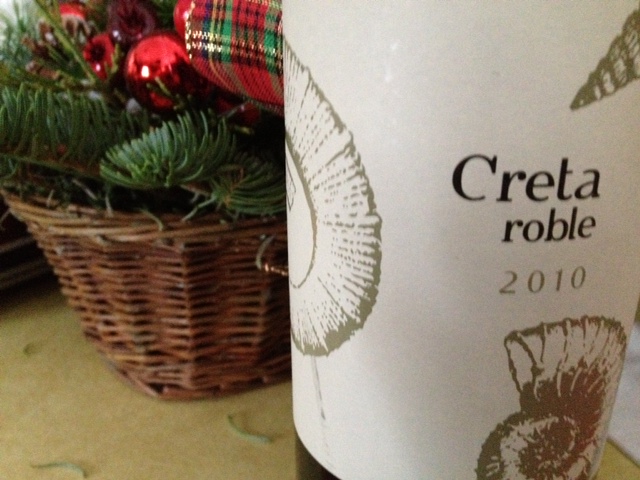
Creta 2010 Ribera del Duero Roble

On our last night with family for the Christmas holiday, we ordered a killer sheet pizza from the local Brockport joint and broke out a slew of interesting beverages for the evening.  These kept us company while we were bent over a puzzle featuring Coca Cola’s salute to females who served in the military in the early half of the 20th century.  Never did finish the puzzle before returning home to NJ, but we did crush the ‘za and enjoyed the Creta Roble 2010.  It needed some time to breathe but once it had its legs under it, the Roble was a nice find.  Lots of dark flavors in this rich Spanish red!  My tastes are sophisticated enough to pick out all the notes in play within the Roble, but I definitely grabbed on to the dark berries.

Creta 2010 Ribera del Duero Roble, Spain.

Creta 2010 Ribera del Duero Roble, Spain.

Here’s what Parker thought of the Creta 2010 Ribera del Duero Roble: “From a 70-year-old vineyard, this outstanding red wine offers notes of melted chocolate, black cherry jam, cedarwood, charcoal, and damp earth.  Rich, dense, supple-textured, fleshy, and medium- to full-bodied, it should drink well for 4-5 years.  It is a very impressive value. 100% Tempranillo.

That dude (who gave it 90 points, in case those things matter to you) has a fun job–particularly on days when he gets to sample grapes like these.  Wish I’d bought more than one!

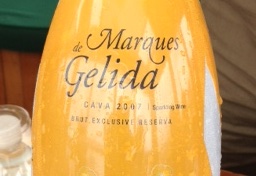
2007 Marques Gelida Exclusive Cava Reserve

Marques Gelida Exclusive Cava Reserve, Penendes, Spain, 2007.

This light white blend marked the halfway point of our wine tasting cruise around Manhattan on a warm August Saturday.  We had “toured” two sparkling wines prior to this blend of Macabeo, Xarello, Parellado, and (15%) Chardonnay from Penendes, Spain.  This our hostess paired with a Gallego cheese from Galencia, Spain.  This cheese was produced by a co-op in Pontevedra that has its own cows; a round of creamy pasteurized cow’s milk is surrounded by a doughy natural rind.  Lactic with a marshmallowy paste, it would have been an ideal starter on the cheese plate or a solid third entry in our afternoon.  As with the Szigeti that started our tasting event, this cheese was delicious when consumed with the Cava, which was related to us as the following:

“A 15% Chardonnay in the blend in addition to the three traditional varieties of the Cava region, it spent 42 months on lees.  It exhibits a refined nose of mineral, biscuit, baking spices, and white flowers leading to a wine with excellent acidity, plenty of forward, dry fruit, and a lengthy finish.”

This third wine in our afternoon still showed its individuality and engendered smiles among all tasting it.