1982 Chateau d’Issan

Perhaps the best wine I’ve tasted to date in my short life.  This red blend was the most luscious, fragrant, and best-tasting…again this is a time when my vocabulary in wine fails to share how amazing a drink this was.  My best friend, a collector of sorts, brought along this treat to Morton’s tonight to accompany a steak dinner among the fellas.  The waiter was enthusiastic about the bottle and–after having some difficulty with the cork–poured generously.  All three of us sampled with gusto while we worked through our wedge salads.  This bordeaux was like great liquid velvet.
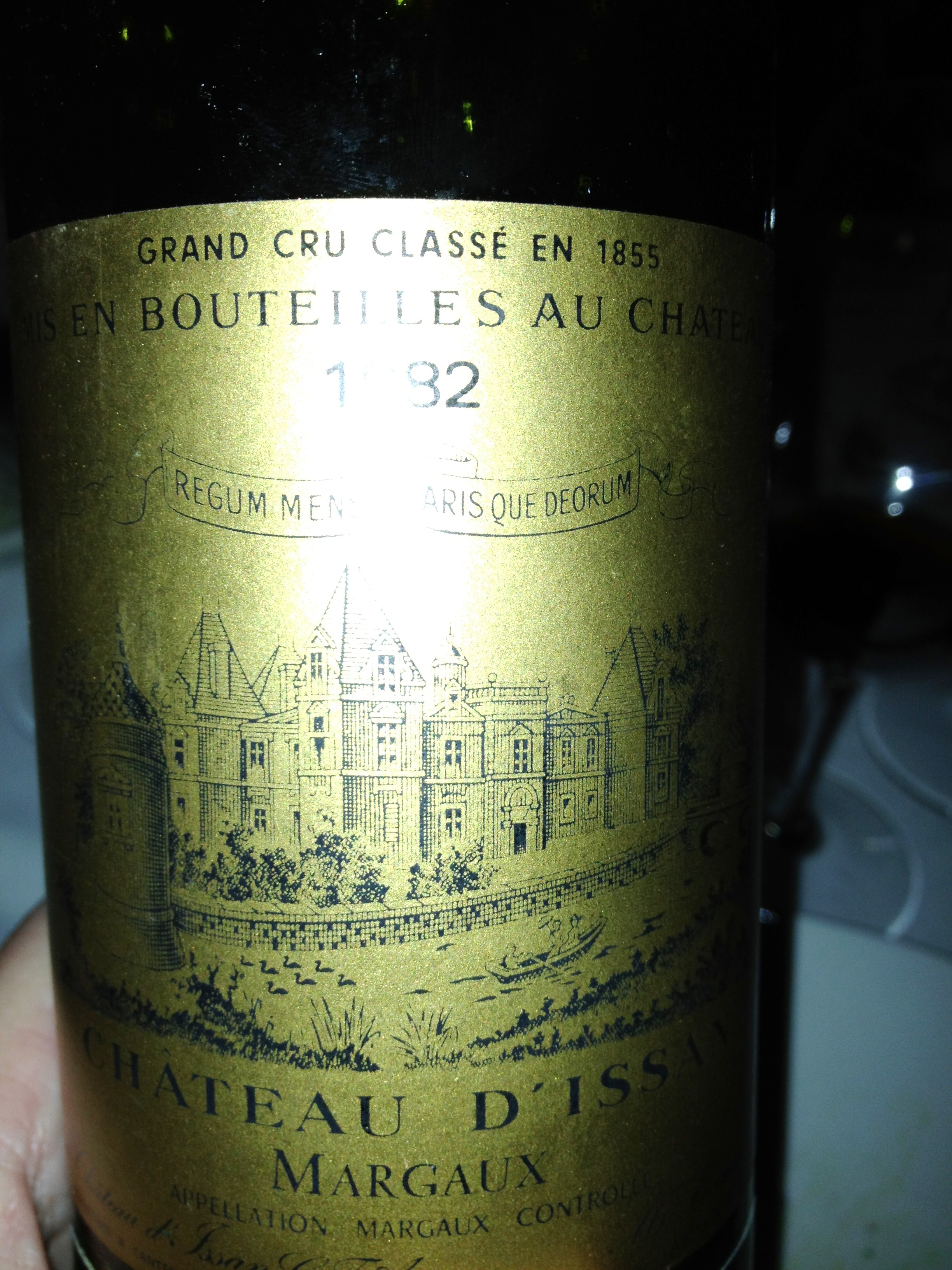
1982 Chateau d’Issan, a fantastic red blend from the Margaux appellation of Bordeaux, France.

The 1982 Chateau d’Issan is a red blend from Margaux, an important appellation in the Haut-Medoc district of Bordeaux in southwestern France. Margaux has several chateaux around it, and each must abide to “Appellation Controlee” rules that stipulate where, when, and how wines must be made in order to warrant the AOC Margaux title. The region is famous for its production of well-rounded, gently perfumed wines–predominantly cabernet sauvignon.

My friend, if you’re reading this, I know how valuable a bottle this was, and it was worthy every dollar.  Really incredible, and a memory that will last a lifetime.

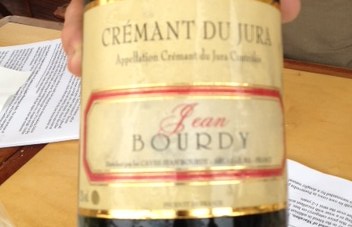
Jean Bourdy Cremant du Jura

Our tour of the world’s wines, making our way around the island of Manhattan, next included the Jean Bourdy Cremant de Jura – a 100% chardonnay from Jura, France.  This white was matched up with the Delice D’Bourgogne, a cheese from Burgandy, France.  Produced by Fromagerie Lincet, the pasteurized triple creme (75% butterfat in dry matter) marries full-fat cow milk with fresh cream, producing a rich, whipped cheese with a thin, pungent mold rind that imparted some great smells (“straw and mushroom aromas, complementing the buttery, yellow, sweet cream interior” according to our learned guide) to all of us enjoying the pairing.  At first I wasn’t sure what smell I detected in the JBC but, when prompted by our hostess, I definitely got a feel for the nutty, fruit-tinged aroma she described.

The Jean Bourdy Cremant de Jura, a 100% chardonnay from Jura, France.

“The nose begins with a boulangerie’s blend of toasted hazelnuts, meshed with pear, baker’s yeast, and sea air.  It plays all rich and creamy with the scents but hits the palate like winter ice–bright, racy, and chiseled.  Almost like a fine Riesling or Vouvray that shows honey and peach but turns into citrus and minerals.  It lives in two universes at once, something we’ve come to expect from Jura wines, which often show heft on the nose but are electric on the palate.”

How’s that for some good wine-speak??!  Just one more pairing still to go after this one as we pass the History Channel sign along the river.

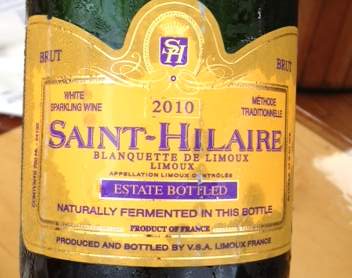
2008 St. Hiliare Blanquette Limoux

The 2008 St. Hiliare Blanquette Limoux, a blend of 98% Mauzac, Chardonnay, and Chenin Blanc from Languedoc, France.

The second sparking wine that we tasted as we cruised north under the George Washington Bride, circling Manhattan with other cruisers, was this 2008 St. Hiliare Blanquette Limoux – a blend of 98% Mauzac, Chardonnay, and Chenin Blanc from Languedoc, France.  Enjoyable for a variety of reasons, and in no small part because we wouldn’t normally pick up a sparkling or drift to French wines in general.  As such, it was a nice change of pace from our domestic proclivities.  This was paired with my favorite cheese of the day, a La Tur from the Piedmont area of Italy.  The cheese was formed from a blend of sheep, cow, and goat’s milk–it was runny (“oozing” in the words of our host, not a description that I’d usually give to my foodstuffs) around the perimeter with a most, cake-like paste.  Its flavor was earthy and full (“like ice cream served from a warm scoop”)–a truly enjoyable pairing.

“The Blanquette de Limoux is probably the oldest sparking wine in the world.  In 1531, the Benedictine Monks of the Abbey of Saint-Hiliare were already producing Blanquette de Limoux, which thus precedes champagne by more than a century.  The Limoux vineyards are located at Languedoc, in Southern France, at the foothills of the Pyrenees Mountains.  The grapes are selected from clay-limestone plots that capture both the Oceanic and Mediterranean influences.  Dry, toasty, smooth and clean it truly captivates with an attractive yeasty aroma and luscious creamy texture.  The palate is light and crisp with citrus and apple flavors and the body is just hefty enough.”

And on our tour of the world’s wines continues!

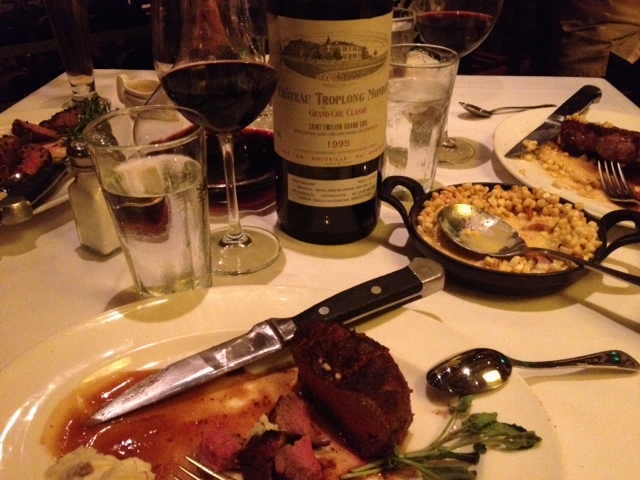
1995 Château Troplong Mondot, Saint-Emilion Grand Cru

Château Troplong Mondot 1995, Saint-Emilion Grand Chu, France.

We had not tasted the goodness that is fine bordeaux until treated at dinner tonight with our friends George and Angela.  The four of us met at the Capital Grill for steak dinners and were not disappointed by any facet of our evening.  All of us started with fantastic salads–three chopped wedges and me with a spinach and bacon salad that was perhaps the best of the bunch.  Our main courses were nicely salted and perfectly cooked filets, strips, and the like.  The photos shown here will definitely not do justice to the meal, which we accompanied with creamed corn and mashed potatoes.  The most important accompaniment, of course, was the 1995 Château Troplong Mondot red to which George treated us.

Eschewing the house options for a corking fee and this red bordeaux, produced by the Château Troplong Mondot and of the appellation Saint-Emilion Grand Cru.  It was perhaps the most expensive bottle of wine I’ve ever enjoyed, and I believe even my course palate understood that it was being treated to some of France’s best work.  A deep, pungent red, it was decanted for us and extremely smooth on the finish.  Here’s a word or two from the producers:

“Château Troplong Mondot is grown on extensive vineyards rich in limestone clay soils. Powerful, well-structured with pronounced complex tannins, its deep aromas of truffles and blackberries develop over time.”

Deep aromas indeed.  Really impressed that folks buy wines like this and can stand to hold them over time, when they’ll increase (not just in value but) in taste and in turn our appreciation.

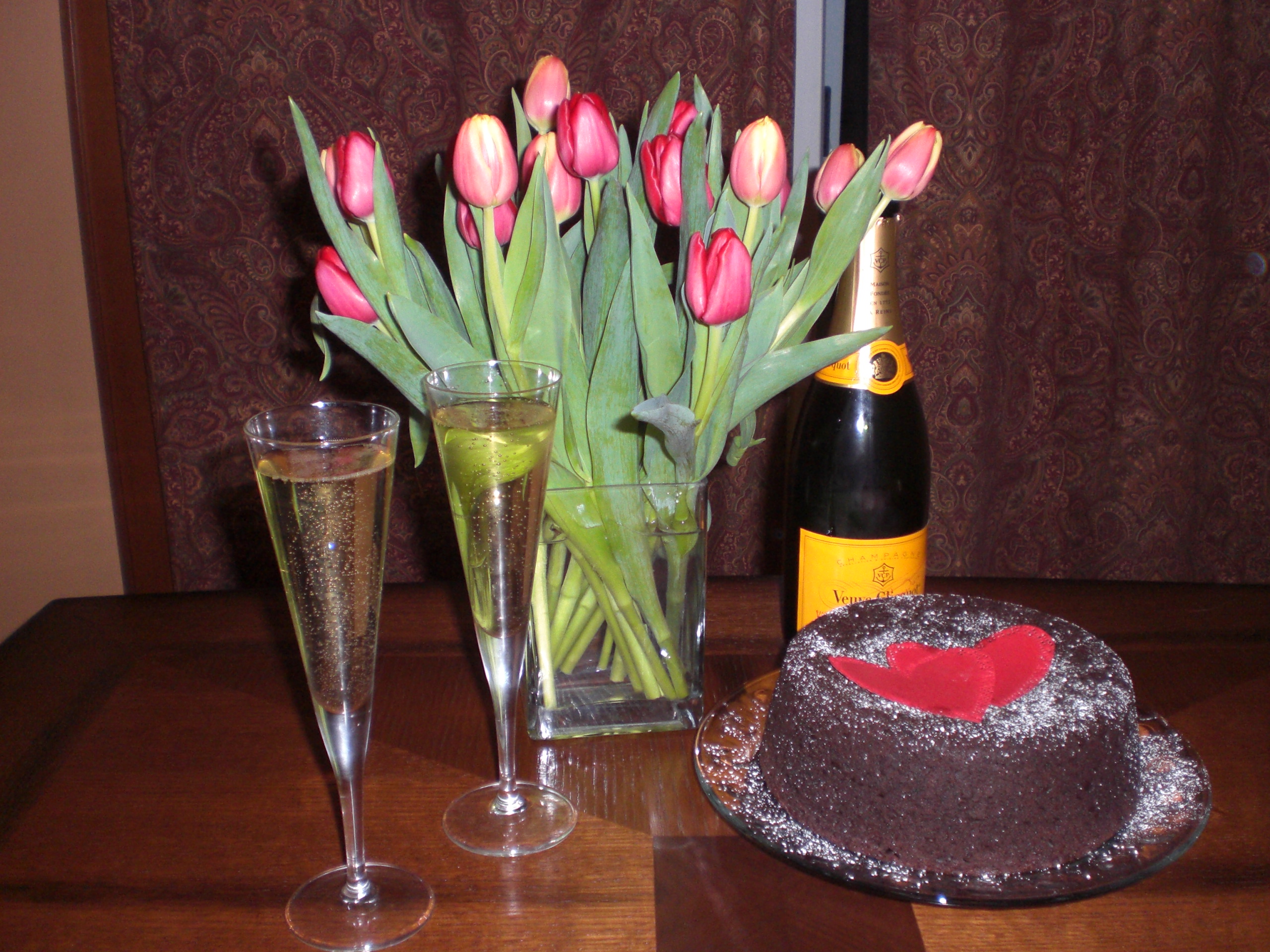
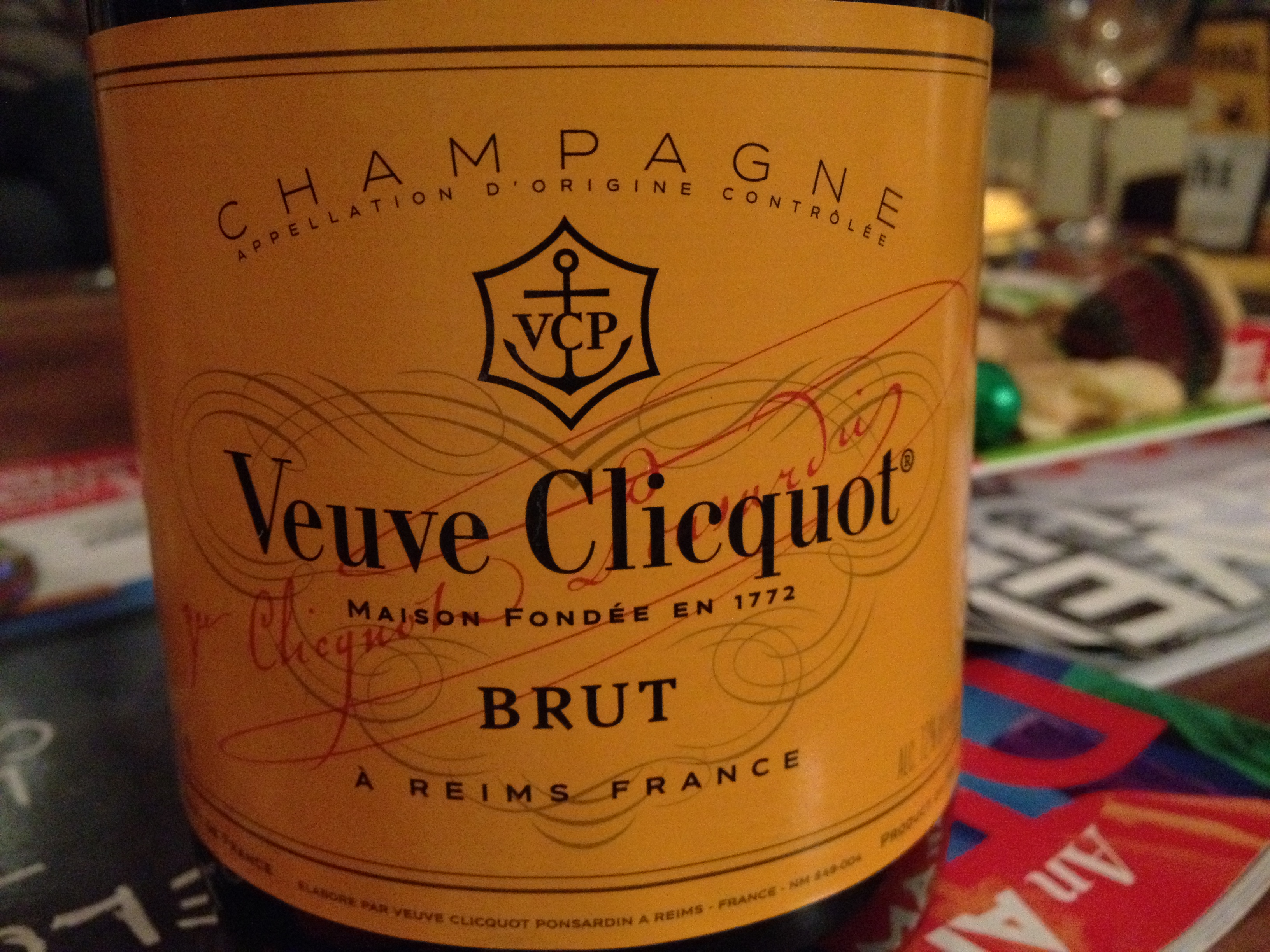
Veuve Clicquot Brut Yellow Label

Happy Valentine’s Day–a day to spend in celebration of that special something that you can’t quite define in words but can cite a thousand examples between the two of you.  Our HVD dinner, brightened with fresh tulips, consisted of a homemade lobster macaroni-and-cheese that armies would fight for, delicious asparagus in a lemon and burnt butter sauce, and the best company possible.

A molten chocolate cake – you see it in the photo here – was a featured dessert that my wife could sell in a high=end supermarket.  It was a great finish to an evening that began with the Veuve Clicquot Brut Yellow Label, one of our absolute favorites, and plenty of phone calls to our favorite people.  Hoping your celebrations and your bubbly were as good!

Veuve Cliquot from HVD 2012

Veuve Cliquot Yellow Label, of Champagne, France, accompanying our fresh tulips, chocolate cake, and lobster macaroni-and-chees dinner.

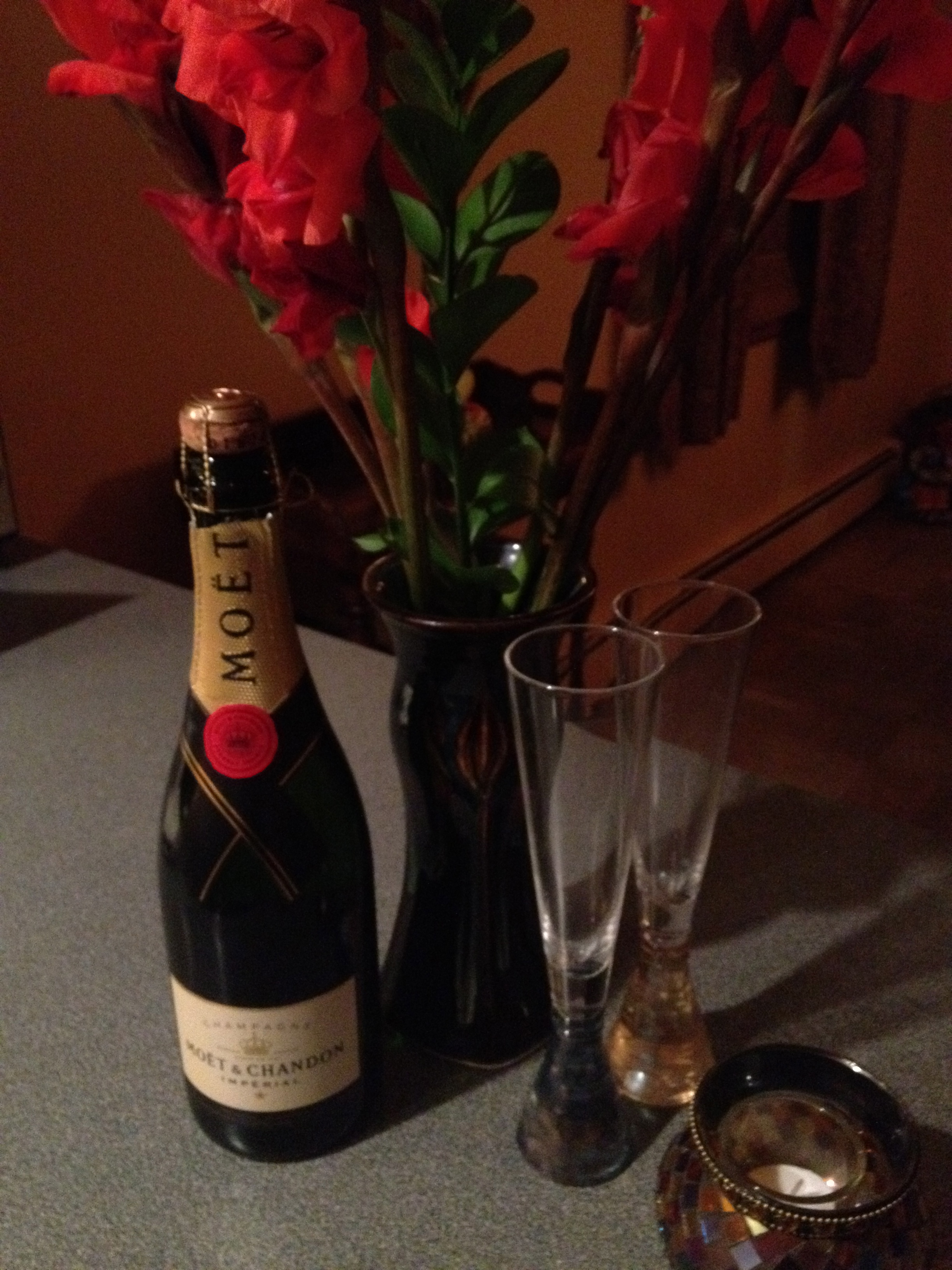
Moet & Chandon Champagne Imperial

A birthday celebration is always more complete with champagne, particularly one as amazing as this one.  The Moet & Chandon Champagne Imperialwas a gift from dear friends, and was a great accompaniment for fresh sushi (courtesy of Kurumi).  We popped this bubbly and hit the chopsticks with big smiles.  It was light, fruity, and had a deft touch that helped make the night into a memory.  Here’s what the big shots say about it:

Moet & Chandon Champagne Imperial

Moet & Chandon Champagne Imperial

The color is an elegant golden straw yellow with amber highlights. Its aromas are radiant, revealing bright yellow-fleshed fruits (i.e., apple, pear, yellow peach), honey, floral nuances (e.g., lime blossom) and elegant blond notes (i.e., brioche and fresh nuts). The palate is seductive, richly flavorful and smooth combining generosity and subtlety, fullness and vigor, followed by a delicately fresh crispiness (fruit with seeds), to reveal the magical balance of champagne.

A must-have again soon!

Veuve Clicquot Brut Yellow Label

Veuve Clicquot Champagne enjoyed to ring in 2012

We had this delicious champagne–a favorite of Bec’s–to celebrate the start of 2012!  Having slipped away to upstate New York, we were staying at the “Sky & Water House” near Woodstock for the occasion with our friends Angela and George.   It was a nice place and we enjoyed thoroughly the peace and the quiet afforded by the place.

Veuve is amazing under any circumstances, and certainly a great treat to celebrate such a milestone as the coming of the new year.  Our dinner consisted of steak (grilled on our deck!), fresh asparagus, and even sweet potato fries.  All were great but none so much as the champagne and the New Year’s celebration.

The winemaker itself writes as follows: “Clicquot’s signature Brut is loved all over the world for its crisp, full flavors, consistent quality and celebratory yellow label.  This classical dry champagne is a blend of two thirds black grapes (pinot noir and pinot meunier)  for body, balanced with one third chardonnay for elegance.  It has a fine, persistent sparkle and golden champagne color.

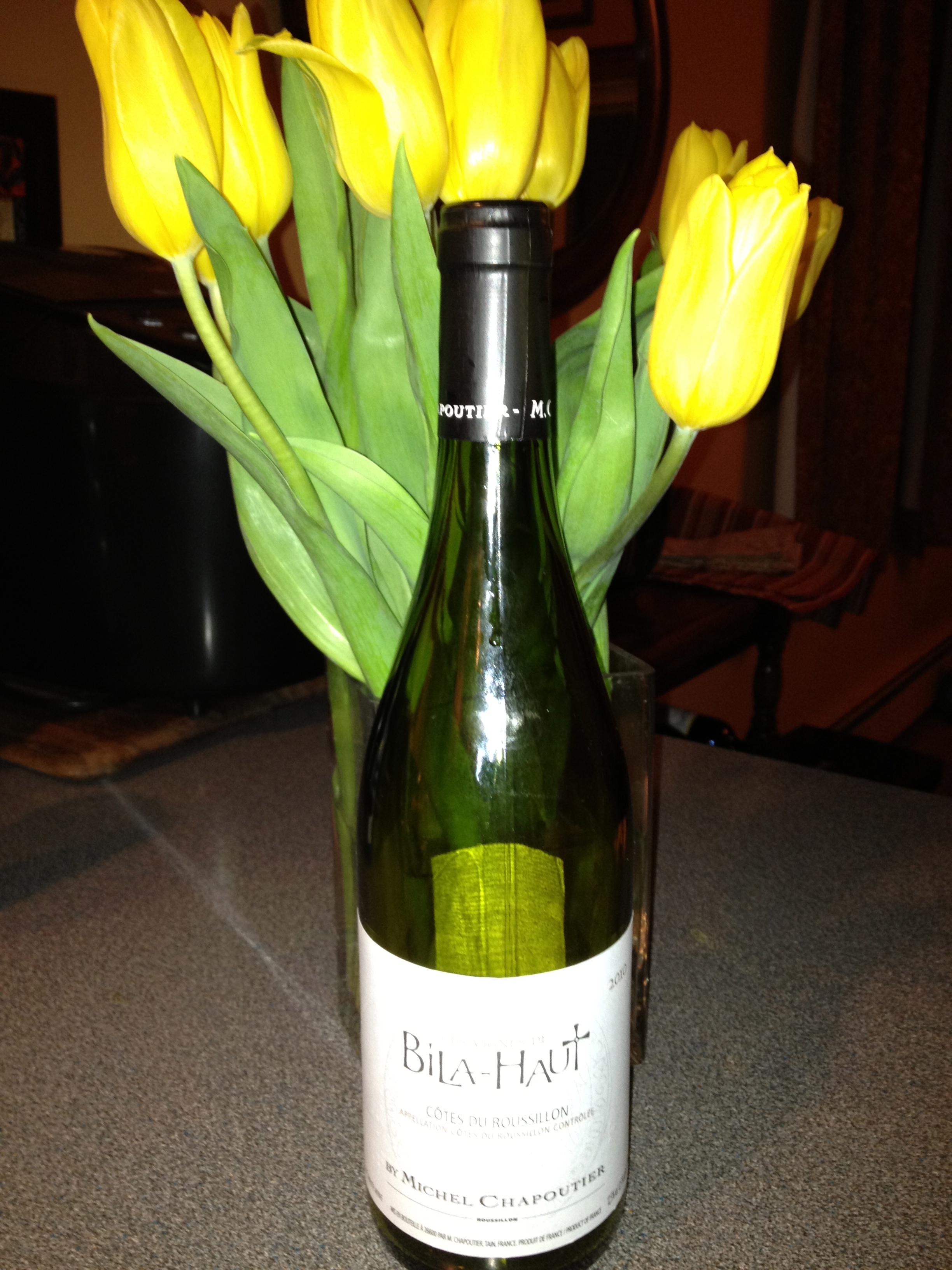
Les Vignes de Bila Haut 2010 Cotes du Roussillon

We are totally hooked on the 2010 Cotes du Roussillon Les Vignes de Bila-Haut, a French wine from the Lanquedoc Rousillon region.  Again, I credit the folks at Bottle King for drawing our attention to this wine.  They were having a tasting this fall, including several other reds and this white (all from Michel Chapoutier), and I thought this one the baddest of the bunch and grabbed up several.  Here’s how the big shots from the Wine Advocate describe it (at 90 points):

A strikingly colorful aromatic display features pink grapefruit, peony, honeysuckle, and golden raspberry, all of which combine on a juicy, mouthwateringly saline palate, finishing with superb refreshment and length. What a fine introduction to Roussillon whites and terrifically versatile accompaniment at table this will make over the next 2-3 years if not beyond!

2010 Cotes du Roussillon Les Vignes de Bila-Haut

Regrettably I cannot remember what we first ate with this–perhaps some Rosarios Italian pasta dishes?–but it’s become a favorite so it will surely get more play herein in the future.  I’m just too much a neophyte to know if I should call this a Grenache Blanc or what?